
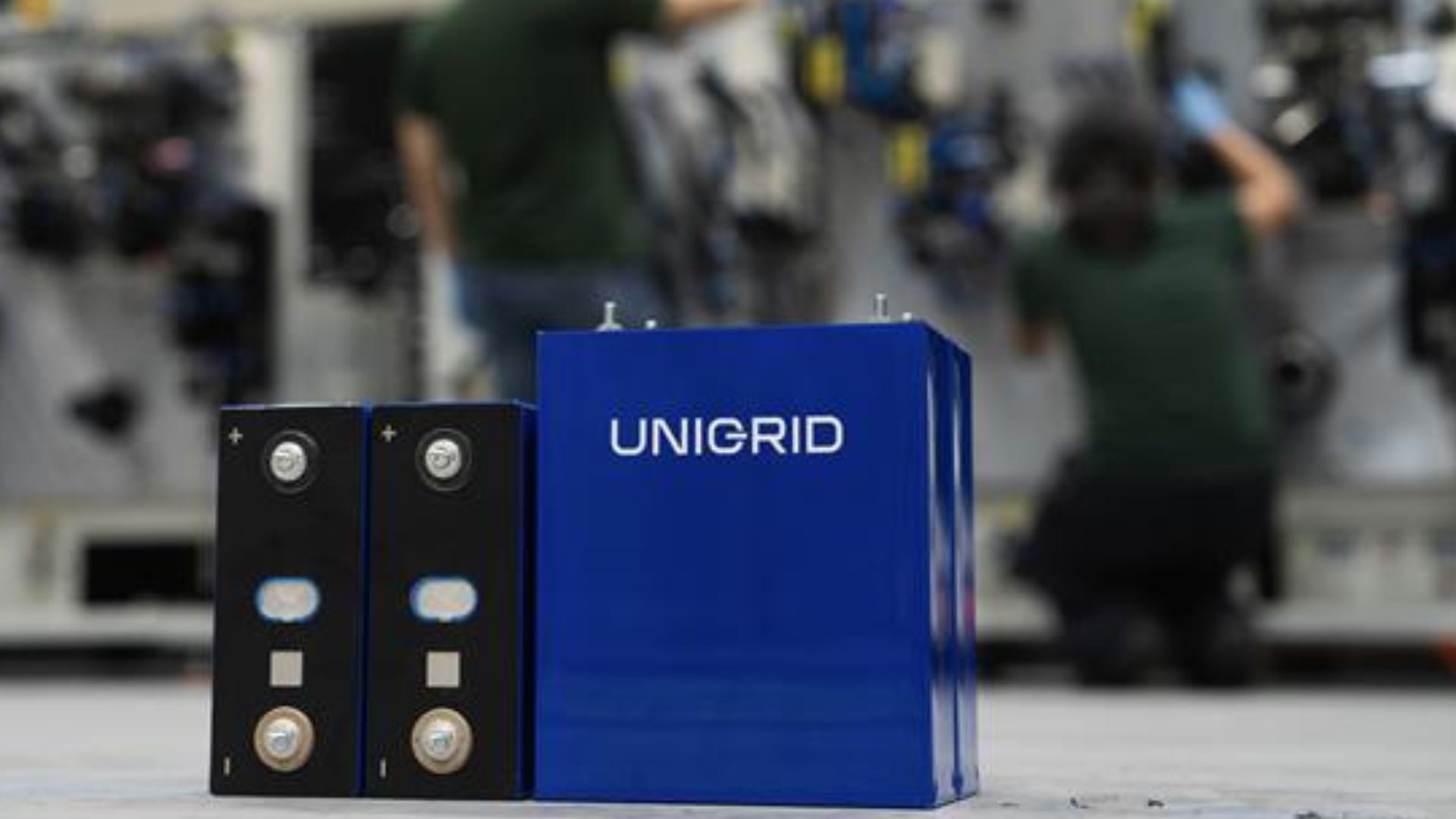
The long-term future of energy storage hinges on solving one persistent, highly dangerous problem: fire risk. Conventional lithium-ion batteries power modern energy grids, but carry a known risk of thermal runaway. It is like a domino effect of overheating that causes catastrophic blazes. Hyundai Motor Group wants to eliminate that hazard entirely inside its manufacturing plants. The automaker just completed an extensive battery validation program with US-based UNIGRID Inc. through its ZER01NE Accelerator initiative. UNIGRID’s sodium chromium oxide (NCO) cell chemistry passed extreme safety testing with zero fire and zero thermal propagation. The technology is intended to deliver non-flammable, ultra-safe Battery Energy Storage Systems (BESS) for grid energy needs. “UNIGRID’s impressive validation performance demonstrates that their advanced sodium-ion chemistry is well positioned to meet the high safety and performance criteria of our upcoming energy initiatives,” said Jongguk Bae, Senior Manager at the Group’s Green Factory Development Team. Successful validation Sodium is cheap, abundant, and chemically similar to lithium. But most of the attempts to scale sodium-ion cells stumbled over short lifespans and poor heat tolerance. UNIGRID’s proprietary NCO formulation will likely be able to break that pattern. During testing, the company’s 210Ah cells ran continuously at 100 percent depth of discharge with minimal capacity loss. Interestingly, the batteries performed across a harsh temperature spectrum of -20°C to 60°C. Heat didn’t trigger runaway and cold didn’t freeze performance. “Validating our chemistry under the Group’s rigorous standards confirms that our NCO technology solves the dual challenges of safety and longevity required to successfully deploy sodium-ion to solve emerging grid energy needs,” said Darren H. S. Tan, CEO & Co-Founder of UNIGRID. Safer choice over lithium As NCO chemistry operates safely across a wide temperature range without risk of thermal runaway, BESS installations can run fully passively. It will remove the the need for heavy HVAC systems, liquid cooling loops, or parasitic power loads to regulate temperatures. Apart from the safety hazard, lithium-ion depends on expensive, supply-constrained materials like lithium, cobalt, and nickel. These challenges often leave large-scale deployments vulnerable to price and geopolitical issues. On the other hand, the sodium advantage lies in its abundance and resilience. Sodium is thousands of times more abundant than lithium, and far cheaper to extract, which could help protect companies from supply-chain disruptions. As per the UNIGRID website, the NCO chemistry is engineered to reach up to 30,000 cycles at 80 percent capacity retention. This equates to roughly a 25-year operational lifespan (compared to standard LFP batteries, which degrade after 3,000–4,000 cycles). Hyundai is taking notice of these promising results and actively putting the technology to work. Aligned with its overarching “Green Factory” initiative, the automotive titan is shifting from evaluation to execution by partnering with domestic Korean integration specialists to engineer complete, commercial-scale NCO-based BESS. Once integrated, Hyundai Motor Group will deploy these specialized platforms across its global manufacturing plants as core distributed energy resources. It will eventually insulate the firm’s high-tech facilities from grid outages and establish a non-flammable benchmark for clean industrial power.Get the latest in engineering, tech, space & science - delivered daily to your inbox.Mrigakshi is a science journalist who enjoys writing about space exploration, biology, and technological innovations. Her work has been featured in well-known publications including Nature India, Supercluster, The Weather Channel and Astronomy magazine. If you have pitches in mind, please do not hesitate to email her.
Thermal runaway solved? Non-flammable sodium battery passes extreme safety testing
Full Article
Original Source
Read the full article at Interestingengineering →KhanList aggregates and links to publicly available news content. We do not host full articles from third-party sources. Always verify important information with original sources.