
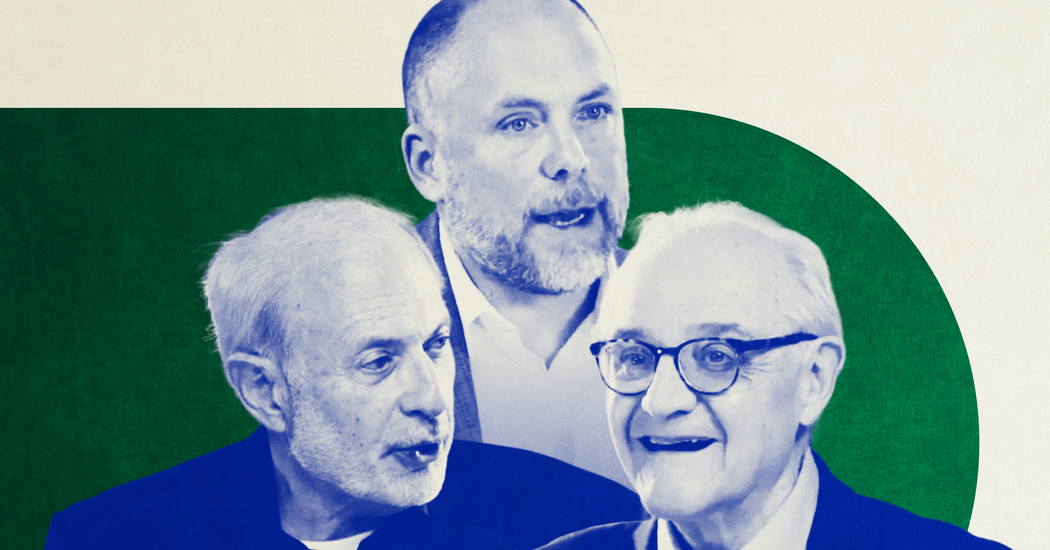
AdvertisementSKIP ADVERTISEMENTThe OpinionsMore than a week after the blue wave, what comes next for both parties?Nov. 14, 2026, 7:00 a.m. ETVideo‘There’s No Juice Left to Squeeze From MAGA’More than a week after the blue wave, what comes next for both parties?CreditCredit...The New York TimesThe midterms last week upended assumptions about where — and how — both political parties can win. So what comes next? The Opinion contributor Robert Siegel joins the contributing writer E.J. Dionne Jr. and the senior political columnist for The Washington Examiner, Tim Carney, to debate whether MAGA can outlast Donald Trump and what Democrats can do with their new power.‘There’s No Juice Left to Squeeze From MAGA’More than a week after the blue wave, what comes next for both parties?Below is a transcript of an episode of “The Opinions.” We recommend listening to it in its original form for the full effect. You can do so using the player above or on the NYTimes app, Apple, Spotify, Amazon Music, YouTube, iHeartRadio or wherever you get your podcasts.The transcript has been lightly edited for length and clarity.Robert Siegel: Since the three of us last talked, the political map of America has been redrawn. Assumptions about which party can win which state have been thrown out, and past speculation about the future has been replaced with fresh speculation about the future. And before we dig into some of the big questions that arose from the 2026 elections, I’d like to hear, briefly, from each of us about what impression of the election sticks in the mind?What sums up what’s happened most vividly for you? Tim?Tim Carney: For me, it’s proof that the Donald Trump realignment that we first started to see in 2016 was not really a partisan realignment, but an emergence of what I call “the Trumpy vote.” If you look at the counties in Ohio, for instance, that swung most from Mitt Romney to Trump — the places where they’re not necessarily conservative Republicans, but they were Trump voters — those Trumpy counties, those were the counties that had the biggest blue wave. Same thing happened — I looked precinct by precinct level — in Lower Bucks County, the blue collar part right outside of Philadelphia.Siegel: In Pennsylvania.Carney: In Pennsylvania, right outside of Philadelphia. Trump came in and won these, what Sean Trende used to call, “the missing white voter.” Those guys, sons of former factory workers, those are the precincts that swung back to give Democrats a House seat, the State Senate, that sort of thing. So I don’t know whether it’s a matter of Trump voters staying home, or what seems more likely from the numbers so far, that the Trump voter was never a conservative, never a Republican, and now he just voted Democrat.Siegel: E.J.?E.J. Dionne Jr.: I got two numbers and two little postcards from my experience of the campaign. Two numbers: Democrats got 56 percent of the popular House vote on the basis of the count right now. That is exceptional. We’ve never seen a blowout like that in decades. The Gingrich “revolution” was with 51 and a half percent of the vote.Siegel: In ’94.Dionne: In ’94. Apparently, Republicans haven’t hit 56 percent since 1928. Four and a half million fewer Republicans at the latest count; 15 million more Democratic votes. So this was both a dispirited Democratic base and mobilization. Two postcards: Covering Adam Hamilton — Rev. Senator-elect Adam Hamilton. It’s the only campaign I ever covered, where part of my work was going to a wedding that he performed as a minister, and a baptism — and I think that tells us something about him and the nature of this campaign.And lastly, I went down to Mississippi, because I’d heard some really good things about the kind of candidate Scott Colom was. I walked into a place called Johnny T.’s Bistro and Blues in Jackson, and I sat down with Scott Colom. He laid out exactly how he could win that race. And it was an extraordinary understanding of that race. And I’ve got to say, he made me a believer — that this really could happen. And he proved, as he said in his speech, that it wasn’t just about faith, it was also about work, because he wouldn’t leave Johnny T.’s before he had shaken every hand in the house. He really worked that race.Siegel: To which I would add, from myself, the political power exercised by Southern Black voters, even after, and in large part in reaction to, the gutting of the Voting Rights Act. It was so great in Georgia, in Mississippi, in North Carolina — you can say Texas is part of the South. It was pretty strong in Louisiana. And it left me wondering if the Voting Rights Act, a great landmark piece of legislation of the 1960s, really had, as many conservatives argue, outlived its necessity. E.J., feel free to scold me for that heretical statement.Dionne: How’d you know I disagree with you, Robert? When you look at Colom’s victory, what did it take? You still had very quite racialized voting in Mississippi. It just happened that Colom was skillful at bringing over enough white voters and a massive turnout of Black voters. Why? Because they fundamentally disagree, obviously, with what you just said. They believe — and I think they’re right — that knocking down the Voting Rights Act enables the kind of gerrymandering that you saw in Tennessee that also happened. In Tennessee, the Republicans split up Memphis, which is about 60, 65 percent Black, not into two pieces, but into three pieces, just to make sure that that vote couldn’t affect the results.Justin Pearson, a brave state legislator who’s Black, ran in one of those districts. He ran a great race. The national wave was with him, and he still could only get to within one point. So I think what we really need is a new Voting Rights Act, but we also should have national outlawing of gerrymandering. Because I think that when you think about environmental laws, we have them so that somebody doesn’t try to cut their price by polluting a river. We say to employers, people, manufacturers: “Sell a better product, but don’t pollute the river.” And I think we’re polluting the river of American politics with competitive gerrymandering, which is going to keep going until we outlaw it.Carney: I agree that partisan gerrymandering — it’s a scourge on democracy. I also agree that part of what the Voting Rights Act was being used to do was to mandate racial gerrymandering. This is part of the case in Louisiana. If you remember those horrible districts in North Carolina a couple decades ago, that were drawn with these little threads along a highway — that was racial gerrymandering to make sure that there are enough majority-minority districts.So I absolutely agree that we need to get rid of the gerrymandering, the partisan stuff. We also need to get rid of racial gerrymandering. And Democrats would not be happy with that, because in some states they depend on tying together two different minority precincts.Siegel: Let’s talk about the two big parties right now. The devastating defeat the Republicans suffered this year raises the question: Is MAGA dead? Who wants to start on this one?Carney: I mean, the political analysis that I was mentioning earlier, the Trump vote, the working-class white vote that Trump brought into the party, never became reliably conservative and Republican. These people weren’t made into Paul Ryan acolytes who love the idea of reforming Social Security. And frankly, they’re not the Ted Cruz vote from 2016. Remember, you could chart by county. The places where people were more likely to go to church every week in the 2016 primaries, they were voting for Ted Cruz.The places where you had the white evangelicals who don’t attend church, they were more likely to be the Trump voter. So the less religiously observant, the less fiscally conservative — that was the Trump vote. And the Republicans cannot rely on them now that Trump is leaving the stage. And then, you combine with that the fact that the party started selecting for loyalty to Trump, rather than either conservatism or quality of candidate — and that also hurt the party. So going forward, the Republicans, there’s no juice left to squeeze from MAGA. And if anybody tries to be a mini MAGA — if JD Vance says, “I’m going to be the next Donald Trump” — you can’t be the next Donald Trump.I mean, we’re New Yorkers. We remember this guy. He is sui generis, thanks be to God, and there isn’t another one of him. I basically think Trump blew up what existed before the consensus — the Reagan consensus that lasted for a while — but nothing has filled that space.Siegel: I just want to underscore what you said about candidates. I was thinking, boy, a lot of Senate Democrats who won Senate elections were lucky to have a terrible opponent. And then it occurred to me it’s not luck that you get Herschel Walker running for the Senate, only because loyalty and fame have been elevated to values that dwarf every other talent that a candidate might have.Dionne: Look, I think that MAGA is dead as such, because it was always rooted in a contradiction. The great economics writer for the Financial Times, Martin Wolf, once described it as “pluto-populism,” which was plutocratic populism.And I think, in this version of Trump, he gave voters the pluto without the populism. And that his ties to very, very wealthy people were just so obvious to so many of these voters, and the obsessions with things like the ballroom and the like, that they just walked away. Now, does it mean that a strongly conservative wing of the Republican Party is gone? No. There’s always been that. The Tea Party, in many ways, gave birth to the MAGA movement. So there will be a right wing of the Republican Party, but MAGA specifically defined by Donald Trump — and this odd contradiction of policies that often help the wealthiest people, but rhetoric that was directed to working people, usually using tariffs as his way in — I think that just will not work anymore.Siegel: Tim, how would you see a Republican Party minus MAGA? Is it back to the Ted Cruz appeal?Carney: I mean, when I talk to conservative Republican circles, they want to, I say, get the band back together. And they think that the way things were and that when they lost in 2012, you know, Romney should have won that — that is a perfidious pipe dream for conservatives. Part of the problem was that they were ignoring the big difference and why some populism was needed between the elites of both parties and the public of both parties.I said this last time I was on the show. Both parties’ elites have long been internationalists on war, trade and immigration, while the public was not. So a more nationalist party — and I know that nationalism sounds like a bad word to a lot of people — but you can have nationalism without it requiring what Trump did. Say, in Minnesota, siccing cops on protesters; immigration enforcement that’s basically “bust the heads and haul off anybody.”Dionne: And kills people.Carney: Yeah. So there is a nationalism that says our immigration policy should be crafted for the people who are here, and our foreign policy should not be listening to what NATO and the E.U. say, but looking after American interests.I mean, in my view, the trade policy that serves us best is basically free trade. But all of those things — be more guided towards nationalism, but in a smart way, not driven by a Trump who says: I love tariffs, they’re my favorite word. So a saner, calmer, but more nationalist-focused conservatism could be one of the paths forward for a post-MAGA conservatism.Dionne: “Perfidious pipe dream.” I’ll have to credit you when I use that. I think that Tim is right about something important, which is that the Trump victory did show that for many years now, the Republican Party has relied a great deal on white working-class voters. And Ross Douthat and Reihan Salam wrote a book years ago, about the Republicans not doing anything for that white working class.The problem is, they still haven’t done very much about the white working class, and what you saw in this election was something like a more authentic populism, I would argue, coming from the Democratic side, which said, “Look, it’s not populist to cut people’s health care off by cutting Obamacare subsidies. It’s not populist to kowtow to big tech companies. It’s not populist to let data centers run rampant without any local control.” And so, I think what you’ve got is a bunch of loose voters again, who are open to persuasion. But if the Republicans go back to a kind of pure Reaganite or Paul Ryanite politics, I don’t think there’s a majority there for them.Carney: But I think a conservative populism can be a real thing. For instance, again, immigration. Is the immigration policy directed at driving down low-skilled wages? Which a lot of our immigration policy has been. Let’s bring in guest workers. Maybe we need them for seasonal work, but do we need them in the factories? Maybe that would be better going to the people who are here, natives, or current immigrants who don’t have a college degree or a college education. Similarly, big government, as we saw with Trump’s tariffs — that often serves the guy with the best lobbyists, which is not going to be mom and pop. So I do think a more conservative populism is possible. Obviously, a very different one than Trump’s. And I think you’re right that the Democrats seized the populism mantle this year, but I don’t think that that’s inevitable going forward.Dionne: You know, under Trump, real wages are down. Manufacturing jobs are not up. And so — if I may channel the late Walter Mondale — where’s the beef?Siegel: Let’s move on to the Democrats, who won nearly everything that could be won. They have big majorities, but not a veto-proof Senate majority. And some of the people who might have crossed the aisle to vote with them in recent years — Susan Collins of Maine, Thom Tillis of North Carolina — are no longer there. There are Democrats holding those seats. So what can the Democrats actually do with all these seats in Congress?Carney: They can investigate Donald Trump. And I’m going to say, not that the average Democrat will listen to my advice, but there are places where there is clear evidence of corruption in the Trump administration, which is self-enrichment. Whether it’s selling crypto — worthless crypto tokens that then the top buyers get — a dinner with Trump; whether it’s his son’s business in the United Arab Emirates or Qatar. We could keep going on with a lot of these. The revolving-door lobbyists, the firms that are close to them, what special deals did they get? In short, were there quid pro quos? Did Donald Trump, or anybody in this administration, give any political favors to people who were personally enriching his family or enriching the people close to him?I bet the answer is yes, and that’s where I’m hoping the Democrats look. I’m afraid they’re going to get distracted by Jeffrey Epstein noise, or by Russia again, or something like that. They need to focus on what really corrodes policymaking in this country, and what Trump was pretty guilty of, it seems to me, which is selling policy for personal favors to the president and the people close to him.Dionne: So I’m going to do something dangerous. I’m going to say that the Democrats actually will be more disciplined than Tim suspects. And if you listen to one of the leading people who’s going to be looking into all this, Jamie Raskin, he is speaking in a very disciplined way, because he knows what the Democrats are up against here.Siegel: We should say he’s poised to be the next chair of the Judiciary [Committee].Dionne: Thank you. And so, I think they do know that a mishmash of too many hearings doesn’t penetrate anything. But they’re also not going to make the mistake of all investigations, no legislation. And I think they already have a plan to pass some very simple, broadly popular things in the party as early as they can, particularly reversing these health care cuts, trying to hem Trump in on the tariffs, particularly with Canada, which are very unpopular in the country. And also, take steps to end the war in Iran. And I think the problem Democrats have is that they don’t know which Trump they’re going to be dealing with. I was so struck that on the same day ——Siegel: When he said he would work with the Democrats?Dionne: Trump gave our former colleague, Ross Douthat, an interview in which he said that the immigration policy was too tough, and he’d like to negotiate a deal with the Democrats. Later that day, he named Stephen Miller, the architect of that policy that was too tough, as his chief of staff. They’re now threatening criminal action, if the Democrats exercise their constitutional right to oversight. So they don’t know what they’re going to be dealing with. The rubber will really hit the road on the budget, because the one thing they have to agree on, at some point, is a budget. The budget can pass on reconciliation, the rules that allow a party to pass stuff in the Senate without 60 votes.Siegel: Without a filibuster.Dionne: Without a filibuster. And then you’re going to have a negotiation, and I think Democrats will put some of the stuff they want that is very popular — like restoring health care money — in that bill, and we’re going to see what Trump really wants to do.Carney: Also, we’re going to see if Democrats believe in taxes anymore. It used to be that Democrats would say: “We’re going to tax people.” Now the Democrats are piling on finding new people to not tax. Four hundred thousand — is that now the limit? If you make less than $400,000, so many Democrats say, “We’re not going to hike your taxes.” So, that’s one point of pressure on them: Are they willing to say, to balance the budget, to reduce the deficit, etc., “we need to increase taxes”?Democrats of old loved increasing taxes on anybody who was above the middle class, or even in the middle class; and now it seems that they’re allergic to it, in part because that upper middle-class electorate has moved so far to the Dems.Dionne: Two things: One, there is so much money given away to the super rich in the tax code, since 2000 — the two Bush tax cuts and the two Trump tax cuts. I think there is a lot of money to be raised just there, to fund what the Democrats think they might be able to do in this period. But I think the honest, most likely thing is neither party is going to deal with tax increases until after the 2028 election, because I think Trump would veto that anyway. And we’re going to have the big argument about budgets and the future of Social Security after 2028.Siegel: Who are some stars of the Democratic landslide and how might they figure in the coming presidential election?Carney: I think Jon Ossoff is the one that won all the buzz coming out. Georgia was a state that 20 years ago the Republicans took over, and now it’s got — statewide — Democratic elected officials. And Ossoff seemed like he was at the cutting edge of that.On the other side, though, I would say I think Josh Shapiro, the governor of Pennsylvania, is the one who comes out of this the biggest loser, in part because now he has a trifecta. He was pretty good working across parties, and Dems would say: Hey, he gets stuff done. Remember, he fixed I-95 in a week or something.But now he’s going to have the pressure from the liberals who are now controlling the state legislature to pass stuff that Tim Walz was handicapped by — the governor of Minnesota who was Kamala Harris’s running mate. He was handicapped because he got pushed to pass all sorts of things, either the special interest asks from the teachers’ unions or massively high minimum wage or other things that could really hobble the economy.So I think of Ossoff as a winner and Shapiro as a loser.Dionne: Tim thinks everything progressives want to do is unpopular. Strengthening health care is popular, child care is popular, building more housing is popular, raising the minimum wage is popular. I think that’s actually good for Shapiro because he needs to move to the left a little bit to have a chance to win the nomination.But you can go down the list. James Talarico is a star. Roy Cooper is an unheralded star. I think Roy ——Siegel: Governor of North Carolina.Dionne: Yes, of North Carolina. I think Roy has not gotten enough kudos because he put the race away so early that it really didn’t get a lot of attention. I don’t think he’s a presidential candidate, but I think his achievement is really going to be studied.And I think that Abdul El-Sayed is going to be one of the most interesting people in the Congress. I think you’re going to see El-Sayed try to develop into more of a national candidate. For example, he started out being Medicare for all, and then he amended a little bit to Medicare for all who want it, which is really the public option, which is the compromise position Democrats can agree on. So I think he’s going to be a fascinating person to watch.Siegel: According to Gallup, close to half of Americans identify as independents, even if they lean one way or the other, they go out of their way not to identify as Democrats or Republicans, perhaps just to avoid fund-raising phone calls. I don’t know why they do it.Dionne: I get emails from President Trump trying to raise money.Siegel: Does the shrinkage of party identity, party affiliation in the country, mean that there is this vast pool of people who are up for grabs in every election?Carney: Up for grabs, yes. But one of the dreams that people get is, oh, well, if half of the country — and that’s bigger, that’s a plurality if it’s 49 percent — we can form a third party that can win. That 49 percent doesn’t agree on very much, so this includes, again, your working-class white guy, who wants more spending on Social Security, but also tariffs. And it includes your moderate country-club voter who wants lower taxes, medium regulation. It includes every sort of thing. So a key thing to remember is that 49 percent might agree that both parties stink, but the next item on the agenda, you’re going to have a lot of disagreement.Dionne: Tim has found something we emphatically agree on. But what I want to say is, somebody years ago wrote a book called “The Myth of the Independent Voter,” and a lot of independents aren’t really independents. The pollsters now ask, do you lean ——Carney: Who did you vote for last time? Who did you vote for?Dionne: But I do think there’s something that friends of a party system — and I think you can’t have a democracy without parties — have to acknowledge that the rising desire to identify as independent is, in some ways, a sign of alienation from the system.Carney: Yeah.Dionne: A sense that the system isn’t delivering. We are not happy with these politicians. I think there is something real there that both parties have to grapple with.Siegel: One interesting feature of this year’s Democratic candidates was the relative comfort that several showed with the language of religion, in describing themselves and their ideas about governing. Senator-elect Hamilton of Kansas is a pastor. James Talarico of Texas is a seminarian. Scott Colom in Mississippi began his victory speech with a long riff on prayer and faith. Just a coincidence or is there something big at work here?Carney: This was the silver lining of the election for me, that these were Democrats who were very comfortable in talking about faith and not just as a personal thing. If I can quote from some E.J. Dionne columns here — Adam Hamilton said: “The gospel isn’t just about a personal faith. It’s about the call to be in the world.” Scott Colom: “When we talk about policy issues we need to talk about it through a faith and values lens.” This is a very important thing that, I think, we struggle with as a country because we rightly see that religion shouldn’t be legislated.We shouldn’t mandate that people go to church. We shouldn’t impose, through legislation, some specific religion. We can’t establish a religion. But there’s this myth that we should just take our religion out of our brain when we’re talking about politics, or ask our elected officials to do that, too. And the fact is that, if you’re passing a policy — if you’re going to go ahead and say, actually, no, we’re going to expand Medicaid. Why are they doing that? Again, Scott Colom says, well, it’s a biblical duty to serve the poor, not just that it would be good to keep people from starving.As a Christian, you have to believe that you have to feed the hungry. You have to clothe the naked, house the homeless. This is actually a duty. They think you can do it through the government, and the point is that they are informed by their religion in their policymaking. I think that this needs to be more broadly accepted. And as we become more pluralist, as we get Muslims in the United States Senate, maybe it’ll be easier for us to say, “OK, yes, individual lawmakers and voters are going to be informed by their religion, nobody’s going to impose their own.” But the idea that religion has no place in the public square, that’s a really destructive idea.Dionne: That was a warmly, “love thy neighbor” thing to do, to quote my column. So thank you for that. And maybe this whole thing is affecting, coming into this room. Two things: I broadly agree with that. A lot of Democrats were religious before and didn’t talk about it. John Kerry is a good example, where he spent a year, after 2004, talking to a lot of theologians; basically asking, “Why was I tongue-tied on this? How could I talk about it?” So it is a myth that Democrats were all godless all those years. That just wasn’t true.On the other hand, it is very clear that Democrats did find a way, partly because of the nature of the candidates themselves, to talk more about this. And by the way, just if I can put a parenthetical in here, Black politicians have always been very good at talking about faith. And what you saw with Scott Colom was deep in his own tradition. But yes, I think what you’ve got is Democrats being much braver about saying, “We want to have an argument about faith. We want to talk about what faith really demands of us.” And I think they are trying to replace the culture wars with a much broader moral argument. I’ve been writing about this, this year. And the biggest compliment to Democrats is that they talk so much about faith that when the Republicans couldn’t attack them as being anti-religion, they attack them as heretics. And as I tell some Democratic friends, that’s a big improvement for Democrats.Robert Siegel: But are northern liberal Democrats — who might attend a house of worship for weddings and funerals and little else — ready for a Jimmy Carter-like invocation of faith in political discourse?Dionne: I think these candidates have found ways of making very clear that they know they live in a pluralist democracy with a First Amendment. Adam Hamilton has been very clear on that. The Republicans actually attacked Adam Hamilton for saying that non-Christians could go to heaven. And Ted Cruz did that. And I actually wrote, what will Senator Cruz tell his Muslim constituents down in Texas about their eternal life? So I think all these candidates signal that they’re pluralists at heart, but they’re believing pluralists.Carney: And again, an important thing is that religion does belong in the public square and in the public discussion, not as one religion imposing on the other. But Nancy Pelosi once said, when she was being asked about how the Democrats could support the case against the Little Sisters of the Poor, and said: Well, you’re a Catholic. Why are you going to force these nuns to provide contraception? And she said: “I do my religion on Sundays.” A poor slip of words, but you can’t just do your religion on Sundays. To be a Christian, a Jew, a Muslim, etc., it has to be part of your life. And so, that religion belongs in the public square is something I’m really hoping that a Hamilton and a Colom can advance.Dionne: If you look at the record, Pelosi actually has talked a lot about the public implications of religion, but ——Carney: And she goes to Mass too, not just on Sundays. So yes.Siegel: OK, one last question. What did you guys make of the vote to impeach Defense Secretary Pete Hegseth, and the Democrats who were stuck in traffic and deprived that motion of a possible majority?Dionne: You know, Italians have this wonderful word that translates as “behindology,” and you never take anything at its surface. And I would love to know why those 11 were not there. I agree that Beltway traffic can be awful, but that was rather astonishing. And is there some move to postpone this to their time in office? Because I think that should have gone through. We should have a debate, in the Senate, where there are a lot of Republican critics. So I still am not satisfied with the explanations we’ve heard.Carney: And yeah, a dog caught the ambulance that it was chasing, and it didn’t know what to do with it. That’s the interpretation that this wasn’t just an accident. If it was an accident, it doesn’t speak to Democrats being good at governing. But some of those charges, why they would be brought against Hegseth as opposed to the president — going to war without congressional authorization, too. Is Congress really who handed this ball over, who were derelict on their duty to declare war? Are they now going to try to impeach the defense secretary for doing it?Dionne: This is one of the most destructive defense secretaries in history. I think it’s a good idea, and you would be the first to say endless impeachments of Trump didn’t work out so well. Really zeroing in on abuses here, I think, is a good idea — and we should do it.Siegel: OK. Well, listen, it’s been great hearing you guys on politics. It’s time now for us to wrap up, as we do in every one of these conversations, with something, some source of joy in your life over the past week or more, that you would share with us. Who wants to start?Dionne: Go ahead. You start it.Carney: So Twitter was actually good for a day. And that was Veterans Day. First, my brother went ahead and posted that our dad, John Carney, was a captain in the U.S. Army, but both of my grandparents were in the military. I had a great-grandfather who was a brigadier general in the Marine Corps. You can go back to the Irish Legion, in the Civil War, to find my ancestors. And then to watch other people proudly post their husband or their wife as a veteran, and posting pictures of their dads.And something about the Vietnam generation, they just looked a little cooler in uniform than anybody else. And so, to watch the celebration of veterans in people’s families and communities, I thought, “Wow, I’m going onto Twitter and coming away feeling better.” That’s a rarity. So that brought me joy.Dionne: I appreciate that. You know, my dad and sister, and a lot of my students at Georgetown, actually were, or are, in the military, and thank you for that. I’ve got to say my joy is political this week, and it’s particular. One is we had a free and fair election. A lot of us were worried about whether we would. A lot of us worried about where the administration would intervene. Now, I think the lack of intervention was in part because a lot of people, including a lot of lawyers, organized and stopped certain things in their tracks. But maybe somebody inside the administration said, “No, there’s a limit to how far we can go here.” We still have to always be alert, but that was a great thing.My other joy was just to be part of history and go down to Mississippi, and watch Scott Colom do what he did there, and be a figure who, at the same time, recognized the sacrifice of earlier generations of civil rights heroes and martyrs — and he talked about them — and also spoke resolutely about building a multiracial coalition: Now your kids are going to be as important to me as my kids.He really did an extraordinary historic thing. And I don’t care what your politics are, to have Mississippi elect the first Black senator since Reconstruction is a big deal for the country, and it was really cool to be able, in a small way, to be a witness to that.Siegel: You bet. And for my part, I would say that my wife and I gave in, to the urgings of a daughter and various friends who told us all to go see, “You Can See Everything,” a three-hour-long documentary. But to call it a documentary doesn’t do justice to the improvised form of this movie. It’s fascinating, and it’s all about how to determine what is true, what is sincere, what’s fraudulent, what’s phony. And I found it just one of the most thought-provoking things I’ve seen in a movie theater in quite a while. I recommend it to you all.Guys, thank you for that. Tim, E.J. — wonderful seeing you again.Carney: My pleasure.Dionne: And may all elections be as fun to discuss.Thoughts? Email us at theopinions@nytimes.com.This episode of “The Opinions” was produced by Vishakha Darbha. It was edited by Alison Bruzek. Mixing by Carole Sabouraud. Video editing by Julian Hackney, Mahdokht Mahmoudabadi and Inés Vogelfang. The postproduction manager is Mike Puretz. Original music by Pat McCusker and Carole Sabouraud. Fact-checking by Kate Sinclair. Audience strategy by Shannon Busta, Kristina Samulewski and Ali Baluch. The director of Opinion Video is Jonah M. Kessel. The director of audio engineering is Isaac Jones. The deputy director of Opinion Shows is Alison Bruzek. The director of Opinion Shows is Annie-Rose Strasser.The Times is committed to publishing a diversity of letters to the editor. We’d like to hear what you think about this or any of our articles. Here are some tips. And here’s our email: letters@nytimes.com.Follow the New York Times Opinion section on Facebook, Instagram, TikTok, Bluesky, WhatsApp and Threads.Related ContentAdvertisementSKIP ADVERTISEMENT
‘There’s No Juice Left to Squeeze From MAGA’
Full Article
Original Source
Read the full article at Nytimes →KhanList aggregates and links to publicly available news content. We do not host full articles from third-party sources. Always verify important information with original sources.