
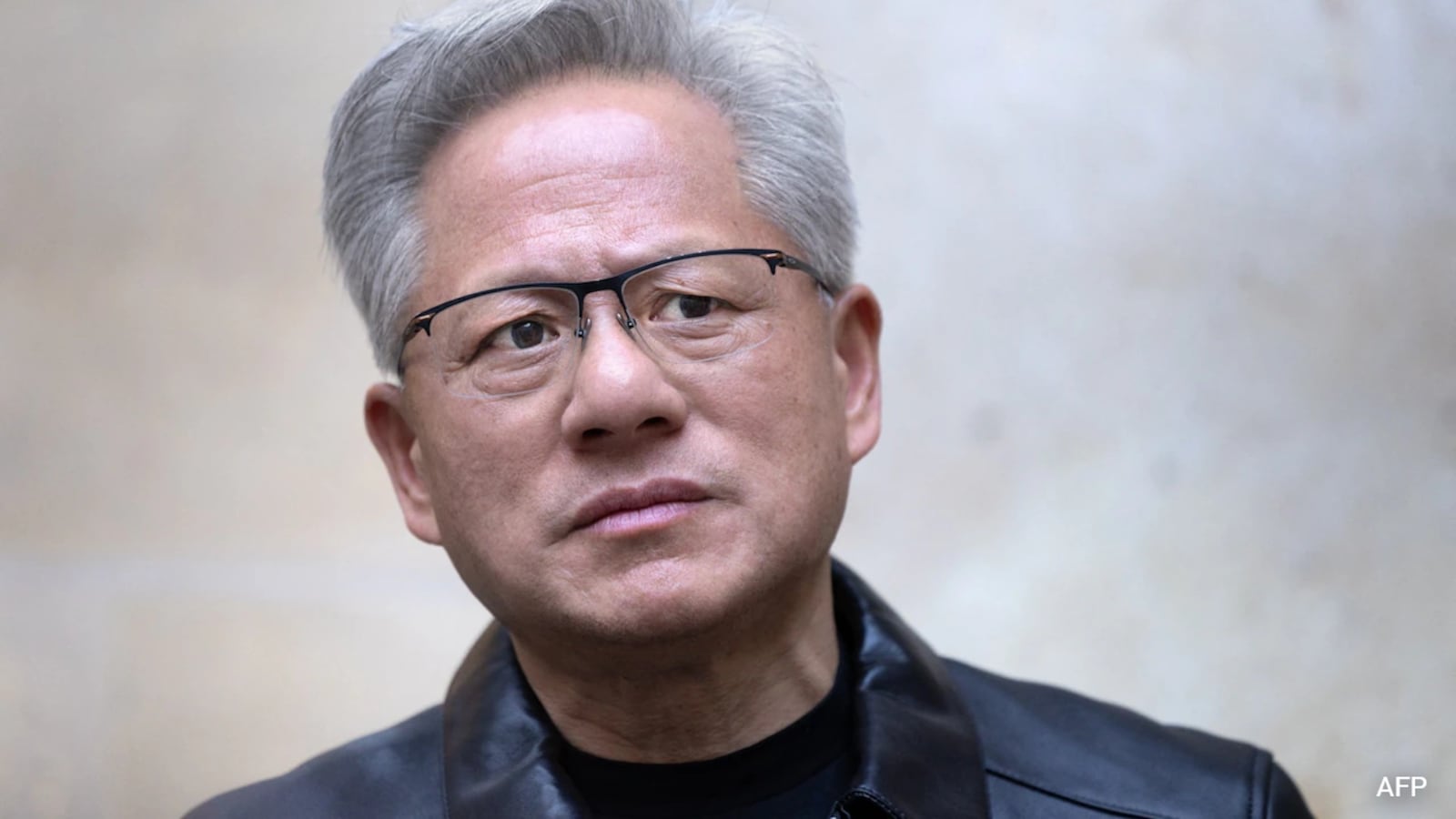
Nvidia has spent three decades becoming one of the most powerful companies in the world but it now faces a difficult situation.Its board of directors must investigate its own chief executive, Jensen Huang, a man whose leadership has been central to Nvidia's rise and whose influence inside the company is difficult to challenge.The development comes after Huang admitted on Sunday to having an extramarital relationship with a businesswoman whom US intelligence agencies have identified as a Chinese spy.The matter has put Nvidia's 10-member board under scrutiny. Many of its members have known Huang for decades, backed his decisions and benefited enormously from the company's success.A class-action shareholder lawsuit against Nvidia and Huang was also filed on Monday in the US District Court for the Northern District of California.A Board That Has Rarely Challenged HuangNvidia's board is made up of early investors, longtime business associates and experienced executives. Together, its members have spent 161 years serving on the board.However, that long association with Huang could now become a problem. Three former employees told The New York Times how Huang has largely treated the board as a governance requirement rather than an important part of Nvidia's business strategy or decision-making.His management style has also kept him firmly at the centre of the company's operations. Huang has more than 60 direct reports and prefers a structure with fewer layers of management, allowing him to make major decisions quickly.That approach has helped Nvidia move fast in the highly competitive technology industry. However, it has also made the company heavily dependent on one individual.The board's immediate responsibility will be to appoint independent outside counsel to investigate the matter. A company spokesperson said Huang would have no role in selecting the counsel. He will, however, continue to run Nvidia while the investigation is underway.No Clear Successor To The Man Who Built NvidiaAnother major question facing Nvidia is what happens when Huang eventually steps down.The 63-year-old has been so closely associated with the company's growth that there is no obvious internal candidate ready to take over his job.Former Nvidia executives told The New York Times that succession planning had been discussed internally over the years. However, Huang was not keen on the idea.Rene Haas, the chief executive of chip design company Arm Holdings, worked at Nvidia between 2006 and 2013. Speaking to The New York Times, he said Huang believed naming a possible successor could create divisions among senior executives."He didn't like the idea," Haas said. "He felt it would create competition among executives and be divisive."Huang himself has previously suggested that he has no plans to leave anytime soon. In 2023, he said he believed he could continue running Nvidia for another three or four decades.Early Investors Have Made Billions From NvidiaIn 1993, when Nvidia was still a small start-up making chips for video games, Sequoia Capital and Sutter Hill Ventures led a $2 million funding round. Their investors, Mark A. Stevens and Tench Coxe, joined the company's board.The investment eventually turned into one of Silicon Valley's biggest success stories.Stevens and Coxe are now among Nvidia's largest individual shareholders after Huang. When Stevens last sold shares in September, his stake was valued at $6.22 billion. Coxe's stake was worth $5.62 billion when he last gave away shares in November.Huang remains the company's biggest individual shareholder, owning 3.56 per cent of Nvidia.Other board members have also benefited enormously from the company's rise. Harvey C. Jones, a former chief executive of software company Synopsys, and A. Brooke Seawell, its former chief financial officer, joined Nvidia's board in the 1990s. Their combined Nvidia holdings were worth $1.86 billion as of June.Huang's Family Also Has Key Roles At NvidiaHis three family members also hold important positions in the business, The New York Times reported citing five current and former employees.His son, Spencer, is a director of product management and plays a leading role in Nvidia's robotics work. His daughter, Madison, is a senior director of product marketing and is involved in robotics, communications and marketing.His son-in-law, Nico Caprez, works in business development.Their positions have led some people within the company to believe Huang could be preparing his children for leadership roles in the future.However, Huang has played down the possibility of his daughter taking over from him. Asked in an interview last month whether Madison could eventually succeed him, he said, "I don't wish the job on her."'There Will Never Be One Like Me'Huang has previously defended his leadership structure, arguing that the company's board has the power to remove him if it believes he is not doing his job.In January, he said, "If the CEO doesn't do his job according to 12 or 15 board members, the CEO is let go."However, he also made it clear that he sees his relationship with Nvidia as something that cannot easily be replicated."There will never be one like me, and the reason for that is because I was raised by the company," he added.
"There'll Never Be One Like Me": Jensen Huang's Nvidia Faces A Succession Crisis
Full Article
Original Source
Read the full article at Ndtv →KhanList aggregates and links to publicly available news content. We do not host full articles from third-party sources. Always verify important information with original sources.