
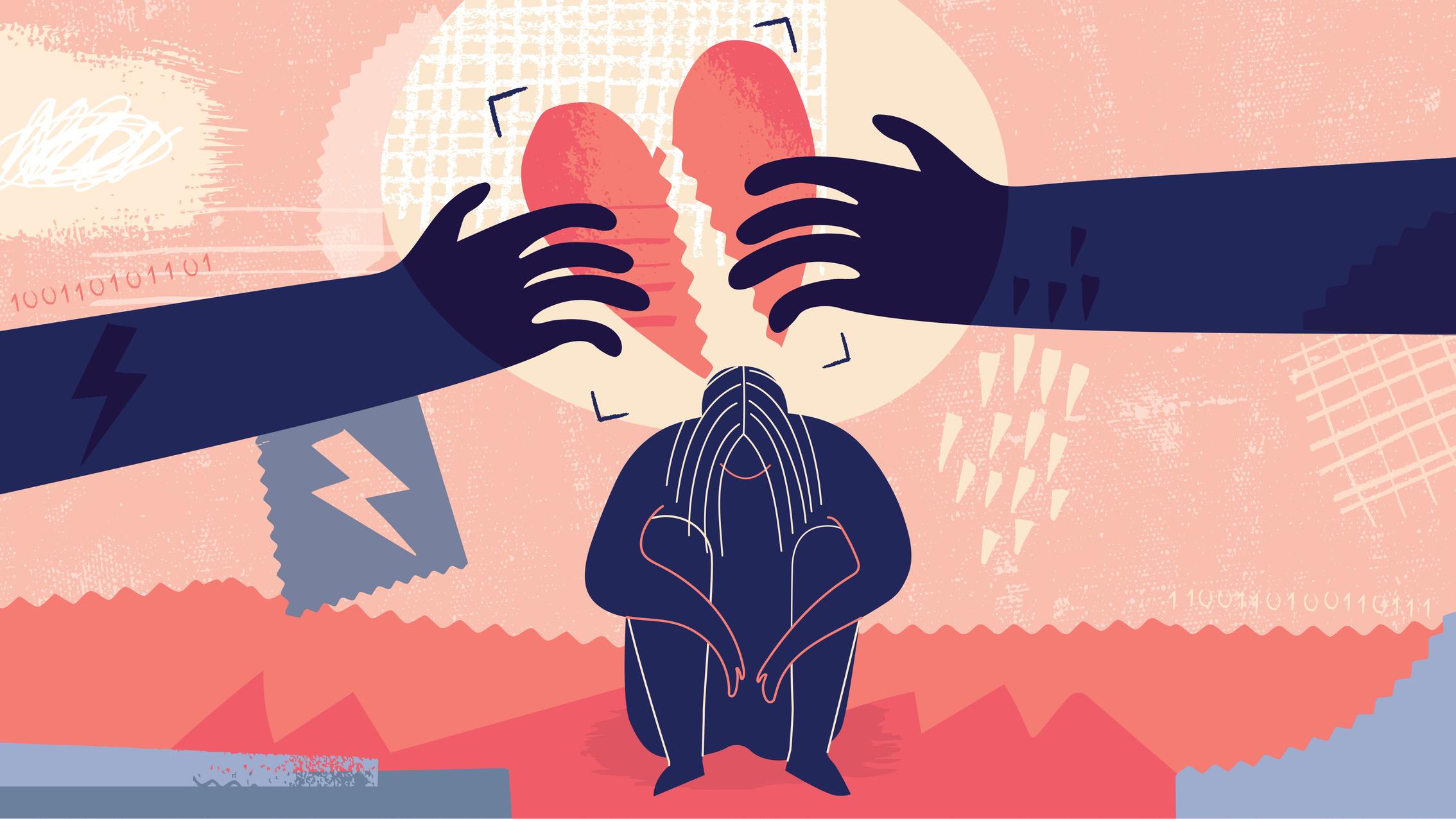
Some relationships need to end. Years ago, I treated a woman whose husband was deliberately trying to drive her toward suicide while attempting to extract money from her family. What struck me was not only the cruelty of his behavior, but his complete lack of empathy or remorse for the harm he was causing. Leaving him was necessary, and the woman is now happily remarried.Most troubled relationships look nothing like that. They involve disappointment, resentment, misunderstanding, conflicting needs, old wounds, and people who have never learned how to reconcile after hurting one another. In more than 20 years of clinical practice, that extreme case remains the only time I directly recommended divorce.Mental-health professionals have become remarkably good at helping clients identify unhealthy relationships. We have a sophisticated vocabulary for boundaries, trauma, toxicity, narcissism, gaslighting, and emotional safety. But I worry that we are far less effective at helping people navigate difficult but meaningful connections.There is an irony here. Psychotherapy itself is predicated upon the healing power of human connection, yet therapists can be surprisingly quick to undervalue relationships outside the therapy room. Furthermore, relationships themselves teach basic psychological capacities such as regulating emotions, tolerating disappointment, and negotiating differences—skills which therapy is supposed to cultivate.Too often, we mistake relational distress for relational dysfunction. Wall Street Journal columnist Elizabeth Bernstein recently highlighted this eloquently. She reported on therapists who encouraged adult children to go “no contact” with their parents, often after surprisingly little effort to mend ruptures. In a survey of roughly 7,000 estranged parents, one-third believed their adult child’s therapist had influenced or even recommended the decision to cut ties. That should give us pause.The issue extends well beyond parents and children. Similar patterns appear in marriages and among siblings, friendships, and other close bonds. Therapists have become too quick to support ending difficult relationships instead of helping people develop the skills to repair them.In reality, walking away from another person often solves one problem while creating others. Increasingly, my practice sees clients who have ended relationships that took a lifetime to build. The immediate conflict may be gone, but so is the connection. Many become lonelier and less equipped to navigate conflict, disappointment, and repair elsewhere.Tragically, many who end contact with loved ones also become more distressed in the long run, since close relationships are a foundation of mental health. Maintaining social connection is a form of “fitness” that requires ongoing cultivation. Even when strained or difficult, human bonds provide belonging, support, identity, and resilience. That may matter more now than ever, as many meaningful in-person social interactions are dwindling in the face of digital alternatives.I learned this lesson the hard way about 15 years ago.A woman came in because she was deeply concerned about her husband, who had obsessive-compulsive disorder. We eventually got him into treatment. He worked hard, completed difficult exposure therapy exercises, and improved considerably. By the standards I had been trained to use, the treatment was successful. But their marriage was not. His wife remained deeply unhappy, and their connection deteriorated. Eventually he lost most of his hard-fought progress, and she fell into clinical depression. Looking back, I can see the mistake clearly: we treated the patient and his symptoms, but not the relationship itself.This reflects something larger about how mental-health care is generally structured. Our system is overwhelmingly individualistic. Diagnostics assign disorders to individuals, and insurance reimbursement follows an identified patient and his or her diagnosis. Even family psychotherapy is typically covered only when it is being used to treat an individual’s mental health. That model may make sense in other areas of medicine, such as orthopedics where a fracture occurs within one body. Mental health is fundamentally different. A great deal of flourishing and suffering happens between people, not just within them, because human beings are relational beings.A second structural problem is that mental healthcare increasingly pathologizes ordinary negative emotions. That can backfire. Excessive focus on distress tends to amplify it. As an anxiety specialist, I know this pattern well. Avoidance may bring immediate relief, but over time it reinforces fear and reduces our capacity to tolerate discomfort. Effective treatment does the opposite: it helps people face distress so they become more capable to withstand adversity, not less. Applied to relationships, this becomes especially critical because even the healthiest connections generate some strain. Loving spouses disappoint us, supportive parents fail us, close friends misunderstand us, and even terrific children create enormous stress. If stress itself is taken as evidence that a relationship is unhealthy, the normal difficulties of human interaction begin to look pathological.Therefore, therapy should do more than help people identify what’s wrong with their relationships. It should build our capacity to sustain connection and repair ruptures: to tolerate disappointment, take responsibility for our own contribution to tensions, set limits without reflexively severing ties, and accept what another person may never be able to give us.These skills matter beyond any single relationship. Learning how to reconnect with a spouse can make us better caregivers. Learning how to accept a parent’s limitations can change how we relate to our friends, work colleagues, and children. Working through difficult interactions can both preserve meaningful connections and strengthen our ability to navigate other ones.Mel Robbins captured this idea in accessible language through her book, The Let Them Theory. Her core insight is simple: stop trying to control other people. Let them disappoint you, disagree with you, and make choices you don’t like. Then decide how you want to respond.That message matters because a great deal of interpersonal conflict comes from trying to force others to change. We want parents to be more emotionally available, spouses to react differently, siblings to finally understand us, and adult children to make choices we approve of. Sometimes change is possible and can be requested directly upon the foundation of a loving connection. But sometimes the wiser move is to stop demanding that another person change as a condition of staying in contact with them.Unfortunately, some of my academic and clinical colleagues have dismissed this approach. I think they are missing something critical. Leaving is sometimes necessary, but far more often the harder and healthier work is learning how to stay connected to imperfect people without surrendering ourselves, or trying to control them.Human beings need relationships. Relationships require skills. Therapy should help us build them.
Therapy Has a Relationship Problem
Full Article
Original Source
Read the full article at Time →KhanList aggregates and links to publicly available news content. We do not host full articles from third-party sources. Always verify important information with original sources.