
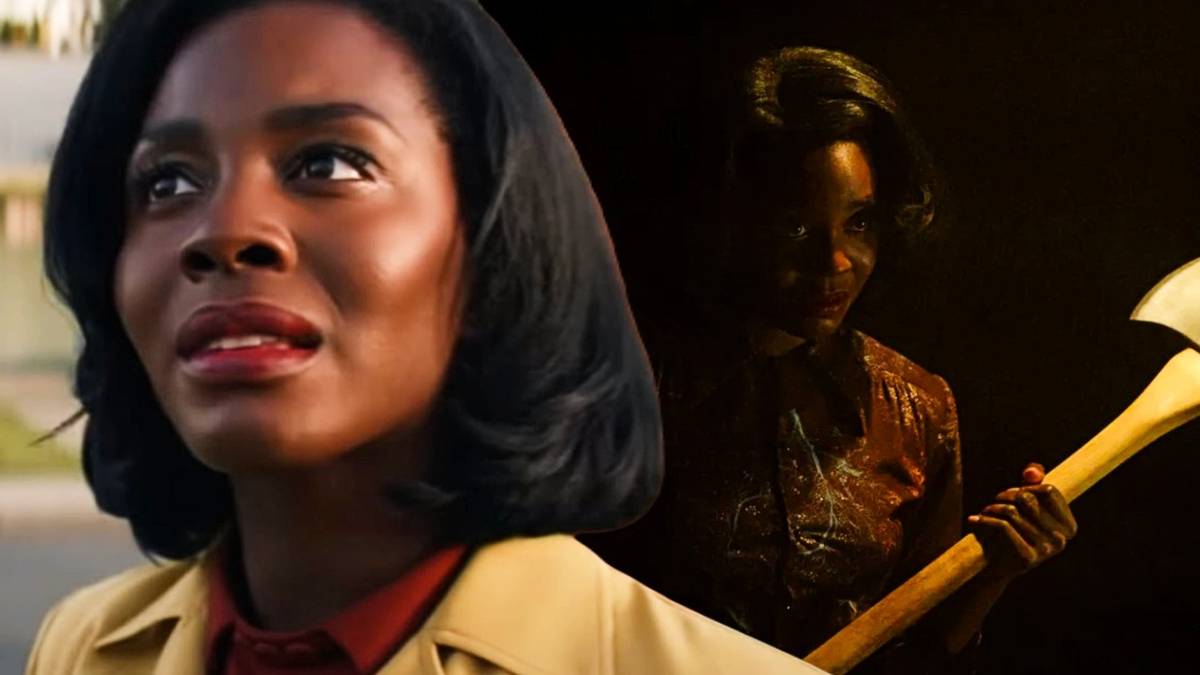
Custom image by Stephen Barker Updated Nov 9, 2026, 5:46 PM EST Sign in to your ScreenRant account Amazon Prime Video's gripping horror anthology series captivated audiences with its chilling portrayal of the Emory family's descent into darkness, and while it was full of mystery, Them season 1's ending explained everything. Set in 1950s America, the show navigates themes of racial injustice, trauma, and the supernatural, offering a haunting reflection on the horrors that lurk both within and beyond the shadows. As the Emory's relocate to East Compton in search of a fresh start, they soon find themselves trapped in a nightmare beyond comprehension. Supernatural forces and racist neighbors alike conspire to torment the family, testing their resilience and threatening to tear them apart. As the season progresses, tensions escalate, culminating in a harrowing showdown in the season 1 finale. The Emorys confront their tormentors and the dark forces that have besieged them, facing their fears head-on in a battle for survival. The Devolution Of The Emory House The House Becomes A Twisted Reflection Of The Emory's Deepest Fears The Emory house, initially presented as a beacon of hope and new beginnings, undergoes a chilling transformation throughout Them season 1. At first glance, the haunted house in Them embodies the quintessential American Dream—a spacious home in a picturesque neighborhood, promising safety and prosperity for the Emory family. However, as the narrative unfolds, the house gradually reveals its sinister underbelly, becoming a nightmarish prison that traps the family in a web of terror. The once-inviting interiors become imbued with an aura of dread, with each room concealing secrets and horrors beyond imagination. Within the walls of their once-promising sanctuary, the Emory house undergoes a chilling metamorphosis, becoming a twisted reflection of the family's deepest fears and traumas. Henry's attempts to return to safety are thwarted by the sinister machinations of the house itself, trapping him in a surreal maze of shifting realities and haunting memories. As the physical and supernatural boundaries blur, the home becomes a battleground for the Emorys' struggle for survival. The house often plays tricks on the Emory family, such as when the bathroom becomes Ruby's high school restroom, playing with her anxieties. Lucky Saves The Emory Family & Overcomes Her Grief Lucky Finds Redemption & Healing Years After The Loss Of Her Son In the climactic showdown of Them season 1, Lucky Emory emerges as a beacon of strength and resilience, confronting the supernatural forces that threaten to tear her family apart. Central to this confrontation is her battle with the enigmatic Black Hat Man, an evil spirit that embodies the darkest aspects of racial oppression and trauma. As the embodiment of the Emorys' deepest fears and insecurities, Black Hat Man is a formidable adversary, manipulating their emotions and exploiting their vulnerabilities with chilling precision. The Black Hat Man, played by Christopher Heyerdahl, is also Hiram Epps, the entity behind the neighborhood's malevolent nature in Them season 1. Nearly all the ghosts in the 1953-set season give small hints that they are different forms of Hiram Epps. Throughout the season, Lucky grapples with profound grief and guilt stemming from the tragic loss of her infant child, Chester. Haunted by the specter of her son's death, she struggles to find solace amidst the chaos and horror that surrounds her. However, as the season reaches its climax, Lucky undergoes a transformative journey of self-discovery and empowerment, ultimately finding the strength to confront her inner demons and face the horrors that threaten her family. In a powerful act of defiance, she refuses to let her son's memory be tarnished by the darkness that surrounds her, reclaiming her agency and asserting her identity as a survivor. As she confronts Black Hat Man, one of Them's scariest ghosts, Lucky undergoes a profound transformation. She sheds the shackles of her grief and embraces the promise of a new beginning. In a powerful act of defiance, she refuses to let her son's memory be tarnished by the darkness that surrounds her, reclaiming her agency and asserting her identity as a survivor. Through her courageous actions, Lucky saves her family and finds redemption and healing, emerging stronger and more resilient than ever before. In the finale, Lucky saves Gracie from Miss Vera first, and Gracie even helps by ripping up the book. Lucky then releases the pain and heartbreak of losing Baby Chester and confronts the demon by letting him know she sees him for the broken man he is, because he, too, lost a child. She shouts the words "I'm right here, I see you" in defiance of Hiram, which cripples him and forces him to face the unjust pain he inflicted upon the Black family in his town. Henry Is Haunted By Demons From The Past The Malevolent Forces Take Advantage Of Henry's Past To Manipulate Him Throughout Them season 1, Henry Emory's character arc is defined by his harrowing struggle with post-traumatic stress disorder and the lingering traumas of his past. As a veteran, Henry carries the weight of his wartime experiences, haunted by World War II memories of violence, loss, and survival. His PTSD manifests in a variety of ways, from debilitating flashbacks and nightmares to episodes of intense emotional distress, rendering him vulnerable to the horrors that unfold in East Compton. Henry's battle with his inner demons is exacerbated by the pervasive racism and hostility that he encounters in his new neighborhood. As a Black man living in a predominantly white community, he faces constant discrimination and harassment, further exacerbating his feelings of isolation and despair. Moreover, the supernatural hauntings that plague the Emory house serve as a constant reminder of the trauma that Henry has endured, triggering his PTSD and exacerbating his mental anguish. Despite his struggles, Henry demonstrates remarkable resilience and courage in the face of adversity. Throughout the season, he fights tirelessly to protect his family and confront the malevolent forces threatening their safety. However, as the horrors of East Compton escalate, Henry's mental state deteriorates, pushing him to the brink of despair. Ultimately, his journey is a testament to the enduring legacy of trauma and the resilience of the human spirit, as Lucky forgives him for not being there, and he confronts his inner demons and finds redemption amidst the darkness. Da Tap Dance Man, Explained His True Identity Is A Reminder That Perpetrators Of Racial Violence Often Hide Behind Masks Among the myriad evil spirits that haunt the Emory family in Them season 1, Da Tap Dance Man emerges as a particularly sinister and enigmatic figure. His unsettling presence looms large throughout the season, serving as a chilling embodiment of rage, manipulation, and racial oppression. Da Tap Dance Man's eerie tap-dancing and haunting visage evoke a sense of dread and unease, signaling his nefarious intentions and malevolent influence over the Emorys. Throughout the season, Da Tap Dance Man's actions and motivations remain shrouded in mystery, adding to his aura of menace and making him the scariest part of Them season 1. He exerts an evil influence over the Emorys, exploiting their fears and insecurities for his own twisted purposes. By masquerading as a spectral embodiment of Black trauma and suffering, Da Tap Dance Man symbolizes how systemic racism dehumanizes and exploits marginalized communities. The reveal that Da Tap Dance Man is, in fact, a White man underscores the pervasive influence of White supremacy and racial violence in the lives of Black people. By masquerading as a spectral embodiment of Black trauma and suffering, Da Tap Dance Man symbolizes how systemic racism dehumanizes and exploits marginalized communities. His true identity serves as a stark reminder that the perpetrators of racial violence often hide behind masks of anonymity, perpetuating cycles of oppression and injustice with impunity. Even though Da Tap Dance Man is revealed to be a White man, the ghost is played by Black actor Jeremiah Birkett. Every Them Episode In Which Da Tap Dance Man Appears Season Episode Episode Title 1 3 "DAY 4" 1 4 "DAY 6" 1 6 "DAY 7: MORNING" 1 7 "DAY 7: NIGHT" 1 8 "DAY 9" 1 10 "DAY 10" 2 8 "The Box" The Emory’s Struggle For Acceptance Reflects Current Issues In The U.S. Them Is A Powerful Reminder Of The Importance Of Confronting Systems Of Oppression The Emory family's ordeal in East Compton is a poignant reflection of the pervasive struggle for acceptance and equality that continues to plague American society. From the moment they arrive in their new neighborhood, the Emorys are met with hostility, racism, and discrimination from their White neighbors. This mirrors the real-life experiences of countless individuals and communities who face systemic bigotry and marginalization daily. The Emorys' struggle for acceptance underscores the deep-rooted divisions and inequalities that persist in American society, highlighting the stark disparities in power, privilege, and opportunity that exist along racial lines. Despite their best efforts to integrate and assimilate into their new community, the Emorys are met with suspicion, hostility, and violence, revealing the enduring legacy of racism and prejudice that continues to shape the lives of marginalized communities across the country. In confronting the racism and discrimination they encounter in East Compton, the Emorys become unwitting participants in a larger struggle for social justice and equality. Their experiences serve as a powerful reminder of the importance of confronting and dismantling oppression, discrimination, and inequality systems to create a more just and equitable society for all. Ultimately, the Emorys' story serves as a call to action, challenging viewers to confront their biases and prejudices and work towards a future where acceptance, equality, and justice are not just ideals but realities for all. The Real Meaning Of Them’s Season 1 Ending The Season Finale Is A Testament To The Power Of Courage & The Enduring Human Capacity For Survival The Emorys are confronted with a barrage of supernatural and all-too-real horrors. From the evil spirits that haunt their home to the relentless racism and discrimination they face in their community, the Emory's are pushed to their limits and forced to confront the darkest aspects of humanity. Yet, despite seemingly insurmountable odds, they refuse to be broken, finding strength and solidarity in their shared struggle. At its core, the ending is a testament to the resilience of the human spirit as the Emory's confront their inner demons and reclaim their power in the face of overwhelming adversity. In the finale, Lucky first has to escape the asylum. She then marches up the steps into her house while a sea of flames sprouts up behind her. When Lucky faces down Hiram Epps, the Black Hat Man, she overcomes his illusions by standing her ground. Lucky saves Gracie, Ruby and Henry from their separate nightmares, and the Emory family is still standing at the end. How Them Season 1's Ending Was Received The Finale Was Enough To Carry The Show On For A Second Season For the most part, the ending of Them season 1 (titled THEM: Covenant) was received well by both fans and critics - as evidenced by the fact that Amazon optioned Them season 2, titled THEM: The Scare, which arrived several years later in 2024. The final episode of the anthology show's first season wrapped up its many mysteries nicely, bringing the plot to a satisfying albeit chilling conclusion that left many viewers clamoring for a second installment despite there not being lingering questions. In particular, many critics commented on the sense of relief that came with many of the moments in the Them season 1 finale. Few shows in recent years have been as tense, and there were some genuinely cathartic victories for the Emory's before the credits rolled for the last time. As Mekeisha Madden Toby put it when writing for TVLine: "The words “I see you” have never sounded and felt so good. Thank you, Queen Lucky. Thank you." That being said, the praise for the last episode of THEM: Covenant wasn't universal. There were several critics and fans alike who found "Day 10" to be somewhat anticlimactic. It should be noted though that this criticism also seemed to extend to the final few episodes of the season in general, rather than the absolute last being a sudden downward turn. In particular, many noted that Them season 1 seemed to mishandle the stories of several of its characters. This was pointed out by Greg Wheeler in his review for The Review Geek: "Betty’s story has been completely butchered. Early on, the show has some really interesting juxtapositions between her and Lucky. But yet, right at the end it renders everything about her progression pointless if she was just going to be killed off unceremoniously like that." Wheeler also went on to point out another recurring criticism among those who didn't quite enjoy the ending of Them season 1. The general consensus among the naysayers is that the final chapter may have explained many of the lingering mysteries, but the answers to the show's many questions weren't really satisfying. While the show did technically resolve its many mysteries, there were some, like Wheeler, who found the explanations weren't substantial enough to warrant the tension and intrigue built up across the earlier episodes of the season: "In the end, Them is a show big on themes but lacking in substance. Behind the glossy façade and gorgeous aesthetic is a show that slips up where it matters most – the story. The plot isn’t outright bad, but it does have a bad ending which makes for a bit of a sour experience overall." Did Them Season 1 Or Season 2 Have A Better Ending? Both Seasons Had Similar Themes But Different Outcomes Both seasons of Them have similar endings, with a mother fighting to save her family. In the first season, Lucky faced her inner demons and refused to give in to the hate, defeating her monster in this way. In the second season, Dawn realized that she was part of the problem, and her status as a Black woman meant she could not be part of the solution to an otherwise racist organization. She also defeated her monster but in a different manner. The second season hit a little harder and showed more nuance in its morality tale about today's society. Release Date 2021 - 2024-00-00 Showrunner Little Marvin Writers Little Marvin The new story centers on LAPD Homicide Detective Dawn Reeve, who is assigned to a new case: the gruesome murder of a foster home mother that has left even the most hardened detectives shaken. Navigating a tumultuous time in Los Angeles, with a city on the razor’s edge of chaos, Dawn is determined to stop the killer. But as she draws closer to the truth, something ominous and malevolent grips her and her family… In both situations, Lucky and Dawn found themselves living in a society and situation that marginalized them and their families and offered no easy solutions. The first season was about fighting to overcome personal demons, which was a nice ending to a fictional series. The problem is that personal demons are not the real problem Black people face in modern-day America. The second season hit a little harder and showed more nuance in its morality tale about today's society. In the second season, Dawn kills a racist police officer who is willing to kill her to frame her for crimes. She overcomes her demons and saves her brother's soul through an act of love, not violence. What changes is that the ending shows her superiors would have brought her down for the earlier act of self-defense if she had not recorded it. Understanding this, she quit the police force, bonding with her son, as she was now no longer part of the problem, helping Them hit notes the first season's finale missed.
Them Season 1 Ending Explained: What Happens To The Emory Family In The Amazon Prime Video Show
Full Article
Original Source
Read the full article at Screenrant →KhanList aggregates and links to publicly available news content. We do not host full articles from third-party sources. Always verify important information with original sources.