
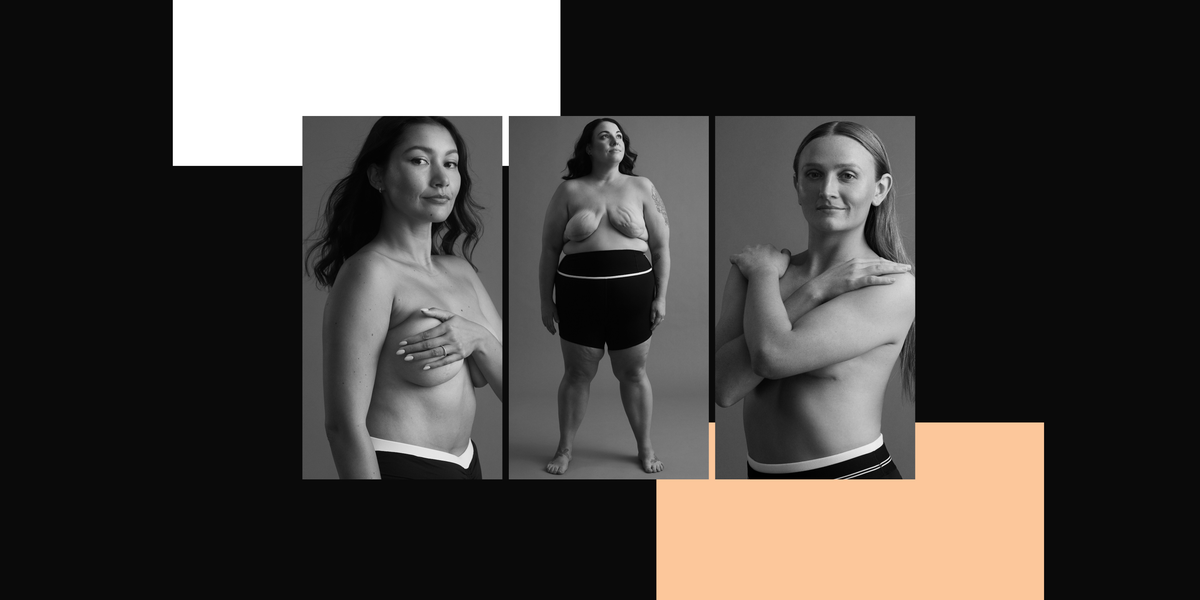
15 min readThis piece is part of a series of stories on the breakthroughs reshaping breast cancer screening and prevention to personalize care, detect cancer earlier, and save lives. Read the rest of the stories here. Gabrielle Hansen had suspected from a young age that she was at higher risk for developing breast cancer. A 29-year-old from Buffalo, New York, Hansen has blue eyes and a sheet of strawberry blonde hair. She is funny and matter-of-fact, and describes her family history with cancer without any detectable self-pity. When she was a toddler, she says, her mother, who was then 35, had been diagnosed with stage II breast cancer. A breast cancer diagnosis before middle age can indicate the presence of mutations in the BRCA1 or BRCA2 genes. These mutations can increase a woman’s likelihood of getting breast cancer from 13 percent (the risk of the average woman) to up to 72 percent.In 2011, when Hansen was 14, her mother received genetic testing and confirmed that she carried a BRCA2 mutation. Eight years later, Hansen’s older sister received the same result. Hansen knew she should get tested as well, but she was slowed by the inertia of her early 20s, when building a life and a career seem so urgent. Given her mother’s cancer and her sister’s test results, Hansen was disciplined about beginning routine screenings at 25; her insurance covers screenings starting 10 years prior to the age at which a first-degree relative received a cancer diagnosis. But the possibility of cancer still felt far-off. “In my mind, I thought, I have until I’m in my mid-30s,” she says.But in 2024, when Hansen was 27, her sister, then 30, was diagnosed with stage III breast cancer. Her sister had also been receiving regular screenings since she found out she carried the BRCA2 mutation and even had a cancer-free MRI within the year; her cancer had developed quickly. (Both Hansen’s mother and her sister are survivors.) That August, shortly after moving to Chicago, where she’d long dreamed of living, Hansen decided to get genetic testing done at Northwestern Medicine. She was unsurprised when she tested positive for the BRCA2 mutation. The result, and the pain of watching chemotherapy poison her older sister’s typical optimism, galvanized her. Her mother accompanied her to a high-risk breast clinic to discuss her test results with a genetic counselor.Hansen then had a choice to make: She could continue to receive biannual screenings, alternating between MRIs and mammograms as she had done for the past two years, or she could consider a risk-reducing surgery—namely, a prophylactic (preventive) double mastectomy, in which breast tissue from both breasts is removed. For women who carry BRCA variants, prophylactic double mastectomies can reduce the risk of developing breast cancer by up to 95 percent. Hansen and her mother listened patiently as the counselor laid out her options, but she knew she wanted the surgery. Having watched her mother and sister navigate cancer, Hansen felt that she’d merely be screening until she received a diagnosis—that it wasn’t a matter of if she’d get breast cancer but when. “I really felt like a ticking time bomb,” she says.Rona AhdoutHansen, 29, photographed with expanders as she awaited to receive new implants. She had her final reconstructive surgery in September.This past winter, Hansen underwent a direct-to-implant double mastectomy, in which breast implants are inserted right after the breast tissue is removed. But soon after the surgery, she noticed some dead tissue close to her nipples. She was prescribed broad-spectrum antibiotics and had weekly follow-up appointments with her plastic surgeon. Without complications, recovery from a mastectomy generally takes three or four weeks, during which patients must be careful to avoid disturbing their incisions or drains—tubes that remove the fluid that builds up under the skin after surgery—and longer for patients who receive a breast reconstruction in the same surgery. But it was unusual when, six weeks after her surgery, her skin still didn’t seem to be healing. Hansen was going to work every day at the Veterans Association, where she is a pharmacist, but she felt exhausted as her body tried and failed to heal. “It was the lowest I’ve ever felt,” she says. When her surgeon told her they’d have to remove the implants, she sobbed.Once her implants had been removed, Hansen was relieved to see her skin healing, but her chest would have to remain flat for at least three months. She decided she didn’t want to go through with her next reconstruction surgery over the summer and postponed it, then postponed it again to avoid interfering with the holidays. This past March, after being flat for nine months, she got expanders. These are temporary inflatable implants inserted during or after a mastectomy to gradually stretch tissue and create a pocket for new breasts. In September, she had a successful breast reconstruction.Hansen is part of a growing cohort of young women who learn that they have a high risk of developing breast cancer but who have not been diagnosed—many of whom call themselves “previvors”—and choose to undergo prophylactic double mastectomies. Where traditionally women might have postponed these procedures until they neared the age at which a relative got cancer, until they had finished having children, or for any other number of reasons, surgeons have noticed an upswell in interest in this risk-reducing surgery from women in their 20s and early 30s.“I would 100 PERCENT do it all again because, despite the complications, I DON’T have cancer. I find a lot of PEACE in that.” —Gabrielle HansenThe uptick in young women choosing preventive mastectomies comes as breast cancer incidence rates rise among women under 50, and one in eight women are expected to receive a breast cancer diagnosis in their lifetime. “There’s a lot more emphasis these days on people getting cancer at younger ages,” says Anne Peled, MD, a surgeon in San Francisco who performs around 150 preventive mastectomies annually. Dr. Peled, a breast cancer survivor herself, has noticed heightened anxiety among her patients. “Someone recently came to me who wanted to talk about a risk-reducing mastectomy,” she says. “When I talked to her, she didn’t have any family history and no other risk factors. I was trying to figure it out. And she was like, ‘I just think one in eight women getting breast cancer is too much.’”Dr. Peled explained to the woman that a prophylactic mastectomy isn't typically recommended without any indication of a genetic risk or strong family history, and the surgery wouldn’t change her survival outcome if she did develop breast cancer. “I try to bring down the fear, because I do think it’s really scary right now,” she says. It’s even scarier for women who learn that they are high-risk. The majority of breast cancer diagnoses are “sporadic,” meaning they occur by chance without an inherited gene mutation. However, those who do find they carry a genetic mutation—or have a strong family history of breast cancer, which is also possible without inheriting a mutation—must weigh challenging risk-reducing surgeries against the possibility of a diagnosis.Prophylactic double mastectomies can be physically, mentally, and emotionally grueling. Patients lose the ability to breastfeed, and in some cases, they lose sensation in their breasts, leading to disconcerting numbness and changes to intimacy. The procedures can significantly impact body image. Women also face the same slew of possible complications and side effects that accompany any major surgery, such as bleeding, infection, and pain. But for many previvors, the alternative is far worse. “I would 100 percent do it all again,” says Hansen, “because, despite the complications, I don’t have cancer. I find a lot of peace in that.”Hansen had been acutely concerned about cancer for much of her life due to her family history, but young women who are not aware of alarming family histories are learning more about their breast cancer risk too. The curiosity is driven in part by rising breast cancer rates among young women, but also by celebrities who have followed in the footsteps of Angelina Jolie, who in 2013 publicly shared the news of her BRCA1 diagnosis and the preventive double mastectomy that followed. (Doctors noticed such a marked uptick in interest in genetic testing that they termed it the “Angelina Jolie effect.”) In 2024, Olivia Munn credited a breast cancer risk-assessment test for saving her life, prompting women to assess their own risk. Recently, influencer Alix Earle and her sister Ashtin shared their BRCA2 results on the family’s Netflix show, Earle Meets World.Women are also learning from each other on social media, seeking out genetic testing after connecting with a previvor on Instagram, and evaluating their options with the help of Reddit communities and Facebook support groups. “We’re in a time where people are trying to be more proactive about their health,” says Dr. Peled. This proactiveness, along with advances in imaging technology, are leading to a shift toward a more personalized, risk-based approach to breast cancer screening and prevention. “That may mean doing genetic testing. That may mean understanding family history better. That may mean getting breast cancer screening tests done earlier and more frequently if you’re high-risk.”Genetic testing has become much more accessible since Jolie brought awareness to the BRCA1 mutation more than a decade ago. Testing for BRCA1 and BRCA2 has been available to women since 1996, but even when Hansen’s mother was tested in 2011, it was not common. Women who were aware of genetic testing often worried that insurance companies would use their BRCA variants to deny them policies or charge them more for coverage. Until the Genetic Information Nondiscrimination Act of 2008, genetic test results could inform insurance companies’ coverage decisions—and the cost of testing, sometimes thousands of dollars, could be prohibitive. Now, many insurance companies will cover the cost of testing for those who meet certain personal and family history criteria. For those who don’t, the out-of-pocket costs are around $250.And there are far more resources available to help a woman interpret a genetic testing result, which can be overwhelming even if a woman was expecting it. “There are a lot of emotions connected to genetic testing,” says Versha Pleasant, MD, MPH, director of the Cancer Genetics and Breast Health Clinic at University of Michigan’s Von Voigtlander Women’s Hospital. “There can be emotions of fear. There can be emotions of anxiety. Of guilt. I’ve heard some patients say they feel like they have a target on their back. For some people, it can also be empowering…to know that there’s something they can do to intervene early or reduce risk of cancer altogether.”Genetic counselors, who help patients interpret the results of their genetic testing, do not casually recommend prophylactic double mastectomies to young women. When someone tests positive for a BRCA mutation, they might first suggest earlier and more intensive screenings, along with lifestyle changes that have been proven to lower cancer risk, such as exercising more and drinking less. They could suggest chemoprevention (medications that can reduce the lifetime risk of breast cancer, such as tamoxifen). Then there are the risk-reducing surgeries. In addition to a prophylactic double mastectomy, they may recommend a bilateral salpingo‐oophorectomy (the removal of the ovaries and the fallopian tubes) since a BRCA mutation also increases the risk of gynecologic cancers.When new patients come to Dana Farengo Clark, MS, LCGC, a senior genetic counselor at Penn Medicine who specializes in inherited cancer syndromes such as BRCA variants, she tries to help them understand which option best aligns with their goals for each decade to come. “As a 26-year-old woman, to think about your risk at age 80 is too much,” she says. “It’s overwhelming.” Instead, she asks them about their priorities, then walks them through the risks associated with each decade. If a BRCA-positive woman in her early 20s says nursing a child is important to her, Farengo Clark discusses the risk of getting breast cancer before 30, then the risk from age 30 to 40, and so on. Upon receiving a high-risk test result, patients might feel like they have to act immediately. Farengo Clark urges them to pause, reminding them that a BRCA-positive result is not the same as a cancer diagnosis.But many women arrive with one path in mind: just cut them off. “There has always been a subset of women who come in saying, ‘This is what I want if I test positive,’” says Farengo Clark. She has noticed, for instance, that women who have small children are more likely to explore preventive mastectomies as an option. And women who have seen people close to them suffer through or succumb to cancer, as those with high-risk genetic results often have, may also be more motivated to pursue a preventive double mastectomy. Sometimes, however, it’s a little more complicated than that.When Taylor Canter, a dynamic 35-year-old nurse in northeast Ohio, tested positive for the BRCA1 mutation at age 30, she was told she had an 87 percent chance of a breast cancer diagnosis in her lifetime. She had seen her mother die from colon cancer at age 48, just a week after going to the hospital with a stomachache. She had also watched her father, who had colon cancer, lymphoma, and vocal cord cancer, go through several rounds of chemotherapy. Still, she decided to get regular screenings rather than get surgery immediately. “I probably would have waited until I was 40,” she says. “I don’t like to slow down. I always like to have something to do, or a project or an adventure.”Rona AhdoutCanter, 35, on her decision to receive a preventive double mastectomy: “I feel like I’ve gained so much independence and confidence. I don’t have to schedule my life around my screenings anymore.”As Canter underwent screenings every six months, her risk weighed on her. Then, last October, her biannual scan showed a suspicious mass. A biopsy revealed that the mass showed precancerous changes, but it was not yet cancer. Still, Canter was shaken, and she decided to get the surgery. In February she had a double mastectomy, opting to remove her nipples. She also had a total hysterectomy with a bilateral salpingo-oophorectomy eight weeks later. (Hysterectomies aren’t routinely recommended for BRCA carriers, but it’s ultimately up to the patient. Canter had already decided not to have children because of the risk of passing down the mutation.)“I kept waiting for this moment of ‘I’m LOSING part of my WOMANHOOD.’ And it NEVER happened.” —Taylor CanterLike Hansen, Canter’s recovery was also arduous. The two surgeries she’d planned turned into five, due to complications, and the day after her total hysterectomy with a salpingo-oophorectomy she had her first hot flash; the surgery had flung her into menopause. “I have an estrogen patch, and the [mood] swings have been insane,” she says. (For some users the patches, which are meant to help stabilize mood, can cause mood swings as the body adapts to the hormones.) She missed 16 weeks of work. Still, having seen her parents and her patients going through cancer, she’s glad she chose to get the surgeries. “I kept waiting for this moment of ‘I’m losing part of my womanhood,’” she says. “And it never happened.”Instead, she feels she’s gained independence and confidence now that she doesn’t have to schedule her life around her screenings anymore. She wouldn’t plan a vacation after a mammogram in case she got troubling news, for instance, and she would schedule her MRIs so that she had a couple of days off afterward, so that she’d have time to process an upsetting result. She is still shocked when some people in her life question her decision, or remark that she chose the “nuclear option.” “In my mind,” she says, “chemotherapy and radiation is the nuclear option.”Mastectomies and breast reconstruction have evolved significantly over the years to preserve natural appearance and function. Breast implants are still the most common method of reconstruction (which can often be accomplished in the same surgery as breast removal), but doctors can also recreate breasts using tissue from elsewhere in the body. One common method is called a DIEP (deep inferior epigastric perforator) flap surgery. This type of reconstruction uses tissue from the abdomen and, unlike older flap procedures, keeps the abdominal muscles in place. Most women are eligible for mastectomies that spare the skin or the nipple, and surgeons like Dr. Peled have pioneered techniques for preserving and reconstructing nerves in the breast that would typically be cut during a mastectomy, allowing women to retain sensation in their breasts.Still, some medical professionals view the decision to get a double mastectomy without a cancer diagnosis as radical, particularly in cases where a patient’s risk is less straightforward than it is for someone with a BRCA mutation. Surgeons weigh many variables when deciding whether to offer a preventive surgery. “I tend to lean pretty heavily toward guidelines and data-driven outcomes,” explains Natasha Rueth, MD, a surgical oncologist specializing in the diagnosis and treatment of breast cancer at the Mayo Clinic. She performs surgeries on BRCA-positive patients, for instance, without qualms but can be more conservative in other cases, such as when a patient tests positive for a gene mutation that doesn’t increase risk as dramatically as a BRCA mutation.“Years ago, we only knew about BRCA1 and 2,” says Dr. Pleasant. “But as of about 2013 we’d discovered all of these other genes that could elevate the risk of breast cancer and other cancers: ATM, BARD1, CHEK2, CDH1, NF1, PALB2, PTEN, RAD51C, RAD51D, STK11, TP53.” The expansion of our knowledge around these gene mutations is useful, but patients with variants whose risks are unknown, or who don't carry a known gene mutation at all, have a more difficult decision to make.Brianna Majsiak, 32, is a cofounder and chief content officer of The Breasties, a community for people affected by breast and gynecologic cancers, including survivors, previvors, “stage 4 thrivers,” and caregivers. She has smooth brown hair and bright, ever-alert eyes. Growing up she was often told that she looked just like her mother, who had died at 42 after being diagnosed with stage IV breast cancer. “It was such a compliment,” she says of the remarks about their resemblance, “but it also really scared me because I knew that she had passed really young.”When she was in college, Majsiak sought out genetic testing, but she was unable to afford it. Later in journalism grad school, she decided to write about the inaccessibility of testing for her thesis. As part of her research, she attended a support group for people having preventive mastectomies, where she met one of her Breasties cofounders, Paige More. The other attendees were much older than they were, so the two quickly bonded, and then continued to host meetups for people who had been affected by breast or gynecologic cancer. These meetings were the foundation of The Breasties.Rona AhdoutMajsiak, 32, has days where she forgets she had a double mastectomy. “I don’t think about breast cancer every day now,” she says.Encountering so many people affected by cancer inspired her to look into getting genetic testing again, and this time she could afford it. At 22, Majsiak learned that she had a VUS, or “variant of unknown significance.” She had worried her whole life that she was genetically predisposed to cancer and felt frustrated by the vague verdict. “The doctor said to me on the phone, ‘You’re not negative, but you’re not positive.’”A variant of unknown significance is, in short, a change in a gene's DNA sequence that’s not understood yet. When a patient comes to Dr. Pleasant with a VUS, she often compares it to a mole: “We don’t remove every single mole that you see on your skin. We monitor, and if a mole starts to look like it’s developing into something else that’s more concerning, then we act on it.” A VUS is more common in people of color, like Majsiak, whose genomes have not been as deeply studied as individuals of European descent. Sometimes, after a patient discovers they have a VUS, new data allows the VUS to be reclassified, at which point the patient learns definitively whether the variant is harmful or benign. Most of these variants turn out to be benign, but patients whose genetic tests reflect them are still left in an uneasy limbo, waiting for science to catch up to their results.Majsiak was aware that there was not yet enough data to show that her VUS alone would warrant a preventive mastectomy. But she knew she wanted to move forward based on her family history. By age 26, she had decided to get the surgery. The first surgeon Majsiak met with agreed to operate on her, but she could tell she did not fully support her decision, and Majsiak felt uncomfortable during their appointments. “The surgeon said, ‘You know, this isn’t going to be a boob job.’ And I said, ‘I know, I actually really like my chest currently. I don’t really want to do this, I feel like I need to do this.’”She regularly left her appointments in tears. Majsiak knew her mother, who was from Honduras, had struggled to get adequate care despite being a nurse, and she felt disappointed that she, decades later, still had to advocate for herself. “We hear every day from community members, especially community members of color, that they’re not treated well,” she says of The Breasties network. “Someone was sharing last night in our Latinx meetup that she brings her white friend with her to her appointments, so that she feels like she’s taken seriously.”“I feel like my WHOLE WORLD OPENED UP because I’d been so weighed down by what everyone else thought about MY BREASTS and MY RISK.” —Brianna MajsiakUltimately, upon the recommendation of a friend, Majsiak found Dr. Peled, the surgeon in San Francisco. Dr. Peled helped Majsiak get insurance to cover her procedure based on her family history, and in June of 2020, she had a nipple-preserving double mastectomy. (Insurance companies generally cover prophylactic mastectomies for high-risk patients with salient genetic variants but less often for those with strong family histories alone.) She retained almost full sensation in her chest and nipples, and six years later, she frequently has days where she forgets she had a mastectomy at all. “You can have a full life,” Majsiak says. “I do things I never thought I could do, like weightlifting. I don’t think about breast cancer every day now.”Through The Breasties, Majsiak hopes to empower young women facing decisions about preventive double mastectomies. “I think society regards breasts as things that are not yours, the same way that in a lot of medicine and in a lot of the world right now, women don’t have autonomy over their own bodies.” She recalls appointments in which doctors emphasized the importance of breastfeeding and made having a mastectomy seem like “the worst thing you could do.” But since her double mastectomy, she says, “I feel like my whole world opened up because I’d been so weighed down by what everyone else thought about my breasts and my risk.” She and Canter and Hansen have joined a community of young women who have decided that their breasts don’t belong to anyone else. And they certainly don’t belong to cancer.Photographs: Rona AhdoutStyling: Jasmine FontainaHair: Griselle Rosario using PatternMakeup: Deborah Altizio using ILIA Cosmetics for TraceyMattingly.comManicure: Yukie Miyakawa using DiorVisual Director: Fabienne Le RouxArt Director: Christine Giordano
The Young Women Who Chose to Have Preventive Double Mastectomies
Full Article
Original Source
Read the full article at Womenshealthmag →KhanList aggregates and links to publicly available news content. We do not host full articles from third-party sources. Always verify important information with original sources.