
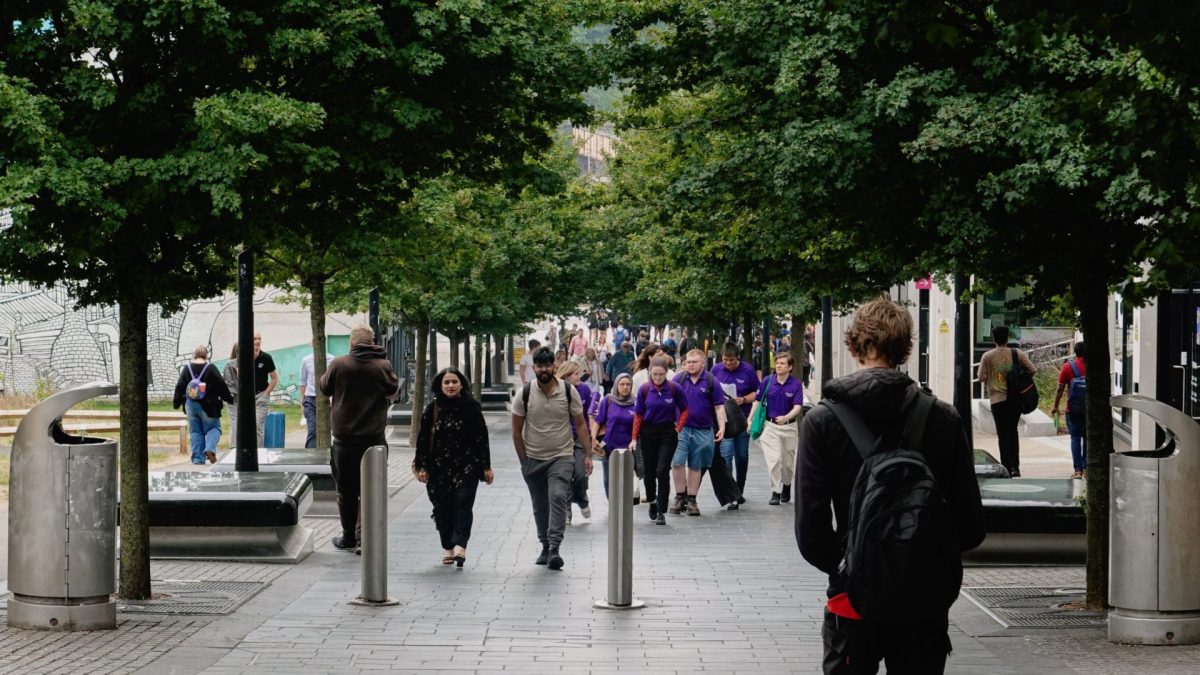
Shabana Mahmood couldn’t be clearer – the Government is delighted that net migration to the UK for the year ending June 2026 was just 77,000 people, the lowest figure since 1997. “We have restored control,” the Home Secretary said while promising “we won’t stop here”. Much of Mahmood’s statements on immigration have focused on asylum seekers and small boat crossings, which account for only a fraction of total migration to Britain. The vast majority who came during the recent surge – net migration reached more than one million people per year at the peak in 2023 – came here legally to work or study. Those figures have now decreased significantly. The number of non-EU migrants who came to the UK to study has fallen from 486,000 in the year ending September 2023, to 257,000 in 2026. Those coming here to work fell from 426,000 to 135,000 in the same period. While the Prime Minister, Andy Burnham, has hailed the figures as showing there is now “a sufficient degree of control” over the migration system, the trend is also having a dramatic effect in some places where migration is vital to local businesses. Higher education is one of the major drivers of Sheffield’s economy, with the University of Sheffield estimated to be worth as much as £4.82bn to the UK on its own. Higher education is one of the major drivers of Sheffield’s economy (Photo: Aleksei Zotov/UCG/Universal Images Group via Getty) International students, who pay higher tuition fees, play a crucial role in the university’s finances – but numbers have fallen off a cliff.The total is down at least 25 per cent from around 10,000 in 2023 to around 7,500. The university has engaged in a number of “restructures” in which faculties have been cut back, causing frequent industrial disputes with staff. The University and College Union (UCU) claims more than 500 staff have been lost since 2024. ‘Students are being turned away from Sheffield’ Meanwhile, the Home Office is taking a harder line on people applying for student visas in the UK, with refusal rates having doubled to 6.4 per cent by September this year. Business leaders told The i Paper they are concerned not only for the health of the universities but also the skills that are not available for Sheffield’s burgeoning start-up ecosystem. “Driving down immigration is only economically credible if we are investing in the skills to meet the needs of our growing economies across the North,” Henri Murison, chief executive of lobby group Northern Powerhouse Partnership, told The i Paper. “We are concerned that arbitrary cuts to students able to study here in the North are damaging our universities. Visa application rates were down 16 per cent back in the peak month of August. “Whole countries of students are being prevented from studying in cities like Sheffield or nearby Hull. “The Home Office needs to focus on dealing with illegal migration rather than forcing down student numbers by driving up refusal rates without any official policy change. “In Sheffield Central alone £275m of direct and additional exports are supported by international students, driving up wages by over £300,000 across the constituency.” The effect of falling international student numbers goes deeper than just the university, however. ‘The UK is less attractive now’ Sheffield’s Chinese community dates back to at least the 1940s before a more significant wave of immigrants arrived in the 60s. More recently, both the University of Sheffield and Sheffield Hallam worked hard to attract more Chinese students, which has also helped support the city’s retail and property sectors. But Sai Cheung Lee, secretary of the Sheffield Chinese Association, said that number has dropped “dramatically”. One reason was the University of Sheffield falling outside the top 100 ranking for universities in 2023, though it has since recovered its spot. “In China, to get a government job you have to have graduated from a top 100 university,” Lee said. He also said that the UK has become “less attractive” to international migrants, including Chinese people. “Some of the Government’s policies are making it harder to come to the UK,” he said “It used to be ‘you need an income of £18,000’, now it’s £30,000. “People on work permits are told they won’t be able to stay, even though they’ve lived here many years – they are looking at alternative places. “Europe, Australia, Canada – maybe it will be easier.” Lee said the fall in Chinese students is hitting local businesses that rely on them for trade. “I’ve seen cutbacks, I know of quite a few people in restaurants and takeaways – in West Street it always used to be full of students – but now they are running into difficulties,” he said. “The Chinese students usually eat our food more than the Western food, they keep the restaurants going, the existing community really rely on them. “A lot of people have flats to rent – they used to be very easy to rent out, but now they have to drop the rent to attract people. “Some friends have told me the lecturers are losing their jobs because the students have gone. They have reduced faculties. “Some of the general public, they just see immigration as asylum seekers; they don’t realise that when they stop immigration, they stop the people who are giving so much to the UK.”
The Yorkshire city where falling migration is putting locals out of work
Full Article
Original Source
Read the full article at Inews →KhanList aggregates and links to publicly available news content. We do not host full articles from third-party sources. Always verify important information with original sources.