
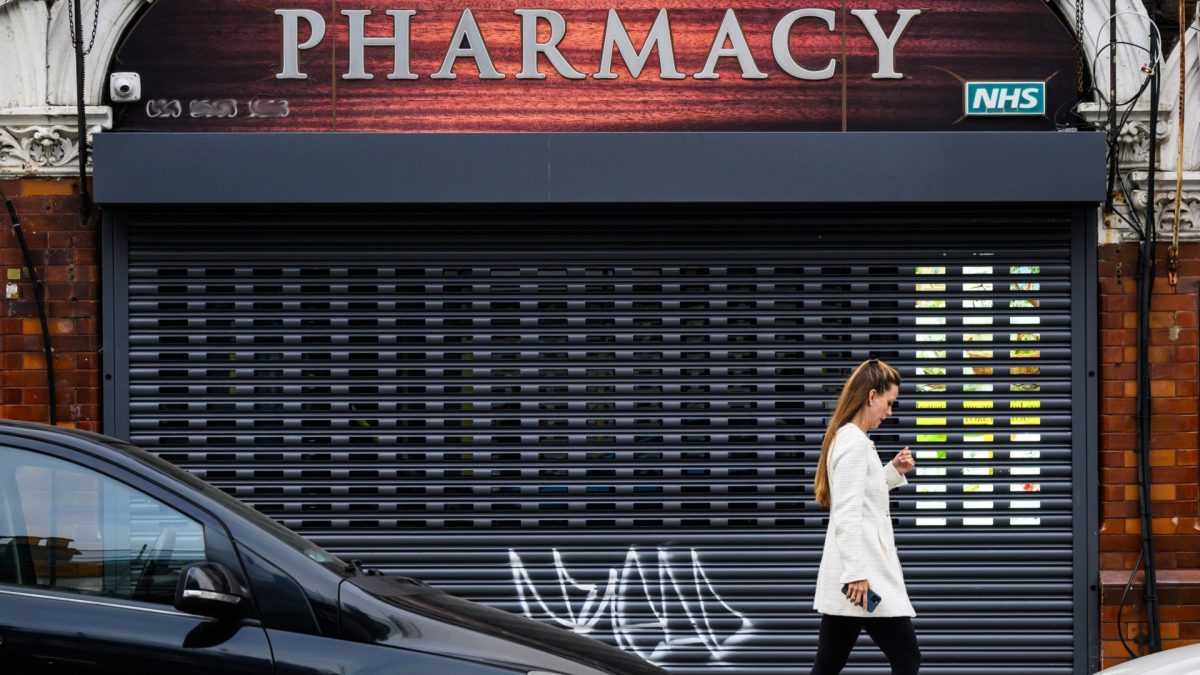
Nearly 300,000 people have seen their local pharmacy shut this year, with dozens closing in shortage areas leaving patients with 17-mile round trips to pick up vital medicines. Analysis of NHS figures by the National Pharmacy Association (NPA) revealed that 51 high-street pharmacies in England shut between January and August this year – the equivalent of two a week. 31 of these were pharmacies given government funding under a scheme to maintain vital access to medicines for patients in “healthcare shortage” areas. Shorts Olivier Picard, chair of the NPA, added the closures were “depressing” and work needs to be done to prevent this situation becoming the “new normal”. South West hardest hit The South West of England has been hit hardest by closures. Nine pharmacies closed across Devon, Cornwall and Somerset. Three pharmacies alone closed in the Somerset town of Taunton. A spokesperson for Taunton Town Council said they were “concerned” at the closures. “While responsibility for commissioning these services sits elsewhere, we recognise the value pharmacies bring to our communities and hope there is no loss of access or increased pressure on residents who may need to travel further for essential healthcare services,” the spokesperson added. Closures are forcing patients to travel significant lengths to access emergency prescriptions as well as contraception and clinical advice, particularly on a weekend, patient groups and pharmacies have warned. The recent closure of a Lloyds Pharmacy in Long Rock, Penzance, left patients with an up to 1 hour and 20-minute journey by public transport to access their nearest pharmacy – a 17-mile round trip. Another closure in Bishops Lydeard, Somerset, left patients with a 10-mile round trip to their nearest alternative, estimated to take an hour on public transport. Of the pharmacies that closed, 31 were supported by the NHS Pharmacy Access Scheme. Branches get additional funding from the government to ensure access to pharmacy services in communities where there is no alternative nearby. Why are pharmacies closing? Pharmacies have seen real-terms cuts of 40 per cent to their funding since 2016, despite recent uplifts. Since then, a total of 1,500 pharmacies have closed. That means 9.9 million patients in England – a fifth of the population – have seen their local pharmacy close, analysis shows. “When a pharmacy closes, it can create pockets where patients will find it harder to access medicines, collect prescriptions and get advice from their local pharmacy,” said Dr James Davies, director of research and insights at Community Pharmacy England (CPE), which represents branches. “Closures often happen in areas where healthcare support is needed most so it intensifies health inequalities.” Despite the Government announcing a £340m boost to pharmacy funding in May, economic analysis commissioned by the NHS for CPE shows community pharmacies still face a funding gap of more than £2bn. Just one in seven pharmacies are profitable, a separate survey by CPE of more than 2,900 pharmacies in July revealed. Ashley Cohen, managing director of pharmacy staffing agency Pharm-Assist, which owns branches in Yorkshire, said: “No healthcare professional should have to put their hands in their own pockets to fund their service. “You wouldn’t ask a GP to pay for an X-ray referral themselves, so why are you asking a pharmacist to fund the medicines that a patient needs because the Government isn’t paying for the cost price.” Pressure on other NHS services One branch in York has had to reduce its opening hours down to five and a half days a week. Cohen added: “A community wants access to a healthcare professional seven days a week, but the Government isn’t paying for that level of service.” NPA leaders urgent the Government to reform the NHS’s contract with pharmacies. Around 90 per cent of a pharmacy’s work is funded through the NHS, they added. William Pett, interim director of policy and external Affairs at Healthwatch, said longer distances were “difficult for those with limited mobility or no access to transport”. “It is no surprise that some people end up turning to other parts of the NHS when they cannot get the help they need in their community.” NHS England and the Department for Health and Social Care have been contacted for comment.
The worst places to live if you are ill – where trips to chemists take an hour
Full Article
Original Source
Read the full article at Inews →KhanList aggregates and links to publicly available news content. We do not host full articles from third-party sources. Always verify important information with original sources.