
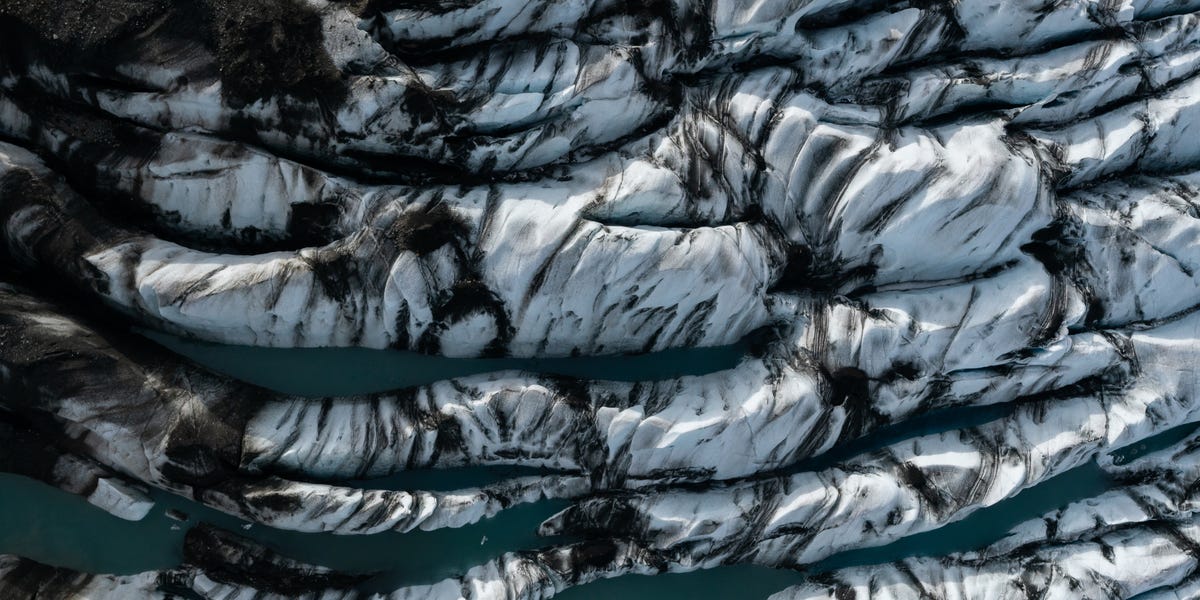
3 min readHere’s what you’ll learn when you read this story:• The Himalayas are known as Earth’s “third pole” due to the massive accumulation of snow and ice there.• A new study details how soot from brick kilns in India is coating glaciers, impacting regional albedo, and speeding up melt rates by one-third.• Nepal's deadly flash flood in August was a wake-up call to the region’s growing ecological instability.The Himalayas, stretching along the borders of India, China, and Nepal, hold the world’s third-largest store of glacial ice—only the poles hold more. But for decades, that massive reservoir has been slowly disappearing, creating an increasingly unstable environment that culminated in this year’s immense devastation in Nepal. While studies suggest a 2015 earthquake helped set the stage for the August landslide that killed and injured thousands there, experts agree that climate change made a bad situation much, much worse.In the wake of that disaster, a new report takes aim at black carbon—soot produced largely by burning biomass and fossil fuels in brick kilns on India’s southern plains. The report, from the global consultancy Systemiq in partnership with the Integrated Mountain Initiative (with technical contributions from ICIMOD and the GB Pant National Institute of Himalayan Environment), identifies black carbon as a local driver of glacial melt. That melt has increased by 65 percent in just the past decade.Rupendra Singh Rawat//Getty ImagesBrick kiln in Landhaura, Roorkee, India“Global warming is the main driver of glacier retreat but is largely beyond regional control. Black carbon is a meaningful local accelerant,” the report reads. “Recent modelling attributes about one-third of glacier mass loss in the Himalayas to South Asian black carbon. Industry, primarily brick kilns, contributes 32-42% of South Asian anthropogenic deposition across the region.”Black carbon forms when fuels burn incompletely, and the problem has only grown over the decades as the economies of India and China have expanded. Scientists have known about this sooty menace for years, and back in 2010, researchers from the Lawrence Berkeley National Laboratory detailed how black carbon accelerates glacial melt by increasing atmospheric temperatures while also impacting the region’s albedo—how much sunlight is reflected off of snowy surfaces. Dirty up that surface with pollutants, and suddenly sunlight that would’ve reflected back into space is now absorbed by the blackened snow, increasing melting rates. A similar phenomenon occurs in the western U.S., where wildfires leave deposits of black carbon on regional snowpacks, cutting albedo by up to 40 percent."Glaciers are retreating, permafrost and high-mountain slopes are becoming increasingly unstable, and communities and infrastructure downstream face growing risks from complex and cascading hazards," Pema Gyamtsho, director general of ICIMOD, told the BBC.This year’s devastation along the Nepal-China border shows what can happen as these melting conditions worsen. The Himalayas have always been one of the most seismically active regions in the world as a result of the Indian Plate’s slow-motion collision with the Eurasian Plate over millions of years. But melting glaciers are causing landslides and other geological instabilities that add a new, fast-moving layer of risk to a region that’s already difficult to reach with emergency aid. According to the Systemiq report, while the Himalayan region accounts for only 18 percent of India’s landmass, it’s the source of 35 percent of its natural disasters.Now, for some good news. Anthropogenic climate change fueled by rising carbon dioxide levels comes with some dire outcomes that are already locked in. This means that even if we stopped burning fossil fuels tomorrow, past emissions will continue to raise global temperatures for centuries (something that even widespread carbon capture technology can’t fix). Black carbon is different. It lingers in the atmosphere for only a few weeks, meaning cuts to emissions would pay off almost immediately. And there’s reason for optimism: India’s black carbon emissions have seen a downward trend in the past few years. But more still needs to be done to protect Earth’s “third pole.”Darren lives in Portland, has a cat, and writes/edits about sci-fi and how our world works. You can find his previous stuff at Gizmodo and Paste if you look hard enough.
The World’s Third-Largest Ice Reservoir Is Vanishing—and the Culprit Isn’t Just Climate Change
Full Article
Original Source
Read the full article at Popularmechanics →KhanList aggregates and links to publicly available news content. We do not host full articles from third-party sources. Always verify important information with original sources.