
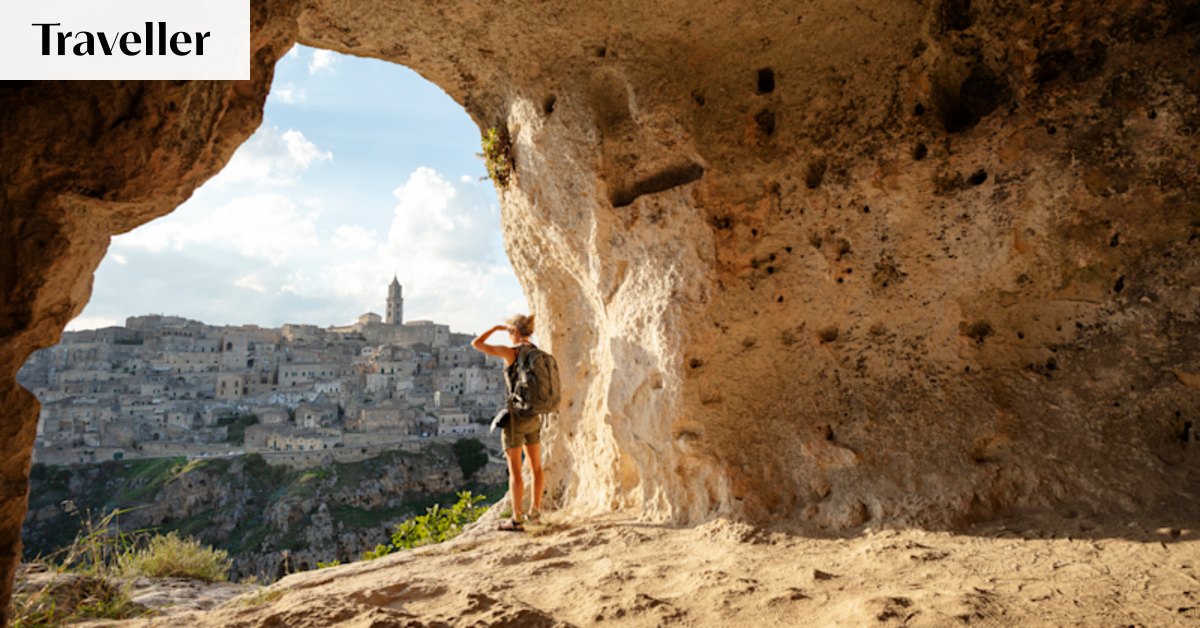
Long before skyscrapers punctured the sky, people were hand-carving entire worlds into rock. Across continents, cliffs, canyons and volcanic landscapes have been hewn into hidden cities, monasteries and temples.Some were created as refuges from invading armies, others to escape unforgiving climates or honour the gods, but all stand as extraordinary feats of human ingenuity. All of them have won UNESCO listings.Some of these settlements are so otherworldly they’ve become unlikely stars of the silver screen, from James Bond’s high-speed chase through Matera, to Luke Skywalker’s desert home in Tunisia.We’ve scoured the globe to bring you eight of the world’s most remarkable cave cities. Follow us beneath the surface.Sassi di Matera, ItalyFamilies lived in the caves of Matera for many centuries.iStockSign up for the Traveller Deals newsletterGet exclusive travel deals delivered straight to your inbox. Sign up now.For centuries, families lived in the caves carved into this limestone gorge in southern Italy, but by the 1950s, poverty, overcrowding and poor sanitation forced residents out. Matera became one of Italy’s “forgotten cities” until UNESCO recognition in 1993 prompted a remarkable restoration and its captivating huddle of boutique hotels, restaurants and galleries won it a starring role in James Bond film No Time to Die.Goreme, TurkeyDwellings were formed in the soft volcanic rock of Cappadocia.iStockMillions of years ago Mount Erciyes, Hasan and Melendiz erupted covering Cappadocia in layers of ash that hardened into soft tuff. Wind and rain eroded the softer rock beneath leaving harder basalt caps and creating distinctive pillars – some more than 40 metres tall – nicknamed fairy chimneys.Locals hollowed out these lunar-like formations to make homes, while Byzantine monks transformed many into hidden monasteries, chapels and churches adorned with vivid frescoes. Explore the UNESCO-listed region on foot or, best of all, from above with a sunrise hot-air balloon ride.Vardzia, GeorgiaVardzia’s cave city is staggered across the slopes of the Erusheti Mountain.iStockIn 1283 a significant earthquake exposed the honeycomb maze of this staggering cave city that was built into a 500-metre-high cliff above Georgia’s Mtkvari River in the 12th century by Queen Tamar of Georgia – the first woman to be crowned as a King in Georgian history.With 400 rooms, 25 wine cellars, a bakery and 13 churches – including the frescoed Church of Dormition – all linked by tunnels, it housed monks, soldiers and villagers. Legend said its name came when Tamar became lost in the caves and cried “ak var dzia” – “here I am”. A small monastic community still lives in sections of the caves.Matmata, TunisiaMatmata’s troglodyte dwellings in Tunisia were created by the Berber community.iStockBuried beneath the desert hills of southern Tunisia, this troglodyte village was carved by Berber families seeking refuge from the searing Saharan heat. Some dwellings are thought to be more than 1000 years old and the settlement remained largely isolated until Tunisian independence in 1956 brought roads.Its otherworldly landscape later caught Hollywood’s eye: the Hotel Sidi Driss became Luke Skywalker’s childhood home in Star Wars, with fans still able to see film props and memorabilia.Ellora Caves, IndiaThe spectacular Ellora Caves in Maharashtra.iStockHewn into a basalt cliff in Maharashtra, the Ellora Caves are among the greatest feats of rock-cut architecture on Earth. Created between the sixth and 10th centuries, the 34 Buddhist, Hindu and Jain caves stand side by side in a rare celebration of religious coexistence.The showstopper is the remarkable Kailasa Temple, carved from a single rock by thousands of men chiselling downwards. Top tip: the Jain caves attract far fewer crowds and contain some of Ellora’s most delicate carvings.Longmen Grottoes, ChinaLuoyang’s Longmen Grottoes are a UNESCO World Heritage Site.iStockOne of the world’s greatest open-air galleries, the Longmen Grottoes shelter China’s most important collection of Buddhist art. Spread along the banks of the Yi River and carved over four centuries (from AD 493) into limestone cliffs, the caverns shelter more than 100,000 statues – from tiny carvings to the majestic 17-metre Vairocana Buddha. For an extra dose of ethereal beauty, visit at dusk during peak season when they illuminate the grottoes.Mesa Verde National Park, USThere are around 600 ancient cliff dwellings at Mesa Verde in south-west Colorado.iStockThe first US national park created to preserve human history, Mesa Verde – in south-west Colorado – protects dwellings dating from the seventh to the 14th century of the Ancestral Puebloan people who made this region their home for more than 700 years. Explore a lost world of cave dwellings, including Balcony House, Long House, Spruce Tree and the spectacular Cliff Palace, a 217-room settlement tucked beneath a vast rock overhang.Mada’in Salih (Hegra), Saudi ArabiaThe 12th-century AlUla Old Town in Saudi Arabia is free to visit year-round.iStockWith Petra currently off limits to travellers, head instead to Hegra, the Nabataeans’ second city. Carved into the rose-red sandstone cliffs of Saudi Arabia’s AlUla valley more than 2000 years ago, its hundreds of desert-air-preserved tombs culminate in Qasr Al-Farid – the spectacular, unfinished “Lonely Castle”, marooned in the desert like a jagged molar.Saudi Arabia’s first UNESCO World Heritage Site, Hegra offers an extraordinary glimpse into the civilisation behind Petra, without the crowds.The Telegraph, London
The world’s most extraordinary cave cities you can visit
Full Article
Original Source
Read the full article at Smh →KhanList aggregates and links to publicly available news content. We do not host full articles from third-party sources. Always verify important information with original sources.