
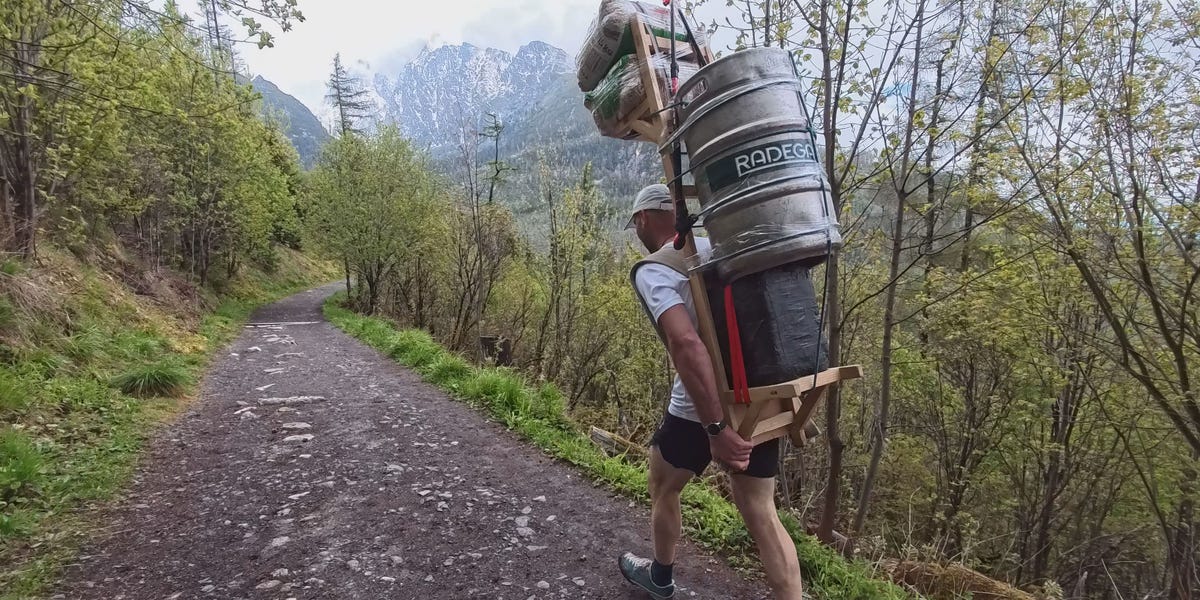
Running up a rocky and technical trail more than a mile above sea level is tricky enough. Imagine doing it with a keg of beer strapped to your back—because this is exactly what competitors in the Sherpa Rallye, held on October 24, had to contend with.Male entrants in the race shoulder a traditional wooden carrying frame, which resembles a sled but is loaded high with a 30-liter (about 8 gallons) keg of beer, plus other supplies (including large bottles of water) that add up to more than 130 pounds (60 kg). Women commonly carry cases of beer and materials that make their load weigh about 44 pounds (20 kg).Since 1985, this unique annual race has been taking place on the unforgiving flanks of the High Tatras mountains in Slovakia. It starts just above the town of Starý Smokovec and finishes at Zbojnícka chata, a mountain refuge perched like an alpine eyrie 3.5 miles up the steep and rough track.The High Tatras are home to Europe’s last remaining group of old-school mountain porters, many of whom take part in the race, which was started by a porter named Viktor Beránek to help bring workers together. They are locally and colloquially known as horský šerpa (mountain sherpas)—although they have no connection to the Sherpas of the Tibetan Himalaya, a distinct ethnic group, and are more correctly called horský nosi (mountain carriers).However you refer to them, each season they manually transport heavy supplies to the mountain huts, refuges, and chalets that hikers use for shelter while trekking the local trails. And herein lies the rub, because once the Sherpa Rallye runners reach Zbojnícka chata, they don’t even get to celebrate by supping the goods they have just transported up to the hut—it goes in the stores for use over winter.Find Your Next Running Playlist
The World’s Hardest Beer Run? This Brutal Race Sends Runners Up a Mountain—With a Keg of Beer on Their Back
Full Article
Original Source
Read the full article at Runnersworld →KhanList aggregates and links to publicly available news content. We do not host full articles from third-party sources. Always verify important information with original sources.