
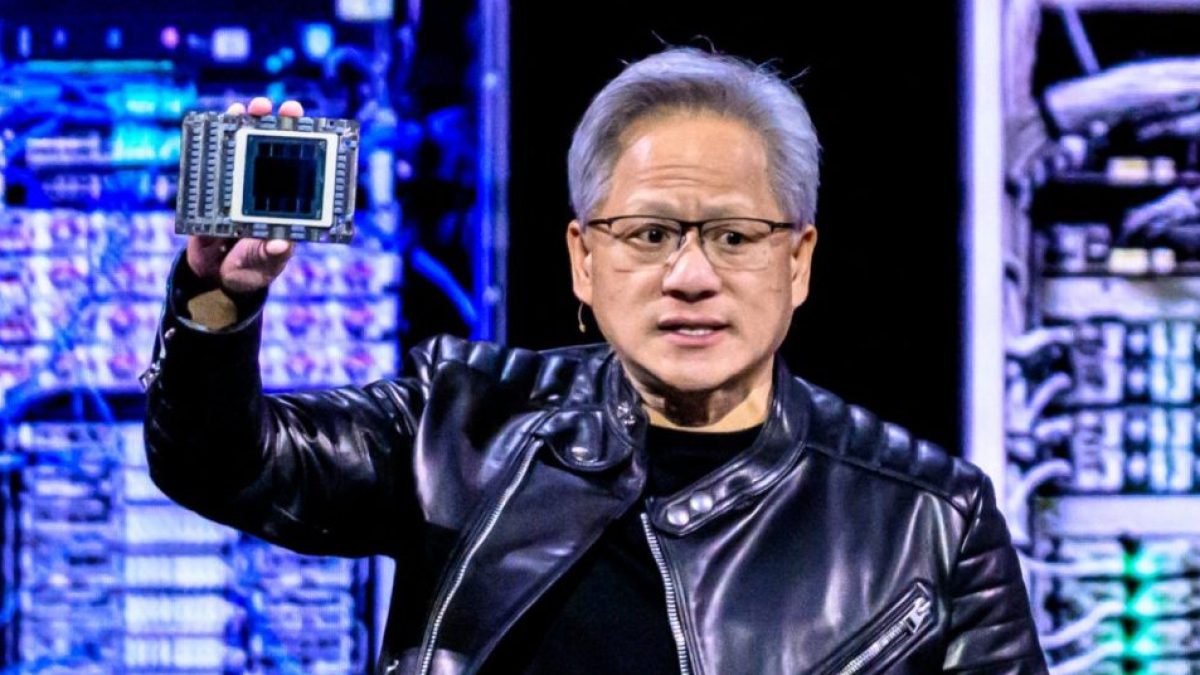
“Turn your phone off and put it in the isolation box over there – it will stop signals coming in and out. No one will be able to hear our conversation.” That is just one of the many spy thriller-style instructions that I have been given when visiting companies during my time as a journalist, and later as an executive. On a trip to a plane manufacturer, I wasn’t even allowed close to the production line in case I came away with any secrets. Companies are paranoid, more so than ever in our world of geopolitical tensions with Russia and China, but that doesn’t make them any safer from espionage. The resignation of Jensen Huang as boss of US chipmaker Nvidia amid a sex scandal and allegations of Chinese spying is proof that companies are vulnerable. No matter what precautions you take, the spy, or alleged spy in this case, will always get through. Tech companies, driving the modern economy, are high up on the target list. In the age of artificial intelligence, a chief executive is a player in national security. Nvidia’s board accepted Huang’s resignation after opening an investigation into reports that its founder had been targeted by a foreign-intelligence operation. Nvidia says it has no reason to believe secrets or national security were compromised. The woman at the centre of the allegations, Alice Huang, has been described in reporting as a suspected Chinese intelligence asset. Video footage shows Chinese executive and alleged spy Alice Huang placing her hand on the arm of Nvidia’s chief executive Jensen Huang at a restaurant in Taipei on 22 May 2025 (Photo: AFP via Getty Images) Whatever the truth in this scandal, it will have global repercussions. Nvidia is too important for the powering of the world economy for the fallout to be contained within the walls of the company that Huang built. Some customers might worry that their operational details are now accessible to China, while US authorities could decide to further tighten computer chip export restrictions to the Chinese market. What began as sexual seduction, ends as geopolitics. Once again, as is often true, the entertainment world is ahead of the rest of us. The Netflix series Black Doves is all about a commercial spy agency set up to steal business secrets. Such enterprises do exist. It’s very lucrative. Nothing is proven in the Nvidia scandal, but British companies would be foolish to conclude there is therefore nothing here to see. The old picture of industrial espionage involved a man photographing blueprints after dark. The modern version can involve a LinkedIn message, a visiting researcher, a cloud account, a startup investment, an employee carrying files to a rival, or a relationship with somebody close enough to an executive to influence what he, or she, sees, says and does. The prize has changed too. Yesterday’s targets were weapons manufacturers or industrial sites. Today, the crown jewels are chip architectures, AI model-training infrastructure, specialist software and the tacit knowledge inside engineers’ heads. Nvidia is just the latest such case. Only a few weeks ago, a former Google software engineer, Linwei Ding, was sentenced to a year in prison by a US court. He was convicted of stealing thousands of pages of confidential material, AI supercomputer secrets. His thefts supposedly started when he was being courted to join a Chinese tech startup. A judge later threw out separate economic espionage charges because prosecutors had not sufficiently proved an intention to benefit the Chinese government. That is precisely the problem that governments face. Gathering enough evidence to confirm a bridge to a foreign government can be exceptionally difficult. Britain has more at stake here than it sometimes admits. Jensen Huang is an influential adviser whose priorities are closely connected to Donald Trump’s ambition for American AI dominance (Photo: Evan Vucci/File Photo/Reuters) We are not the United States, leading the world in tech. But the British Government’s own studies identify hundreds of tech companies in the UK. We have world-class strengths in design, intellectual property, and academic research. In other words, much of the British tech advantage is exactly the sort of thing that can walk out of a laboratory on a laptop. MI5 is already shouting. In September, it warned that a Chinese research body, linked to the Ministry of State Security, had funded work involving more than 100 UK-linked academics, including research on AI and cyber security. The UK’s National Cyber Security Centre annual review calls China’s activity the most sophisticated and sustained cyber challenge facing Britain. It ranks cyber espionage as highly likely to be one of the greatest threats to the UK’s long-term economic growth. Britain has belatedly given itself better laws. The National Security Act created a specific offence of obtaining or disclosing trade secrets which benefit a foreign power, carrying a maximum 14-year sentence. But laws aimed at the thief are only half the answer. Companies must treat sensitive technical knowledge as they treat cash. Universities need to know who ultimately funds collaborative research. Startups taking strategic foreign investment need serious counter-intelligence advice, not a compliance form. We should resist the lurid temptation to turn the Nvidia affair into a spy novel before the facts are established but British companies should start learning immediate lessons. The real story is not that intelligence agencies might be using the oldest trick in the book, a story of a modern Mata Hari, the Dutch exotic dancer who spied for the Germans during the First World War. It is that AI and the tech sector are now at evident risk, in the UK and elsewhere. Britain possesses rather more of that strategic territory than we might think. Our adversaries do not need to launch a physical attack to bring us to our knees. Sometimes they only need a charming companion and a password.
The world’s economy is only as strong as America’s neediest tech bro
Full Article
Original Source
Read the full article at Inews →KhanList aggregates and links to publicly available news content. We do not host full articles from third-party sources. Always verify important information with original sources.