
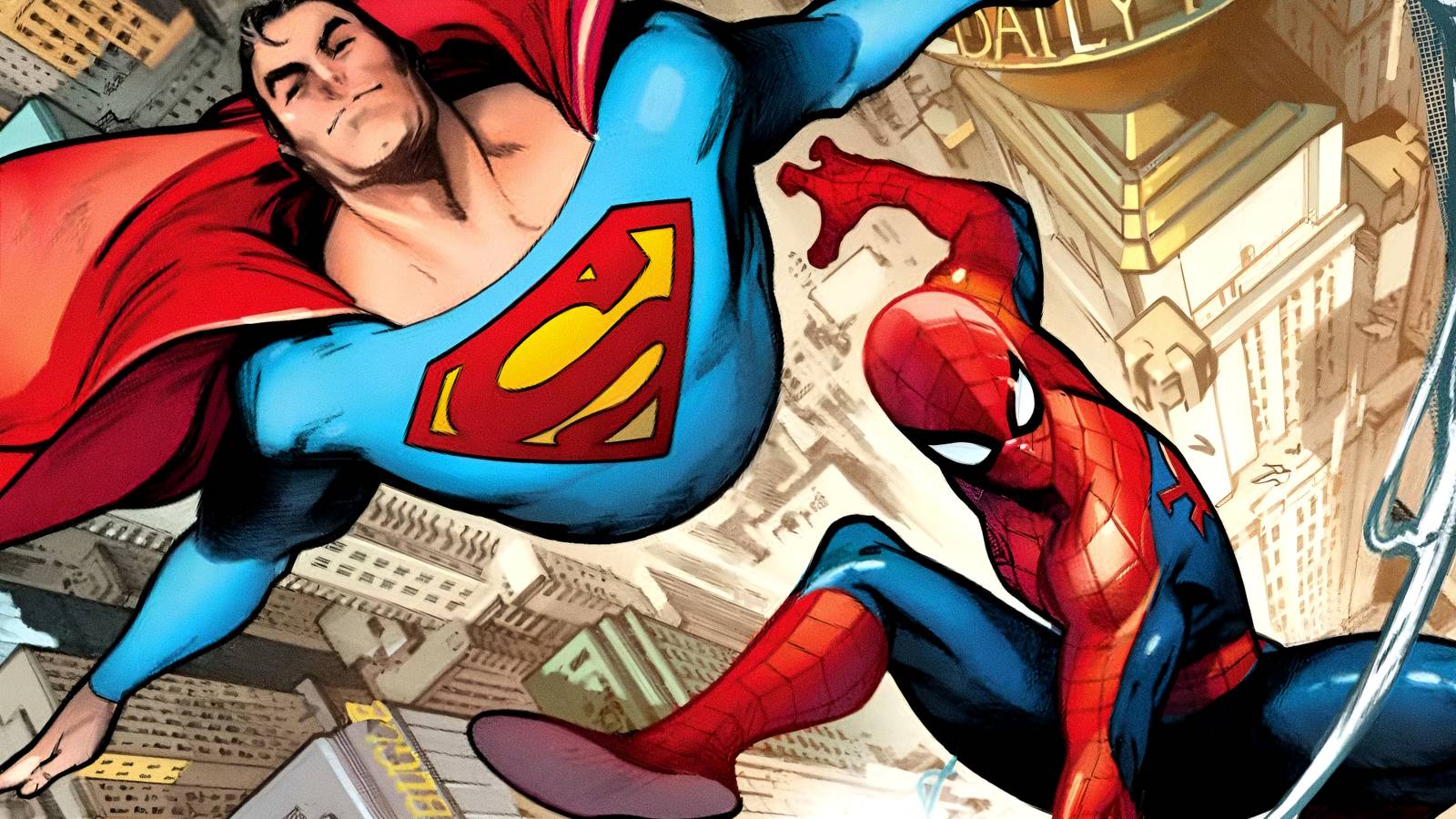
Published Oct 10, 2026, 8:00 PM EDT Nicolas Ayala is a Senior Writer for the Comics team at ScreenRant, with over five years of experience writing about Superhero media, action movies, and TV shows. The most successful comic franchise in the world has earned its place as a global phenomenon larger than Marvel and DC's most famous comic book properties. Comic book giants Marvel and DC have retained their multi-generational dominance with icons like Spider-Man, Batman, and Superman, who transcend the pages of traditional comics to become worldwide pop-culture icons. Beyond their comics, cinematic milestones like Christopher Nolan's The Dark Knight trilogy, the Arrowverse, and the Marvel Cinematic Universe draw entirely new audiences to the source material, not to mention the countless video games, animated adaptations, and merchandise that make superheroes a staple of entertainment. European comics like The Adventures of Tintin and Asterix, and independent properties like The Walking Dead and Teenage Mutant Ninja Turtles also hold a special place in the comic medium. But parallel to the gargantuan success of western comic books, manga thrives as a multi-billion dollar industry, with unanimous hits such as Dragon Ball, Demon Slayer, and Attack on Titan. Manga usually relies on singular creative voices delivering finite stories that build intense reader loyalty. Paired with highly successful anime adaptations and an increasing number of box office and streaming hits, manga continues to extend its reach across the globe. As popular as they may be, properties like Spider-Man, Batman, and Dragon Ball aren't exempt from being dethroned by phenomena like One Piece. One Piece Is The Biggest Anime In The World For A Reason One Piece's Success Covers All Formats Eiichiro Oda's One Piece has cemented itself as a juggernaut of entertainment. As of March 2026, the One Piece manga officially surpassed a historic milestone of six hundred million copies in circulation worldwide, tying and surpassing Superman as the best-selling comic book property of all time. This unprecedented print success has translated into unparalleled commercial success, with the entire media franchise amassing an estimated total gross revenue of $23.8 billion. The One Piece brand's popularity spans over one thousand anime episodes, several video game entries, and Netflix's critically acclaimed live-action television adaptation. As if that weren't enough, One Piece has also overtaken Dragon Ball as Toei's top-earning franchise. One Piece ranked as the best-selling manga series in Japan every single year from 2007 through 2018. Monkey D. Luffy's legendary adventure takes him across countless different landscapes and through a wide variety of personal arcs alongside an extensive cast of colorful characters, to say the least. Toei backs up One Piece's grand scope with spectacular visual choreography, with movie-quality animation, especially for key events like Luffy’s Gear 5 awakening. One Piece's intimidating 1,000+ episode isn't an obstacle for completely new audiences, as between the streamlined Netflix live-action series and Wit Studio’s upcoming high-fidelity anime remake, The One Piece, newcomers can easily dive into the Straw Hat crew's journey without feeling overwhelmed by decades of backlog. One Piece's Biggest Criticism Is Also Its Biggest Strength One Piece Is A Long-Running Franchise With A Single Main Continuity One Piece's impressive length is one of the franchise's polarizing attributes. Starting to read or watch One Piece from the beginning may seem like an intimidating commitment, and the decade-spanning arcs occasionally slow the narrative pace enough to delay the characters from making evident advancements toward their destination. However, this deliberately slow-burn approach is a huge achievement on its own. One Piece has become one of the longest and most intricate fictional universes entirely within a single uninterrupted continuity. Every single character, location, and event is tied to the overarching plot without parallel timelines or alternate events. Although One Piece surpasses Superman in total global comic sales, the Man of Steel’s history is divided into dozens of separate continuities, which include countless reboots and parallel timelines, and many of those realities are also composed of several creative visions from different writers and artists over nearly a century. One Piece is a cohesive epic written and illustrated by a creative team since day one. Every piece of lore stems from a singular creative source, which allows the series to maintain an extraordinary level of consistency that most western comic book universes simply can't replicate. One Piece's Worldbuilding Is An Overlooked Feat One Piece Presents A Huge World That Continues To Grow Remarkably, One Piece's endless expansion keeps the stakes high even after more than one thousand episodes. The Worst Generation's chaotic pirate crews collide with the Marines' oppressive military might, the CP0's covert espionage, the Five Elders' tyrannical authority, and the rising insurrection of Monkey D. Dragon’s Revolutionary Army. Every conflict on islands like Wano and Egghead feels vital due to their direct connection to a centuries-old conspiracy. The overarching narrative is always the search for the One Piece, but the heart of the series is in the countless little adventures that compose the larger journey. Media properties of similar longevity eventually shake up their lore using disruptive tools like reboots, retcons, and parallel stories. One Piece rejects shortcuts like these and simply continues forward indefinitely, building directly upon every line of dialogue and historical event established since its debut. While the lack of a definitive ending could be a significant flaw, the fact that One Piece's extensive worldbuilding continues to be exciting and unpredictable after nearly thirty years is an amazing achievement that's rarely seen in other similar fantasy and sci-fi franchises. Matching One Piece's Success Looks Increasingly Difficult One Piece's Unique History Can't Be Replicated Giant Western comic book franchises like Marvel and DC easily surpass One Piece in terms of total revenue and the sheer popularity of their live-action, animation, and video game adaptations. However, these multimedia empires are inherently fragmented. Not all fans of the MCU have even played Marvel Rivals once, and not all diehard X-Men '97 or Agents of SHIELD fans have necessarily read the latest comic book releases. One Piece achieves its multibillion-dollar footprint as a single uninterrupted story in three separate formats. Its audience generally stays loyal to one masterfully planned linear continuity. Even when compared to its closest anime contemporaries, the unique nature of One Piece's dominance is clear. Akira Toriyama's Dragon Ball has historically boasted record-breaking viewership and profits, and holds an arguably superior level of pop-culture influence across the world. Still, official financial earnings from the past year officially confirmed that One Piece generated 27.8 billion yen ($167 million USD) for Toei Animation, officially dethroning Dragon Ball as the studio's top-earning anime property. While Dragon Ball is known for long breaks and an increasingly convoluted canon, One Piece maintains its historic momentum weekly, with major releases like Netflix's live-action series only reinforcing its popularity. What do you like about One Piece the most? Created by Eiichiro Oda First TV Show One Piece First Film One Piece: The Movie Video Game(s) One Piece: Unlimited World Red, One Piece: Pirate Warriors 3, One Piece: Pirate Warriors 4, One Piece: World Seeker, One Piece Odyssey Cast Kazuya Nakai, Akemi Okamura, Kappei Yamaguchi, Hiroaki Hirata, Ikue Ôtani, Yuriko Yamaguchi Character(s) Monkey D. Luffy, Roronora Zoro, Nami (One Piece), Nico Robin, Usopp (One Piece), Vinsmoke Sanji, Tony Tony Chopper, Franky (One Piece), Jimbei (One Piece)
The World's Best-Selling Comic Series Isn't Just Popular, It's A Masterpiece
Full Article
Original Source
Read the full article at Screenrant →KhanList aggregates and links to publicly available news content. We do not host full articles from third-party sources. Always verify important information with original sources.