
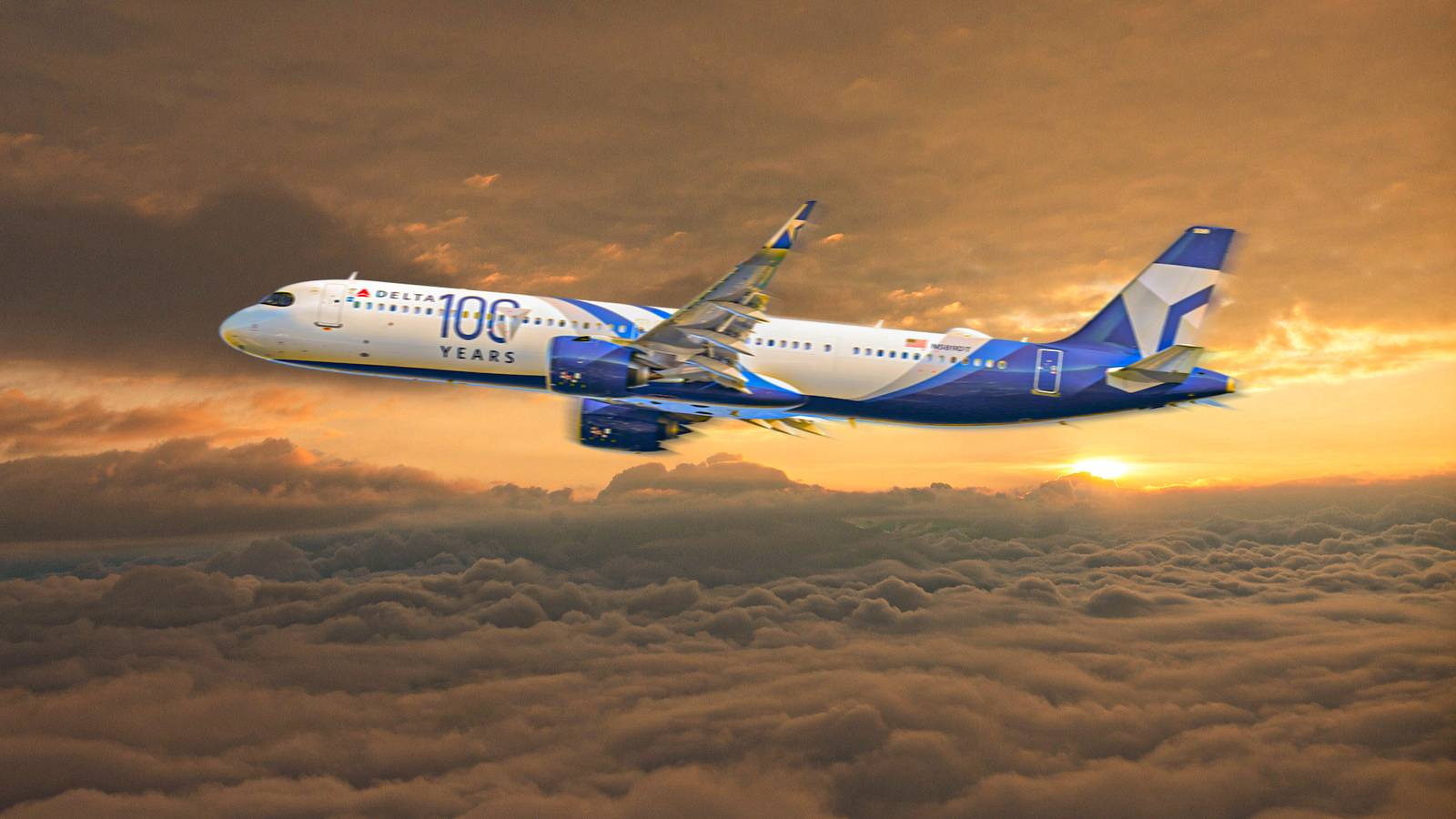
The single-aisle market has experienced a profound change over the past decade, with extended-range narrowbody aircraft replacing widebodies on transcontinental and regional trunk routes. At the vanguard of this revolution is the ever-popular Airbus A321neo, an airframe that combines unmatched fuel efficiency with transoceanic legs reaching up to 4,000 nautical miles (7,408 kilometers). At almost any major airport in the world, the A321neo can be found, and that is for good reason. Across the globe, mega-carriers and ultra-low-cost airlines alike have restructured their operational strategies around this versatile jet, but which airlines have built the largest fleets of this aircraft? This list will showcase the world's six largest operators of the A321neo, focusing on how distinct commercial models use the jet to redefine modern passenger aviation. These range from European ultra-low-cost expansion to Asian mega-growth and American domestic hub dominance. 6 United Airlines 80 aircraft United Airlines has emerged as a powerhouse operator of the A321neo, expanding its fleet to 80 active aircraft, per Planespotters.net, while maintaining a substantial order book of over 135 additional frames. As part of its aggressive United Next fleet modernization strategy, the carrier has leaned heavily on the A321neo to increase capacity availability on high-density domestic trunk routes and gradually replace aging narrowbody types. Operating primarily out of its major hubs at Chicago O'Hare International Airport (ORD), Newark Liberty International Airport (EWR), and Denver International Airport (DEN), the type connects high-traffic business and leisure markets that are vital to United's overall network. Passenger experience on United's A321neo fleet centers around a modern three-class cabin layout seating 200 passengers. The aircraft features 20 domestic first-class recliners at the front, alongside spacious economy seating equipped with the carrier's latest NEXT interior standards. Travelers benefit from high-resolution seatback entertainment touchscreens, Bluetooth audio connectivity for wireless headphones, and significantly larger overhead bins designed to accommodate standard roller bags on their side. The A321neo is incredibly important for United and its future roadmap. The aircraft provides the range and payload flexibility required to service demanding transcontinental corridors between the East and West coasts. Now operating these modern narrowbodies alongside incoming A321XLRs, United has successfully optimized its single-aisle network to match the capacity and comfort expectations of modern frequent flyers. 5 American Airlines 96 aircraft With a growing presence among global leaders, American Airlines operates 96 standard A321neo aircraft, backed by a robust backlog of 127 additional jets on order alongside its separate A321XLR fleet. As highlighted in recent fleet coverage by Simple Flying, these narrowbody aircraft serve as the leader for high-density domestic corridors. They connect major hubs like Dallas/Fort Worth International Airport (DFW), Charlotte Douglas International Airport (CLT), and Miami International Airport (MIA). Cabin layout choices emphasize a dual-class commercial strategy tailored for domestic business and leisure travelers. American Airlines equips its standard A321neos with a 196-seat configuration. This layout features 20 domestic first-class recliners at the front, alongside spacious main cabin extra options providing extra legroom of up to 34 inches (86 cm). Passengers benefit from modern amenities including high-speed Wi-Fi, seatback power ports, and personal device entertainment streaming, providing consistent comfort across medium-haul domestic sectors. Strategically, the introduction of these advanced narrowbodies has allowed American Airlines to retire aging mainline types and therefore optimize seat capacity on high-demand transcontinental and Caribbean routes. The aircraft deliver significant fuel burn reductions compared to older legacy jets. This fleet integration positions the carrier to seamlessly link standard domestic operations with premium-heavy long-haul missions flown by its sister A321XLR fleet. 4 China Southern Airlines 100 aircraft As the largest carrier in Asia by overall fleet volume, China Southern Airlines is the preeminent Chinese operator of the A321neo. China Southern has 100 active A321neo frames in service, forming an integral pillar of the airline's domestic and regional trunk infrastructure. Operating mainly out of its mega-hubs at Guangzhou Baiyun International Airport (CAN) and Beijing Daxing International Airport (PKX), the airline deploys these efficient narrowbodies to connect high-density commercial centers across mainland China. It also ventures into key Southeast Asian markets such as Bangkok and Jakarta. China Southern's A321neo fleet cabins reflect a tailored approach to regional comfort. On this front, it frequently uses a balanced three-class or high-density two-class layout. Standard configurations often seat approximately 195 passengers, incorporating a dedicated premium cabin section featuring four business class recliners, 24 economy comfort seats with expanded legroom, and 167 main cabin seats. The thoughtful partitioning allows the carrier to capture high-yielding domestic business travelers as well as servicing high-volume leisure demand on trunk sectors. The integration of the A321neo has allowed China Southern to greatly improve route economics amidst intense domestic competition. What makes the A321neo so invaluable for China Southern is its ability to seamlessly handle multi-hour domestic and regional legs spanning up to 3,500 nautical miles (6,482 kilometers), encompassing the entirety of the major population centers in China. Ultimately, China Southern has bolstered its major hub operations with versatile narrowbody capacity, producing the operational flexibility needed to manage China's sprawling aviation network. 3 Delta Air Lines 111 aircraft The largest A321neo operator in North America is Delta Air Lines, which operates a robust fleet approaching 111 active aircraft supported by nearly 90 firm future orders. As a cornerstone of Delta's long-term narrowbody renewal program, the A321neo operates high-density domestic trunk routes. It connects major hubs like Hartsfield-Jackson Atlanta International Airport (ATL), Minneapolis-Saint Paul International Airport (MSP), and Boston Logan International Airport (BOS). Delta's A321neo fleet is notable for its innovative cabin configurations, including a premium-heavy subfleet layout tailored for high-yielding markets. While standard layouts feature 20 first-class recliners, 60 Comfort+ extra-legroom seats, and 114 main cabin seats, newly updated configurations incorporate an expansive 44-seat Delta First cabin. This high-premium arrangement dedicates roughly 60% of the aircraft to premium seating, meeting robust corporate demand as well as satisfying exceptional passenger load factors across competitive domestic routes. Passenger comfort across the fleet is enhanced by comprehensive modern amenities, including seatback entertainment screens, in-seat power outlets, and high-speed in-flight connectivity. Powered by Pratt & Whitney GTF engines, the aircraft combines industry-leading fuel efficiency with a quiet, spacious cabin environment. Delta has positioned its A321neo fleet as a benchmark for premium narrowbody operations in modern commercial aviation. 2 IndiGo 181 aircraft India's largest airline, IndiGo, comes in at a close second globally in A321neo operations, with fleet counts hovering around 181 aircraft in service. Operating in one of the world's fastest-growing aviation markets, the carrier has turned to the narrowbody's efficiency to connect high-density domestic city pairs across the Indian subcontinent. Simultaneously, it has extended its international reach into the Middle East, Southeast Asia, and Central Asia. IndiGo's relentless domestic expansion has been in part due to its high aircraft utilization rates, often turning planes around in under 30 minutes at busy hubs. What truly distinguishes IndiGo's position in the global A321neo landscape is its monumental order book. The airline has hundreds of additional A321neos and long-range A321XLRs slated for delivery over the coming decade, pushing its ultimate commitment toward more than 600 aircraft of the type. As such, IndiGo is widely projected to surpass Wizz Air as the world's absolute largest operator of the airframe, as noted by The Hindu. The massive influx of narrowbody capacity is fundamental to the airline's long-term growth strategy, allowing it to up-gauge high-demand trunk routes and significantly lower operating costs per available seat-mile. To support its high-frequency regional network, IndiGo equips its A321neos in dense single-class configurations optimized for maximum passenger capacity and operational turnaround speed. 1 Wizz Air 185 aircraft Topping the global leaderboards as the largest operator of the A321neo is Wizz Air, the Hungarian ultra-low-cost carrier that has staked its entire aggressive expansion strategy on the type. Wizz Air has 185 active A321neo frames in service across its operating subsidiaries, including Wizz Air Hungary, Wizz Air Malta, and Wizz Air UK. It is supported by a colossal backlog designed to phase out older ceo variants. Operating from key bases across Central and Eastern Europe, the airline uses the aircraft's exceptional fuel economy to open many point-to-point leisure routes spanning across Europe, the Middle East, and North Africa. Wizz Air configures its high-density A321neos in a single-class layout accommodating 239 passengers, per Seat Maps, which is designed to maximize seat-mile cost efficiency. The ultra-dense seating arrangement features a functional pitch of approximately 28 to 29 inches (71 to 74 cm) alongside 18-inch (46 cm) wide seats. This enables the carrier to offer highly competitive fares while maintaining strong profitability on high-density sun and city-break corridors. Like many other ultra-low-cost airlines, Wizz Air has standardized its cockpit and cabin operations around the A321neo, and in doing so, has cemented its status as the premier European champion of Airbus narrowbody technology. Furthermore, the carrier is actively modernizing its onboard product to enhance passenger comfort in a way that does not sacrifice unit economics. Wizz Air has introduced updated lightweight seating partnerships with manufacturer Geven, alongside modern LED ambient lighting and advanced cabin features across incoming deliveries.
The World's 6 Largest Airbus A321neo Operators In 2026
Full Article
Original Source
Read the full article at Simpleflying →KhanList aggregates and links to publicly available news content. We do not host full articles from third-party sources. Always verify important information with original sources.