
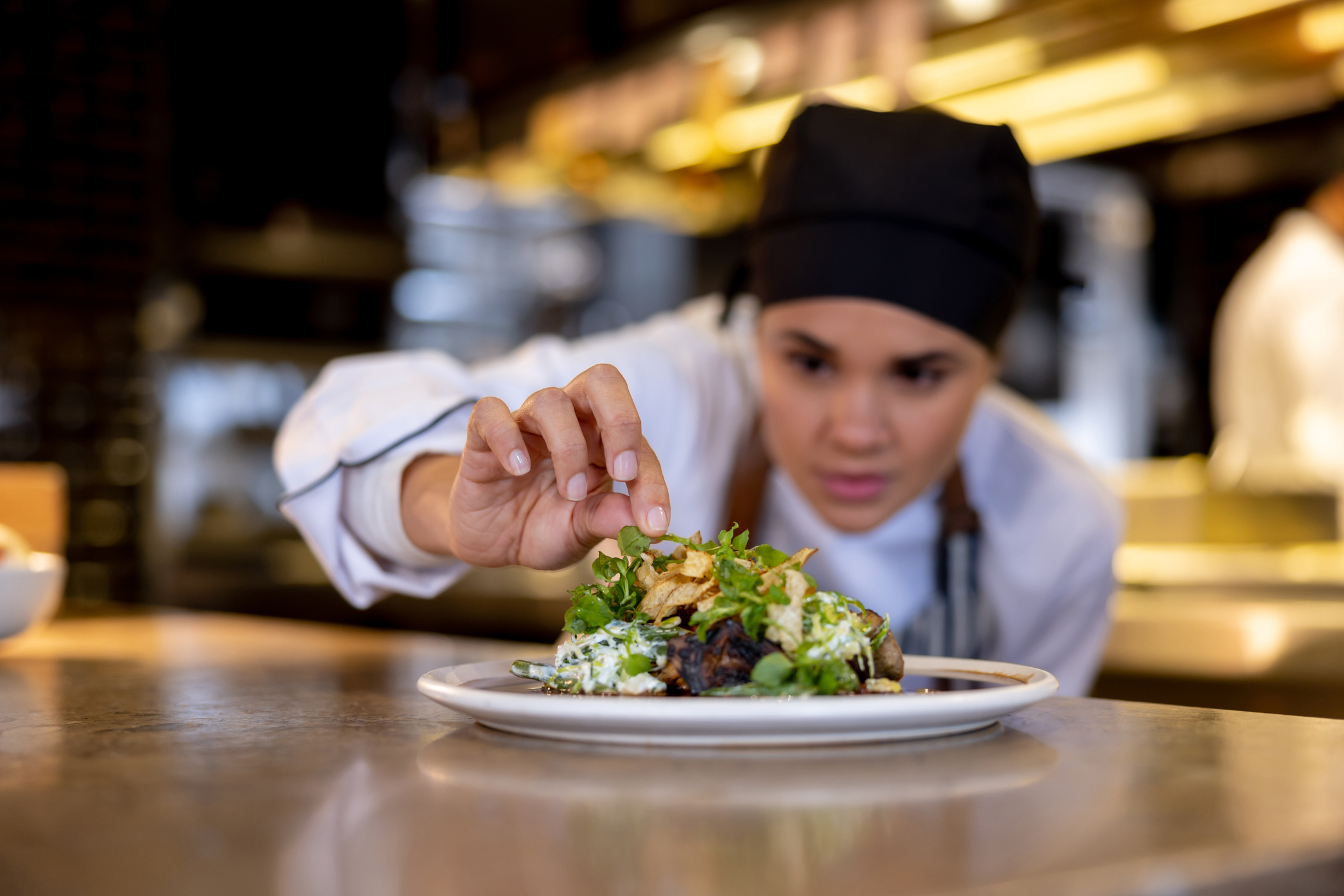
From the Chef's Table Festival, chefs with different styles show there's no one way to lead Published September 27, 2026 10:30AM (EDT) Chef decorating a plate (Hispanolistic / Getty Images) For a long time, the image of the chef has been remarkably consistent: a man in a white jacket, barking orders in a hot kitchen and demanding perfection from everyone around him. At the Chef’s Table Festival in Park City, Utah, last month, the women chefs I encountered offered a much more expansive definition of what it means to cook — and what it means to lead a kitchen. They weren’t presenting a single vision for the future of food. They were doing something more interesting: building careers around their own identities, experiences and ideas rather than trying to force themselves into the traditional mold of what a chef is supposed to look like. During a panel titled “Women Shaping the Future of Food,” chefs Fariyal Abdullahi, Sarah Glover and Betül Tunç talked about everything from social media and motherhood to femininity, cultural identity and the pressures of building a career in an industry that has not always made much room for women. For Abdullahi, visibility is part of that work. She told the audience that after posting a simple video of herself breaking down a fish, the clip unexpectedly took off on Instagram. What surprised her wasn’t only the number of people watching, but what some of those viewers saw in her. “I don’t realize how many eyes are on me until someone is driving from D.C. to eat my food and saying, ‘I want my daughter to be like you,’” she said. “Inspiring little girls and being visible is so important to me.” Abdullahi, who grew up in Ethiopia, has always understood food as inseparable from community. She was raised in a huge extended family — she has 32 aunts and uncles — and remembers a house that was almost constantly full. “Our house was always packed, I was never bored,” she said. “One of the things that captivated me about food was that it brings people together.” That sense of togetherness followed her into professional cooking, but so did the more complicated expectations surrounding women and food. Abdullahi spoke about growing up Muslim and the tradition of women showing respect for their husbands and male family members by cooking for them and serving them first. At the same time, she draws inspiration from the women in Ethiopian history who fought for the country’s independence, including an empress who went into battle against the Italian army. She doesn’t see those identities as contradictory. “I have both of those things in me,” she said. That ability to hold seemingly opposing ideas at once became one of the most compelling threads running through the festival. For Australian chef Sarah Glover, it has meant embracing femininity while building a career around one of cooking’s most visually aggressive elements: fire. Glover talked about being inspired by Nigella Lawson, one of the early food-media personalities to make femininity itself a visible part of her public identity. “Nigella was so beautiful and sexy and really showing people how to be this domestic goddess,” Glover said. She also recalled a conversation with open-fire chef Francis Mallmann, who described fire as feminine. Glover connected that idea to Aboriginal traditions in which women historically cared for the fire while men hunted. There is something almost deliberately subversive about that framing. Fire is usually coded as aggression, danger and toughness. Glover sees something else in it: warmth, caretaking and even a kind of dance. “People think fire is aggressive because it burns and it can hurt you,” she said. “But the smell and warmth is very nurturing and comforting.” Glover said she enjoys embracing her femininity and “taking that back” while working over fire. Her floral, flowing clothes and romantic aesthetic are not things she feels compelled to shed in order to be taken seriously as a chef. They are part of the point of view she brings to her work. That idea — that a chef’s point of view comes from the entirety of a life, rather than one neatly defined culinary tradition — surfaced again during a panel about travel and where chefs eat. Chef Isabel Coss spoke about deliberately seeking out experiences that leave her feeling a little out of place. Travel, she said, requires trusting yourself and trusting the journey. “Playlists, music, attention to detail, you bring all of that back,” she said. “We’re a compound of our travels, lives, and experiences.” It is a useful way to think about culinary identity. Food does not always have to fit neatly into categories like Mexican, Jordanian, Ethiopian or Australian. It can be the accumulation of everywhere a person has been and everything they have experienced. Jordanian chef Sara Aqel made a similar argument from another direction. “We get really sucked into the idea of looking up to someone and wanting to be just like them, and that’s not right,” she said. “You start losing bits of yourself and what could make you a better chef and make your food better food.” Aqel said she is fascinated by ingredients and techniques from around the world, particularly Japan. But when she cooks, she returns to what she knows most intimately. Her food is rooted in Jordan, she explained, even as she incorporates techniques learned from chefs in Italy, Peru and Ecuador. “Every chef I meet, I learn new techniques I can use,” she said. “But when you cook, you always want to cook from somewhere you understand.” That sense of authorship was visible throughout the festival. Each chef seemed to have a recognizable point of view — something you could understand from the plate itself, without needing the chef to stand beside the table explaining it. Want more great food writing and recipes? Sign up for Salon’s free food newsletter, The Bite. For women working in food, though, that question of authorship extends beyond aesthetics. It can also mean rethinking the culture of the kitchen itself. Earlier in the festival, chef Jessica Rosval made that argument during a panel about creativity. Creativity, she said, is never free. Chefs have to consider seasonality, cost, time and, crucially, the people who will actually have to execute the food. “You have to be conscious of your team and employees in the process,” she said. “It’s your responsibility as a chef to provide good quality of work life.” Rosval pushed directly against the stereotype of the angry, aggressive chef who treats the kitchen like a battlefield. A menu, she argued, should not require cooks to spend 18 hours peeling pine nuts simply because the chef wants to demonstrate technical skill. “You have to learn how to take the big ideas and stories and compress that into a bite,” she said. Her philosophy was simpler still: “Work does not have to feel like war.” That may be one of the most significant shifts these chefs are arguing for. The goal is not simply to get more women into professional kitchens. It is to make enough room for women to decide what those kitchens — and the careers built inside them — should look like once they arrive. That also means confronting one of the industry’s most persistent assumptions: that a successful chef must sacrifice everything else to the job. Abdullahi and Glover both spoke about the fear many women in the industry face that becoming a mother could mean giving up their careers. Professional kitchens demand long hours and enormous physical and emotional energy, and the industry has historically been structured around the expectation that someone else is handling the rest of your life. Abdullahi argued that the solution is not asking women to choose differently. It is building an industry spacious enough to hold both. “We need to make space for women in the kitchen to have careers and also be mothers,” she said. “Work does not have to feel like war. The chefs at the festival weren’t offering a single blueprint for how to accomplish that. Their work suggested precisely the opposite: there can be many versions. There is Glover, embracing a feminine aesthetic while cooking over open flames. Aqel, grounding her food in Jordan while absorbing techniques from around the world. Coss, treating travel as an essential ingredient in her creative life. Abdullahi, drawing simultaneously from Ethiopian history, Muslim traditions and her own contemporary experience. Rosval, trying to build kitchens in which creativity and humane working conditions reinforce, rather than contradict, one another. And then there is Bolivian chef Marsia Taha, who used the festival to introduce diners to an ingredient they might otherwise approach with some hesitation. She served piranha. The fish arrived at the table whole, head on, its sharp teeth still plainly visible. We ate it with our hands. And it was delicious. That meal felt like a small, vivid demonstration of what the women at the festival had been describing all weekend. Food can preserve tradition without becoming trapped by it. It can be feminine without being delicate. It can be ambitious without being punishing. A chef can travel the world without losing sight of where she came from. She can become a mother without surrendering her career. A kitchen can demand excellence without demanding suffering. At the Chef’s Table Festival, the women chefs seemed less interested in proving that they could succeed within the old model than in asking what might happen if they built something different. The future of food does not require one new model of the chef. It requires making room for many more of them. Related Topics ------------------------------------------ Related Articles
The women reshaping kitchen culture
Full Article
Original Source
Read the full article at Salon →KhanList aggregates and links to publicly available news content. We do not host full articles from third-party sources. Always verify important information with original sources.