
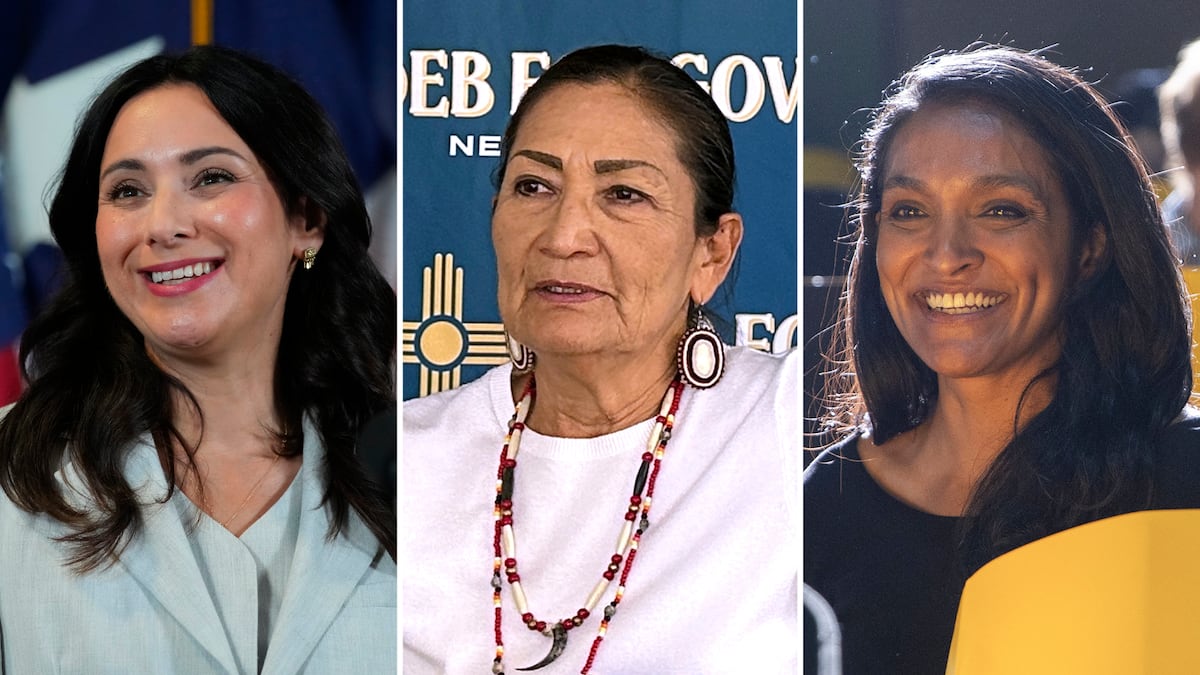
The U.S. midterm elections have brought a great deal of change: high turnout, major Democratic gains, and a host of new faces. But they have also brought a remarkable surge in the political representation of women. Thanks both to female voter participation and to the women elected to office, many of whom shattered longstanding glass ceilings, the political map of the United States has been transformed.For the first time, as many as 155 women will serve in the U.S. Congress. The previous record was 152, set in 2024. The figure speaks for itself, underscoring how more and more women are seeking to take responsibility for the country’s affairs and help shape its future. There will also be 17 female governors across the 50 states, 14 Democrats and three Republicans, representing just over one-third of all governorships. The previous record stood at 14.The wave of new names on the national political stage is enormous, and many of them are giving greater visibility to groups that have not always been well represented in politics. Perhaps the most prominent example is Gina Hinojosa, the new governor of Texas, a 52-year-old who has become the first Democrat and the first woman to lead the state in more than 30 years.But Hinojosa is also the first Latino person to govern Texas, a state where Latinos now make up the largest share of the population, accounting for 40.2%, slightly more than white people at 39.8%, according to data from the Brennan Center. That population has doubled since 2000. Of Mexican heritage, Hinojosa and her victory have inspired many Texans, who welcomed her with country music and the honking of pickup trucks.“It’s a shock. We’re still in shock,” says Jean Sinzdak, associate director of the Center for American Women and Politics (CAWP), the leading U.S. organization for research and data on women’s political participation. Speaking with obvious excitement, she describes the election results as “a steamroller.” “We know elections are cyclical; there was a possibility,” the expert acknowledges. “Like everyone in this country, we have a sense of surprise at how much has changed. I’m still processing it,” she tells EL PAÍS by phone.Her organization is still compiling the numbers, but researchers there remain genuinely astonished by the scale of the Democrats’ midterm gains and encouraged by the number of women who have won influential positions. Sinzdak points in particular to Latina women: “At least 26 will serve in Congress, compared with 21 before. And there could be more.” There will also be 31 Black women and three Native American women serving in Congress.First Native American and Black women governorsSeveral races are still too close to be called, as Sinzdak notes, but the significance of the results is already clear. Alongside Hinojosa, there is Deb Haaland, the 65-year-old Democrat from New Mexico, who will become the first Native American governor in U.S. history. A 35th-generation descendant of the Laguna Pueblo, she was also the first Native American to serve in a federal Cabinet position when she became secretary of the interior in 2021 under Joe Biden.And then there is Keisha Lance Bottoms, who, after her victory in Georgia, will become the first Black woman ever elected governor of a U.S. state.Georgia is a particularly notable example, according to Sinzdak. “A total of 18 Black women will serve the country at the federal level in various roles. Previously there were 11. And of those 18, nine are from Georgia. That has been very striking,” she says. “There’s a whole story about records broken and visibility, about the diversity of women serving in Congress and other institutions.” Georgia has a long history of civil-rights activism, and its African American women’s community has supported those efforts for decades. Now, work that was often overlooked or carried out behind the scenes has evolved into successful political careers. Lance Bottoms, 56, was mayor of Atlanta, the state’s largest city, from 2018 to 2022. That role helped make her an aspirational figure for thousands of women.A similar trailblazing role now falls to Nithya Raman in Los Angeles. Elected the city’s first mayor of Asian descent, specifically of Indian heritage, she succeeds Karen Bass, who made history as Los Angeles’s first woman and first Black mayor. Born in 1981, Raman is also among the youngest leaders of a major U.S. city.Increasingly, young women are taking an interest in politics. “They’re more likely to be discouraged or at least not actively encouraged to think about getting involved in politics or running for office than young men are,” Sinzdak explains. For her, part of the challenge is to flip that narrative. She stresses the importance of girls and young women having role models they can identify with, making it seem normal that their representative in Congress or the person running their city is a woman. She also emphasizes the need for civic education about how institutions work to be taught in schools and made equally accessible to children of all backgrounds, a priority championed by CAWP.For now, much of that information reaches young people through social media. That is why many women in politics use their platforms to share their political stories, personal experiences, or often a combination of both.One example is Alexandria Ocasio-Cortez, who recently chose to document her egg-freezing journey. It is a deeply personal decision, but one with broader social, and therefore political, implications, touching on issues such as delayed motherhood and the cost of fertility treatments. The Democratic congresswoman is widely seen as a potential contender for the White House in 2028.There is also Ilhan Omar, the Minnesota congresswoman and former Somali refugee, who was comfortably reelected in this election after enduring a barrage of attacks from U.S. President Donald Trump, culminating a few weeks ago in a search of her Washington home by the U.S. Department of Justice. Omar has amassed nearly two million followers on Instagram, where she speaks openly about the importance of “compassion, empathy and courage” and is just as willing to engage with the latest viral trends. She went on to win her district in a landslide, securing 76.5% of the vote.According to Sinzdak, the fact that Kamala Harris served as vice president and later ran for president in 2024 also inspired many women. But she was not the first. As the National Museum of African American History and Culture, part of the Smithsonian Institution, notes, more than 200 women have sought a presidential nomination since 1872. Yet only two have been Black women: Harris and Shirley Chisholm, the first Black woman elected to Congress, who mounted a historic presidential primary campaign in 1972. Like Chisholm before them, women today still choose to believe that it is possible.Sign up for our weekly newsletter to get more English-language news coverage from EL PAÍS USA Edition
The women behind the Democratic wave transforming US politics
Full Article
Original Source
Read the full article at English →KhanList aggregates and links to publicly available news content. We do not host full articles from third-party sources. Always verify important information with original sources.