
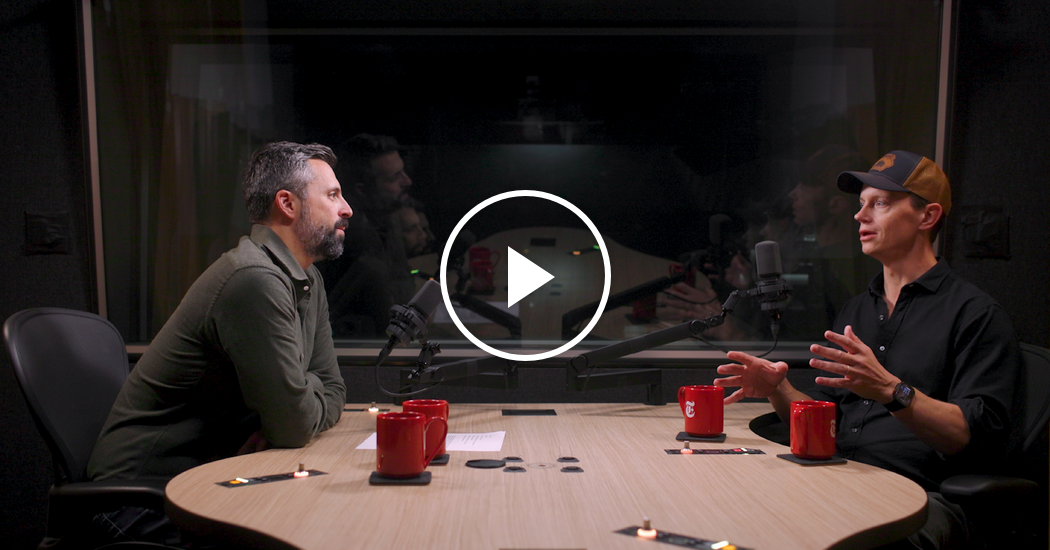
One of the races I was following most closely across the election was Rob Sand’s race for governor in Iowa. Last time a Democrat won the Iowa governor’s mansion was 2006 when Chet Culver took it. It’s one of those states that Democrats used to be very, very competitive in and seemed to have lost almost entirely. And Sand was running a race that was distinctive to really anything else I saw across the country this year. He’s a Democrat running as a Democrat, but his big pitch was that he wanted to destroy the two-party system. “That is what we mean on the yard signs and the T-shirts when we say it’s time to make Iowa not redder or bluer, just better and truer.” He wanted to end the two-party duopoly, what he liked to call the special clubs in Iowa. “I’ve been pissing off powerful people in both parties as your State Auditor, and I really want to keep pissing them off as your governor.” And man, did it work. Sand won the governor’s mansion in Iowa. Not by a little. He won it by a lot. He wanted by about 11 points. He ran 24 points ahead of Kamala Harris in 2024. He ran almost 30 points ahead of the Democrat for governor in 2022. And so I want to have Sand on to talk about how he did it, both because I think it’s an interesting model for possibly a lot of candidates across the country. We’ve been talking a lot about anti-corporate, anti-billionaire populism. But anti-party populism has a very long history, and one thing Americans really hate is political parties. But also because now he’s actually got to do something with it. And the question of how you actually govern as an anti-party populist is not an easy one. Rob Sand joins me now. Governor-elect Rob Sand, welcome to the show. Thanks for having me. So I want to talk about what got you here. You had a 30-point swing toward you from the last gubernatorial election in Iowa. I was going through your career, and through line to me was public corruption. You worked in the Iowa Attorney general’s office. You were an Assistant Attorney General. You focused and specialized in white collar crime and public corruption. You became State Auditor, I think, the first Democratic State Auditor in Iowa, first since the ’60s. So for a long time Yeah, yeah. Again, a lot of work there on theft of public money. What motivated you into public corruption and what have you learned about how it works. So a lot of what I do is animated by my faith. And one of the stories that stuck out to me as a Bible story when I was a kid was Jesus flipping over the money changers tables at the temple. You pay attention to the gospel, and it’s like, love your neighbor, love your enemy, even. Feed the hungry, clothe the naked, heal the sick. But he got angry too. And what he got angry at was people in positions of trust and power who were abusing their trust in power to enrich and serve themselves instead of recognizing, wow, what a gift I have been given to be here and putting that gift, that placement in society to good use for ordinary people. And I remember going into law school thinking, I’d love it if I could do public corruption, prosecution, financial crime, prosecution, prosecution of people who, by definition have access to other people’s money so they have a good position in life. They’re not committing crimes of desperation. They’re not committing crimes of inebriation. They’re just literally greedy. I’ve called it before crimes against gratitude and crimes against gratitude. Crimes against gratitude. It’s like, look at you. You have a job. You must get paid a decent salary because you have access to other people’s money. And here you are. Instead of looking around the world and thinking of all the things that you have, you’re thinking, I want more, I need more, and that kind of stuff to me is just it’s more offensive in a way, particularly on the public sector side, because those crimes are also crimes against public trust. They’re crimes against our idea of self-governance. They’re crimes against the idea that we actually could have a government that would actually serve us in serving insiders and special interest groups. And I got lucky in that sense that when I graduated, they wanted to hire someone at the attorney general’s office to focus on financial crimes because no one else wanted to do it. And I was the guy that was kind of like the Rube. Everyone else is like, man, these cases are complicated. There’s a ton of paperwork you could read document 10,000, and it totally changes the meaning of document seven. I raised my hand as the guy just kind of fresh out of law school. And so they put me into this Iowa film office tax credit scandal that we had at the time. And they just kept handing me all the public corruption cases. The other piece of it that was really frustrating, at least in Iowa, was you’d do all this work, all this paperwork you got your witnesses to of course. And at the end, no matter how much money somebody steals in Iowa, there’s no point at which they are required to go to prison. So you could prove that somebody Stole $400,000 from taxpayers, but they would go to sentencing after a trial and be saying, boy, Judge. You my client’s not going to be able to pay it back if you put them in prison. So, you should put them on a payment plan and give them a suspended sentence, which to me is explain that to an ordinary person. Explain that to somebody who gets up every day, goes to work, works hard, makes a middle income or working class. And here’s someone who was in charge of a piece of their taxes, their money, their time away from their family, their blood, their sweat, their tears. And you’re going to tell them like, O.K, they Stole $400,000. But we’re just going to let them back out and make sure they pay it back. And by the way, the payment plan that they get put on, it’s like they’ll get it paid back when they’re 867 years old Yeah yeah yeah yeah. It’s never very realistic. So I hear the way that kind of corruption offends you. What did you learn about the conditions that are conducive to it? What is the soil in which corruption thrives? I mean, you want to ask me right now, sitting here today, and I think a huge piece of it is a two choice political system where vast amounts of attention and time and money and resources get put into Democrats and Republicans just beating up on each other, as opposed to actually working together to solve problems. There’s all kinds of problems that people experience in their day to day life, and people in elected office are just out there, trying to win the next election immediately after they win this one and then trying to beat up on the other side because it’s this broken two choice political system that functionally it allows corruption. It allows laziness because the only thing you have to do to have what many people would consider a successful political career, if you define success by getting reelected over and over and over again is just convince people that you’re the lesser of two evils. When you say it like that, it’s hard for me to tell if you’re making a distinction between what one might think of as corruption. I would put in that category, somebody like Donald Trump taking the jet from Qatar, and what you might just think of as failure. Yes failure to address priorities, a failure to govern well, a failure to spend your time on what the public wants you to spend it on. Are you making a distinction there? I don’t think that I am. I think I’m using a broader definition of corruption because there can be the corruption where I prosecuted the town clerk that Stole 60 or $80,000 from Menlo, Iowa, teeny little town. I had a couple of town meetings, talking to people about what had happened. And that’s corruption in the most specific sense. But there is this broader sense where I think a lot of people, a lot of ordinary people see corruption as anytime you have that position of trust and power, not doing what you’re supposed to do with it. I cut my teeth at the attorney general’s office, prosecuting the Iowa film office tax credit scandal. My mentor was a Republican in the office, the Deputy Attorney General, Tom h. Miller not to be confused with the attorney general himself, Tom j. Miller but it’s Iowa, and Tom and I prosecuted most of these cases together. If you remember, back in the late aughts, film tax credits were like a big deal because everybody thought like, oh, we can get filmmakers to come into our state if we just give them money. And of course, you could get them there for a month to film one movie, but then someone else would pass another set of incentives that would lower the floor, and they would go somewhere else to film their next movie. So it’s always kind of just a silly wild goose chase. But they passed a program in Iowa riddled, absolutely riddled with loopholes. They literally wrote a statute that gives people an unlimited amount of refundable tax credits, and all you had to do was spend money basically for the movie and that. And if you spent money for the movie, then you could get percent of whatever you spent back in refundable tax credits, so you could then sell them. If you didn’t have tax liability in Iowa to somebody that did. So you could have under this. Oh yeah. Oh yeah. Oh yeah. Oh yeah. You could have bought a refundable tax credit like that. That’s not Yeah also transferable. So you could buy a 747. Use it in the background of a single shot, sell it for $0.95 on the dollar of what you got it for, and then get another percent on top of your purchase price in refundable transferable tax credits. You could then sell to somebody else because you actually don’t have that much tax liability. And the transfer is usually $0.88 on the dollar. It was insane. And so here we were trying to prosecute fraud. And it basically had to be around people inflating their invoices. So in the auditor’s office, I had an exhibit from one of our trials, a shovel, just a really very regular shovel that you would probably have in your garage that taxpayers paid $250 to rent for six weeks. Just one of those things where you’re like, where were the brakes here. So this is a real you’re looking to prosecute what’s illegal, but the scandal is what’s legal Yeah quality. Yes it was unbelievable. It was such a great illustration of again, from reality and common sense lawmaking can be. Where again, if people really had a sense of accountability who are in elected office and a sense of true public service, where making mistakes like that could really cost them, they probably would think a little bit more clearly about passing a law like that before they do it, there’s this book from the early 2000. It’s a political science book that has a tendency to lodge in people’s head when they’ve read it. And when I was looking at the things you say, it felt to me like you’ve read it. It’s called stealth democracy. You’ve read it. I actually I have a specific memory a specific memory of walking around in the library while I was in college looking, pulling books for my honors thesis and actually pulling it off the shelf. I’m not even kidding you and thinking, oh, stealth democracy. What’s that about. Because it’s a great name. It’s a great name, man. As a shot in the dark. In my political science knowledge, this one paid off for me. It’s been a very memetic book for years. It has sat with me, and the core argument of that book, based on a lot of survey data, is that when people see the two parties arguing a lot to them, that is evidence of a kind of corruption Yeah, they take that as evidence that the public believes, rightly or wrongly, there is this large zone of common sense. And if the parties are not agreeing in a commonsensical way, yes, what that is revealing is that they are out for their own interests and not for yours. The cooperation is a signal of things working in a clean, good government way Yeah and conflict is a signal of at least a certain form of public corruption. And a lot of the things you say on the trail just sound like that to me. I think that is accurate. If that’s a piece of stealth democracy, that makes sense to me. But in a large part my bigger point is in responding to that is, yes, I do think that people look at it that way. And I think some of that goes back to that there’s a problem. And I can imagine you get in a taxi or an Uber and where you’re going. But then you look around and you’re like, yeah, this isn’t quite the right thing. You just have this sense of this isn’t right. You’re not exactly sure what the problem is. Did the driver take a wrong turn? Was there traffic? Maybe they’re taking, but. But that something isn’t right. And I think people have that sense. And the easiest way to understand that I think is describing it as it is. It’s some form of corruption. Could it be financial? It could be, but it could just be power. Power distorting people’s sense of public service. Because at the end of the day, even if maybe they’re not always trying to serve somebody financially, they’re still trying to just grab that power and use it for their little private cloud rather than actually using it to serve the public. You’re in an interesting political tradition here. I think this year people got used to on the Democratic side, anti-corporate, anti billionaire populism. On the Republican side, there’s anti-immigrant, anti-elite populism Yeah you’re in a tradition of anti-party populism. Yes old school progressive reformer tradition 1920s like 1920s. So tell me a bit about this theory. So if you’re sitting here and somebody says no, the problem is simply the billionaires or the corporations, or maybe a Republican is sitting here and saying it’s the academics and you’re saying, no, it’s the political parties. Why Because at the end of the day, I think about it this way. There’s this line in the Lord’s Prayer, lead us not into temptation. And it’s a really wonderful thing to try to recite every day, because the idea is that if we can stay on the straight and narrow and avoid the things that might pull us off, it’s easier for us to do what we know we should be doing. And when I look at the two choice political system, all I see is temptation. Temptation for elected officials and candidates and consultants to get people to take the easy way. We did 200 public town halls in this campaign for governor. At every one of them, we started by talking about how politicians and candidates have come to understand that getting reelected can be easy, even though solving problems is hard because they don’t have to solve problems to get reelected, they just have to be the lesser of two evils. That’s not complicated. Just lie about and demonize your opponent, and then you can get people to be like, well, I guess I got to vote for this guy. And so. Across America, millions of people feel trapped into voting for a candidate that they don’t like because they think, well, the other one I can’t vote for. That is a tremendously corrupting influence on where we’re supposed to go. And to me, it’s one of the issues. I think it’s like the baseline underlying issue behind everything else. The economic inequality question is a good one. That has always been debated, and I’m not saying that it isn’t important. Economic equality and inequality are important, but at the end of the day, we’re talking about the decisions made by elected officials, but elected officials who need money. The $56 million we raised, I think 58 58, it’s a record. I mean, don’t those people I mean, some of those are small donors. We average donor out of that, I think $150 for us. But to get to that number, some of them are not small donors Yeah, yeah. And I think an intuition people have not wrongly is that actually everybody wants something. So some of the small donors just want you to beat the Republicans. Correct even some of the big donors to big donors. This has been a fascinating experience. I have a whole in my book on polarization, I’d like to hear let’s talk about money for a few minutes, because the way we think about money, I’ve always broken it into two groups. There’s transactional money and ideological money. The transactional money, and it’s all transactional way. Some of the money wants you to do something that is political or values aligned. Some of the money just wants a favor in government, a tax break to be created or extended or reversed. But all of that money wants something. And the people who say, the core generator of corruption in government, is the need for this money. What have you learned about political money? Why is it not the core of what you’re saying here? Well, it is a problem. I mean, I’ve said repeatedly and I’ll say it again right now, Citizens United was the worst Supreme Court decisions in our lifetimes. Just absolute embarrassing failure of the Roberts court. We do need to do something about it I would love to do in Iowa what they’re doing in Montana and Hawaii, to redefine the powers of a corporation, to say, no, O.K, Citizens United might be there, but we’re not going to give you the power to do that. I think that we should do that everywhere. It’s a wonderful way at the state level to get around it. So money is a problem in politics. But the bigger piece that I’m more focused on is this party piece, because again, to me, it enables a whole separate level of that same corruption and different kinds of corruption, as well as just the laziness. We don’t have to solve problems. This, a lot of this comes down to that. Well, why do there’s a lack of competition? So a great book that I have recommended to people for years is the politics industry. And it’s a pretty simple idea. It’s written by a business school professor and a businesswoman from Wisconsin, which always makes me want to say that she was running a cheese company. I’m not sure if that’s true, but to Catherine, Catherine, Gail, and Michael Porter Yeah, yeah. And it was this. And it was a simple point. They were saying, hey, we live in a society where we say we like markets, where people have the freedom to choose from multiple options. We know that a duopoly, which a shared monopoly between two people or two companies isn’t productive. So why do we allow that in our political system? It doesn’t serve customers. If you only have two options for where to get a thing that you must get. They’re both just going to end up trying to tell you that the other one is the worst choice. If you had to eat hamburgers and you can only get them at Burger King and McDonald’s, they would be telling you the other one is feeding you rat meat. When you look at Europe or Israel or Brazil or I mean, there are a lot of countries in this world with multi-party systems. Do they look so much better to you in their governance? No, but I’d also don’t want to emulate them. I don’t think that that’s the path. I just think it’s about having more options on the ballot. It doesn’t have to be more parties, for example. You can have two people whose views are largely similar. But one of whom is corrupt and the other of whom has high integrity. And in the system, in the kind of system that I want us to step into to advance to could replace someone in a party who’s highly corrupt with someone in the same party who isn’t, and it wouldn’t be a miraculous effort to do it. I mean, that’s part of the problem right now, is the way we divide it. I mean, in Iowa, for example, independents don’t have an equal right to participate in our democracy. Literally don’t have it. So you’ve got your constitutional right to vote. You’ve got an election that your tax dollars are paying for. But if you’re an independent voter in Iowa, which about a third of Iowans are. If you walk in on primary day, they’re going to tell you, sorry, you’ve got to sign this sheet of paper. Joining a private cloud before you can exercise your right to vote in this election that your tax dollars are paying for. That, to me, is un-American. It’s wrong, and it’s corrupting. Because then what you get is people that are only listening to their private cloud in order to get through the primary, or people who only cared about their private cloud coming into the primary in the first place, who decide to run because the whole system is not about serving the public. When this country was founded, they used to use the phrase the people, and it didn’t mean each individual person. It meant the people as a group out of many. One — E pluribus unum. And we don’t think about that anymore. But I really think it’s important for us to reconsider the idea that public service can be about trying to represent everybody. I’ve tried to do that really intensively, both in my time as State Auditor and in the campaign for governor. I’m planning to do it continue to 100 public townhalls every year, telling people what I think is realistic. People come to me asking me if I can do a thing, rather than making a promise that I know that realistically, in the situation I’m getting into, I can’t keep or that there’s some legal reason that I won’t be able to do it, I just tell them that. And Ezra, a tremendous number of people just appreciate me not BSing them. They’re like, oh, I didn’t know that. Thank you. That’s refreshing. I hear that so much from people just for saying, hey, look, I know you care about that. Here’s the reality of the situation. This is why I couldn’t do that. If you want somebody who’s going to tell you they can do things they can’t do have to look elsewhere. I am going to try to just tell you what the truth is. I can imagine having this conversation about parties. In fact, I have had this conversation about parties where it’s a fun, abstract political science discussion. You are the governor elect of Iowa Yeah this has been at the core of your pitch to Iowans. Yes, Iowa obviously not being a highly partisan Democratic state. And for you, it’s a set of structural reforms that, if enacted over time, will make solutions and possibilities possible that are currently off the table. So walk me through this. Walk me through this. Not just as a kind of conceptual argument about politics, but when you are thinking about questions like Iowa cancer rates, which were a huge part of your campaign, or what’s happening with the water or the education system, how do you imagine this going, how you begin with structural forms to the party duopoly? Sure and it actually gets you to things where people’s lives are different. So this is one of my favorite things to talk about, because I always go back to I learned in the course of this campaign, apparently we don’t think that this is truly an Abraham Lincoln quote. So many are not, it turns out. No but allegedly, he said that if you give me six hours to chop down a tree, I’ll spend four sharpening the X. What that means is that when you have a tool to accomplish a job, having that tool be ready and able to do that job effectively is incredibly important. You look at our system of governance right now. It’s a joke. It’s a mess. Look at what. Every time that on DC, one party gets a trifecta. What do they do? They pass one bill in two years. Like one big thing. That’s not quite fair. Two they did well, I’d say two. I’d say two things about this. One, there’s a lot of secret Congress going on to use Matt Yglesias term, but two, and I actually think this is a problem with how DC works now. But you look at the Inflation Reduction Act, you look at the Bipartisan infrastructure bill, you look at the CHIPS and Science Act. Three those should know those should properly be like 400 Bills. Oh, because what has happened now is everything has become a giant omnibus because you get so few shots on goal, because you’re using weird procedural workarounds to the filibuster. So it’s not that they’re not passing anything, it’s what they’re passing are giant, completely incomprehensible Yeah under so that everybody then can look at it and be like, I can’t believe you voted for that. I can’t believe you opposed it. Well, you’re looking at different pieces of it. Do you remember this moment? I think it was back when it was called Twitter where Ted Cruz in this house. Fair enough. In this house, we believe Ted Cruz and AOC on Twitter were like, let’s pass a clean bill. And I think it was an ethics reform bill, which is why it stuck out to me because I’m a big, good government guy. They were just like, let’s do a clean bill. And I think it was like banning stock trading never happened. But there they were on Twitter X having an exchange in the public being like, let’s do it didn’t happen. And you’re right that they just do these huge things instead. But here’s my bigger point. I to go back to your point about O.K, we got high cancer rates in Iowa. So a couple of things in Iowa that the state can be doing. We have the highest radon levels in the country 6x average radon is the second leading cause of lung cancer behind smoking. And lung cancer is the leading killer. They passed a bill last year that said O.K, New construction in Iowa has to be built with a radon mitigation system. Good and then I’ll ask at a town Hall, anyone here think they’re going to live in New construction before they die. People laugh. I say great, so that’s not enough. If we want to address this, we need to do more. Here’s something we can do that doesn’t cost taxpayers $1. Every time a home inspector does an inspection, every time a realtor sells a house documented, they need to show that their client initials every one of these. I know that radon is incredibly high in Iowa. I know that radon causes lung cancer. Yes or no want a radon test performed as a part of this. And then yes or no. I know that getting radon mitigation system is going to cost me two grand and I. Yes or no. Want one of those installed. Just that little bit of forcing people to think through this as they do it. I know the vast majority of Iowans are going to say, better safe than sorry. And if you’re making a house, if you’re purchasing a house, you’re putting a lot of resources into something. You’re also going to say, hey, long term, that $2,000 on a radon mitigation system is a lot cheaper than lung cancer in 20 years. So that would be a much more effective way to address that water quality. Real issue in Iowa. Nitrates cause cancer. We have incredibly high nitrate levels. I want to do the single biggest wetlands restoration that anyone has ever seen. Everyone can get behind that. Nothing filters water better, and no matter who you can find something that you want to do in wetlands. I like to say there’s four and 1/2 F’s. If your kids you can take a field trip, you can fowl hunt, you can photograph, you can float photographs. The half FR I did it out of order I try to save that one for last. But the idea is at the same time, we’re 49th for Public Land in America. We are losing young folks. Many of them move to places that have more outdoor opportunities. So let’s clean up our water, reduce our cancer rates, improve our ability to have fun outside and retain our young people all with that one solution. And so I think to bring this back to the party question, I think one way a Democrat might hear this is to say, yeah, you’ve had a bunch of Republicans in charge who traditionally Republicans I’m not as familiar with the Iowa variant but are not as excited about public lands, tend to give corporations a lot more leeway, tend to not put as many impositions on home builders and home Sellers and so on. And what you have here is a corporate power problem and a Republican Party problem, probably generated by big donors. So connect this back to the core thing. You’re saying. You want to sharpen the ax, you sharpen the ax. And how does that lead you to cut down rate on levels? And that’s the thing the one thing that unites every single one of the problems that we face is that our political system is designed to reelect politicians, rather than to solve our problems. Here’s one of the wonderful things about this Ezra Iowa actually has a great tradition. We have been one of the foremost reformer states in the country. First state to create an independent redistricting commission. Iowa ours is still the gold standard. Seven years as a prosecutor. If I talk to lawyers from other states. When they learned I was from Iowa, they would get excited about how we pick judges. Just they would geek out on it. And this is the cool thing about that. If you think you are the smartest attorney in the state of Iowa, that everyone would be so lucky to have you ruling from the Iowa Supreme Court and all your wisdom and your brilliance for us to see, to guide our lives. Cool good for you. You have to interview with Joe Sixpack before you can get on the Iowa Supreme Court. That’s literally how our system works. You have to submit your resume, letters of reference. You have to sit down for public interviews. And the committee that you’re in front of is half lawyers, half non-lawyers, just Iowans. They can ask you whatever question they want. Then they will send to the governor a small list of names that the people of the state of Iowa, think are qualified and the governor can only pick from those names. So we have this great tradition of doing this in Iowa. And the thing is, right now, if we reform our system, then the next time we have a cancer crisis or another crisis comes up and we don’t know what it is today, we’re not thinking about it, we’re not talking about it. But if we have a system, if we have an ax that’s sharp, a system that is more ready to actually address issues because politicians actually have to serve us to get reelected instead of just demonizing their only opponent. Then those problems that future generations face will fade more quickly. So talk to me about how you actually do that. What changes do you make to your system. Changes? yes. Single open primary. Your eyes brighten when I ask about I love this stuff. I love this stuff. Yes let’s end the special legal privileges of the Democratic and Republican parties. One single primary. It’s the people’s primary. Because this is our democracy. You want to be a member of a private cloud. Congrats good for you. Go right ahead. You can have the D behind your name, but the public runs this primary. Every candidate that qualifies to get on the ballot is on the same ballot. We all, as voters walk in, including independent voters, all eligible voters, and circle whoever we like the most for each race. So then send the top three to five to the general election. In the general election, I like what Fargo, North Dakota first started doing. Approval voting. Here are five candidates. Vote for as many of them as you approve of. If there’s two in your party and you’re a super partisan person, great vote for those two. There’s two in your party, but there’s one that actually impresses you with their character. And you just love the idea of your kids listening to this person talk and watching what they’re going to do, even though you know you’re going to have disagreements with them. You trust them to do what they think is right. Then you can actually vote for them too. Maybe it’s a situation where you’re just kind of a middle of the road person, and you can just vote for the independent, and then maybe you vote for the other one because you really don’t want this one over here, but it gives you two options. Fine maybe out of five. One is your ex. You can vote for the other four, It doesn’t. It’s just like your conscience dictates what you do and how each person stands. Each candidate stands is up or down based on their own merits. And then one of my favorite things to do on the campaign trail is walk this. Walk people through this with two of the people sitting in the audience and just say like, O.K, so me, Susan and Ezra here are all running for office against each other, and we’re doing it this system. So I know that a bunch of people are going to Ezra. They like his ideas, they like his experience. But his voters can vote for me, too. Some of them if they like me too. So how am I going to treat Ezra in order to get his voters to also support me? And people will shout out, you’ll be nice, you’ll be respectful, you’ll be honest. People get super excited about it because when you just think about this, it doesn’t take a lot of thought. But no one’s been talking about this. In our democracy, almost nobody. We’ve had a fair amount of primary reform. I mean, California now has jungle primaries where it is kind of everybody’s primary. You can end up, and you often do end up with two Democrats in the top two, which is again, it’s done. Alaska has a top I think it’s a top four system Yeah, yeah. So you like that better. Well, but for the primary piece. But then ranked choice is confusing, and it delays results as we’re seeing right now. And approval voting I think is a great way to do that everyone automatically understands what that means Hey, here’s four candidates. Vote for as many of them as you like. Whoever has the most people that someone wins the race. Oh, O.K. Cool I always worry a little bit. I know a lot of election rule nerds. That’s the milieu I come out of. And whenever I have these conversations, it isn’t that these systems don’t sound better to me. And we have ranked choice here in New York. And I actually think you saw it made the mayoral primary nicer in certain ways. Certainly Brad Lander and Zohran Mamdani were incentivized to become friends as opposed to become enemies. On the other hand, whenever I’m like, well, you look at this place, it doesn’t really seem to have solved governance there. You look at that place. I always get a yeah, well, they didn’t quite make the exact set of tweaks Yeah, yeah. And it has always made me wonder a bit Yeah whether two things I guess. One is if it is so sensitive to getting the technical details exactly right, such that it’s very hard to point to a place that is large and say, well, they really nailed it. And you can see this radical vertical movement in positive governance. That makes me worried. But the other is that the electorate has a say too, right? And the conditions in which the electorate is operating have a say. And so, for instance, the media conditions have a very big say in this. What kinds of information people are getting. We were talking about Twitter X and how many people are there. Decline of local news is a big part of this. One of the things that I think has made a lot of governance in this country harder and goes a little bit more towards your lazy and do not actually have to solve problems. Dimensions is so much of political information is nationalized. People know a lot more about what is happening nationally. They know a lot more about the big fights. It’s hard to find out what’s happening in your state capital Yeah what is your representative doing in your state to say nothing of your state Senator and state, legislator that when you’re dealing with these systems that are meant to have a lot of incentives to work, for your people, but in fact have a lot of incentives now to be part of the big national structuring fight that tweaking and twisting the electoral rules can help on the margin, but how much will it really do. I think it can actually help a ton. So there’s two answers to that question. And I see the heart of your question. The heart of your point is how much of a difference does it really make. I have two answers to that. Number one, I do think that some pieces of the structure are important because again, if you just end up with the top two still just have the lesser of two evils for the entire general election, which is not a great set of incentives. It’s leading people into temptation. So yes, that part does matter. But the other piece is that it takes time. It takes time for people, both voters and candidates to re understand how the New system works. If you look at Alaska, it’s like the way that Sarah Palin ran under their New system the first time and the second time are very different because all of a sudden she understood, oh, when I insult other people and I’m rude, it actually just makes people like me less. Maybe I shouldn’t do that. I like to say it make politicians act like normal people. You get to have more than one friend, Ezra. So do I. If we only were in a world where we only got one friend? Someone else that wanted to be our friend would come in and start talking smack about our one friend in order to try to replace them. The world doesn’t work like that. When people do that kind of thing, we go, I don’t like these people. And so if you give elected officials and candidates the same set of structures that regular people have, they will behave better. But part of this to keep in mind is the culture that we create. I think everyone can appreciate this, but part of it to me is faith based. We lead candidates into the temptation to lie, to cheat, to demonize, because that’s the effective path for them to get elected. But if we have a system like the kind that I’m proposing that’s used in a few different jurisdictions, that incentive isn’t there. So does that mean that they won’t lie or demonize? No, it doesn’t, but it means they won’t have a reason to do it that actually boosts them. People will still fall short. They’ll still behave in bad ways, but it won’t be necessarily because the system is pushing them to do it. It’ll be because that’s more just their nature. Well, one thing I also see you both saying and doing here, and this maybe goes back in some ways to stealth democracy is people don’t want politics to feel this way Yeah, they might be part of it. They might participate in it. Can we talk about America the Beautiful? We’re going to talk about America the Beautiful, right? Well, why don’t you describe America the Beautiful? And I have a question I want to ask you about it. All right. We sang America the Beautiful at 200 public townhalls this campaign. We sang it at other events, too. But let me go back to before we were doing that in 2018, when I ran the first time I launched my campaign in my little hometown in Decorah. This is for auditor. For auditor. Yep at the VFW. And I remember before I did it, I reached out to the guy who was the chair of the Winneshiek County. Republicans and said, hey, hey, I’m going to run for State Auditor. I really think our politics is moving in a bad direction. And I want you to know that we’re having the event. It’s here, it’s this time, and you’re invited. I specifically want you to be there. I’m not doing this because I think that he’s going to vote for me. I’m doing it because I think this is important. We are. We are tearing ourselves apart. This system, this create, this incentive that are furthering division is weakening the social fabric of this entire country. And every one of U.S. has something that we can do to make it better. So throughout my time at the State Auditor’s office, I was more willing to criticize my own party, more willing to defend the other party. And in this campaign for governor, as we did these town halls, we would start them by talking about a lot of stuff that we’ve been saying. Now, our political system is broken. It’s too private clubs who are more interested in beating up on each other than solving our problems. The only way we fix that is by rejecting those private clubs and working together. So to do that, we have to love our neighbor. And I’d ask people, I tell them, because this is such a foreign feeling, I’m going to ask you a couple questions. If you should raise your hand in order to be honest. Don’t be scared. We’re just going to clap for you, O.K. It’s O.K to raise your hand. It’s going to be safe. Then I’d ask raise your hand if you’re a registered Republican and the Democrats and the independents in the room, I’d say, O.K, let’s applaud our Republican friends and neighbors. And then we’d do the same thing for the independents and the Democrats. So people I’m actually asking them to literally love their neighbor. Applaud for the people that they disagree with. And then now that we know that we disagree, let’s go ahead and prove that Democrats and Republicans, along with independents, can work together. Let’s sing the first verse of America the Beautiful. And I just say it starts with beautiful for spacious skies. I will not kick us off. Somebody else start it. And we did this in every single County in Iowa twice in this campaign. And people would cry, Ezra, because it was like it was the first time that they had been invited not to pretend that they agree, not to pretend that we are 1, but to acknowledge that we are different and then unite, which is in a very different framework, a very different feeling than just saying, skipping over the differences. I suspect this research, but there’s a lot of research on how there is nothing that human beings can do that makes him feel more connected to and warmly towards each other than to sing or dance together. A friend of mine told me about this halfway through the campaign Really Yeah. I mean, this is why people go to raves. It’s why they join the church. Chorus right. She pointed out that this is my friend Catie. She pointed out that when you sing with other people, your brainwaves sync up on a D Wave, and it’s the closest thing that there is to deep sleep Yeah I don’t but this research is very, very. I had always assumed you had this in the back of your hand Not at the — No, not when I started, but I love. How did you notice the way that it would shift the tenor of the room? It was unmistakable. I mean, even 200 times in. There are still times when I do this where I have to stop singing because I get emotional. I’m feeling it right now just thinking about it. We don’t do this often enough. We have all of these things with such a great start with this country, this idea that we are going to do this together even though we disagree, and these passionate disagreements, plenty of anger, but at the same time, so much mutual respect too. And that’s the piece of it that I think we’ve forgotten about. And to invite people into a room to say, hey, these people all disagree with each other today, right now doesn’t matter. Let’s be one. Let’s sing. It’s just a completely different feeling. There’s another piece of this that we did to try to just break down the walls of partisanship. And that was. When we got to the Q&A, I would remember one of the people who had raised their hand to say that they were Republican. Typically, 30 percent to 40 of the people at my town halls were not Democrats, and I would start the Q&A by saying, I just talked a lot about how partisanship is destroying us, and we need to create a better system. Talk is cheap, so I can tell you that we should listen to each other, or I can hand the microphone to a Republican, and I would just hand to the microphone to somebody in the audience who is a Republican. And sometimes they would give a little speech. Sometimes they would ask me a question that was just a totally ordinary question. Sometimes they would throw me a hardball. But a guy asked me once, a reporter asked me, has it ever backfired. And I don’t remember what my answer was at the time, but I remember thinking about it later and thinking it can’t because the action of me handing that microphone to a Republican, it doesn’t matter what the question is or what I say. People seen me doing that means a lot more than whatever words might come out of their mouth or my mouth. So you grew up in a County. Winneshiek County. That is one of these archetypal shifted from the Democrats to the Republicans spots. So it was Obama. Plus 23 2008 became Trump plus 9 by 2024. So you really come from somewhere that lost faith in the Democratic Party in a pretty profound way. What did you see happen? Well, I reframe this a little bit. What if it was always that County wants people who are going to shake up politics, and that County has actually been consistent, and the parties have been inconsistent in whom they’ve nominated. Obama came in 2008. Here we were 9/11 happened. It was my first year of college. He was willing to call it a dumb war. The war in Iraq, the second one. And there were so many people who were hungry for someone that just wasn’t a part of everything that had been happening in DC, and he was the outsider who was going to shake it up, and he was going to do with a smile on his face, which was great. I tend to have one myself. And so when she County, Northeast Iowa, the driftless area, we like that. And then in 16, along came Donald Trump, who also was going to shake it up. And they like that. And they’re more interested in someone who’s willing to be who they are, be true to themselves, and challenge their own party, even if that makes powerful people in their party upset than they are in what that person’s party affiliation is, which I actually think is lovely. Something I found myself thinking about as we talk about this. You and I are about the same age. And I think you were an Obama canvasser in Iowa. I think Yeah, I was yeah, yeah. 0808 so Obama kind of burst onto the political scene in 04 with this very famous DNC speech about how we’re not a red and blue America. That’s right. We’re One America Yeah and he runs for president in 2008. And that’s still a big part of his pitch Yeah that we’re being divided by special interests that there. But when you look at us, when you look at the way we live Yeah when you look at us on a soccer field or at a PTA meeting or at work, we’re not. We don’t look like we do on cable news. That’s right. And then Obama becomes president. And the lesson a lot of I think, particularly Democrats are not only take from his presidency as no, we really are red and blue America that you have Mitch McConnell blocking everything. You then have Donald Trump. And that kind of politics, that sense that our divisions are not what they seem to be, I think, became seen as naive. And that approach to politics was functionally dead in the Democratic Party for a long time. The Hillary Clinton I always think about the difference between Obama’s kind of gaffe when he got recorded saying, people cling to guns and religion because towns have been hollowed out by factories sent abroad and globalization, which was not a great comment, but was an effort at understanding, at the very least versus the Clinton Hillary Clinton deplorables comment, which is some of these people are just labeling it. They cannot be reasoned with anymore. This idea that you could transcend these divides was I think fell out of fashion. And one thing I saw in this election, I saw you doing it, I saw it happening in other places in different ways, but is maybe a bit of a return to it. But I think the question it raises is whether or it’s just another rhetorical rise before the partisanship fall, before you face a Republican legislature that just says, we want to win the next election. We’ll find out, we. I will never forget Mitch McConnell saying that his top goal was to make Barack Obama a one term president. That was so shocking to me. Just as an American. I was like, how can you’re not how can your top goal not be to address, this one issue and then this other issue and then this other issue. How can not your top 10 goals be working with whoever it that is sent by the people to make problems go away in this country? Sometimes that’s adding legislation, sometimes it’s subtracting it. But how that be or not. It just was so mind blowing to me that he would say that that’s my number one thing to do. Everything that he was saying that Obama was saying was right. But we have to make policy changes, structural changes to our democracy to make it real, because his rhetoric meant that reality of Mitch McConnell just being like, well, I don’t have to do anything in order to get reelected. That’s so messed up. We need to have competition. It should be that if you give someone a six-year Senate term and they don’t do Jack that someone else, even in their own party, can just run and get into the general election and be like, O.K, they say they like this stuff, but they haven’t done anything. I’ll do it. If it’s only two options. They don’t really have to compete in order to win, but if we want to get rid of that, make them compete, make them work hard for us, cut down corruption, then it can’t just be that rhetoric. That’s undeniably true. I believe that Americans are more United by what we share than we are divided. I think that is inescapably true, but you have to create a system that allows that to rise to the top, as opposed to one that pushes our leaders to divide us and focus on the places where we are different. So is the path to what you want to do that you send or ask for a bill from a Republican legislature remaking Iowa’s electoral system? What is your theory of from here to there? I mean, that’s the way you do it in Iowa. We don’t have referenda. So yeah, it’s hey, do you find openness to that Yeah I mean, well, we will find out. We are, what, 10 days out as you build your startup. We’re yeah. That’s right, that’s right. But yeah, I mean, look, we’ve got two Republican chambers. I think there’s plenty of public servants in there. And it’s just a question of finding the right people. And maybe it’s the leaders who are going to say what stands right. To be clear, there’s plenty of Republicans who support this, too. It’s not like they have to call it my idea. It’s not mine. I’m seeing it happen in other places, including Alaska. Pretty Republican state. Including Maine. Pretty Mill Road state. They can just say, yeah, this set of ideas. I agree with them. We should change the way the system works. What do you do about issues where there is genuine division on values? So Iowa has one of the strictest abortion bans now in the country six weeks. And that’s an issue where the people who believe different things, they really do just believe different things. There’s not always a technocratic positive, some compromise where everybody can get a little bit more of what they want and go home happy. So on these issues that are divisive because people are divided say here, abortion, how do you approach that. If you have a system where people are actually incentivized to work together to find practical solutions and places of agreement, instead of grandstanding and bomb throwing on places of disagreement, then all of those issues I actually think, will find those places where the vast majority of people agree and we’ll see progress on them, or Ezra. We just will see elected officials put their time and attention into places where we do agree, in order to actually produce results for ordinary people in order to earn a re-election. Something I’ve seen you say is you want to make sure that your administration will have Republicans in it. I know you did that as State Auditor, something I used to hear politicians promise and try to do. I think it became a little it fell a little bit out of favor over time Yeah what is both been your experience of it and what are you trying to achieve. Sure bipartisanship inside. Sure administration. Left wing. Wing One bird. We all benefit from listening to each other. I think we all probably. I talk about this a lot on the campaign trail, balancing out your own thinking with people that you often disagree with ends up being very effective. I think most people know this. The most interesting conversations that most of us ever have isn’t when someone says something and everyone else says, yep, because they all agree. It’s when you say something and someone goes, well, I think I know where you’re coming from on that, and I disagree. And here’s why. Y ou. Now all of a sudden you’re going to learned something New. Maybe you’ll teach them something. But this is such a more interesting exchange. And you usually walk away from those conversations feeling like you have a better understanding of the world and feeling also like the other people that are in it with you are also looking for answers. I wanted to have an independent and a Republican in the auditor’s office and senior leadership, and I had them there. They had made campaign contributions to my opponent, but I want somebody to tell me when my ideas are slightly less than perfect. It does rarely happen. But if they’re not there, then I’m going to do things that are bad. And I don’t want to do that. I want to do good. But if I don’t have someone who’s already inclined to think that my ideas aren’t so great, it’ll be harder for the people that I put there who are just are my team to begin with to be the ones to pump the brakes on something. Something that strikes me about that is in my I’ve been covering politics for about over 20 years now. And when I got into it, it was much more baked in to the legislative process that you’re trying to get bipartisan support, because bipartisan support was more common, and that meant you were having a lot more constant conversations across the aisle, and people were better at knowing how a piece of legislation would look to the other side. Oh that’s interesting. And they’ve gotten worse at it over time. Both sides on this. And I’ve always thought this is an interesting thing about having bipartisan conversations in a space where you can listen to them openly, that whether or not you actually got the support, when people couldn’t get the support anymore, they stopped having the conversation. But the conversation was often valuable. Yes because you can understand you to think through how this was going to be received in places that you didn’t naturally look to. So now what I see is Democrats are very, very sensitive to what the left wing might not like about a legislative proposal because they are having those conversations internally. Oh, that’s interesting. Even if they’re not left and right, but they’re not paying attention Yeah, but they’re not paying attention to what the other party will think, because they don’t really know how to judge that. And they’re thinking, oh, they’re just going to hate it anyways. Yes yeah. And what’s the point. I’m not going to get the votes Yeah. Why try Yeah but of course, you still have the question of the voters. right. And, things sometimes do matter in the way they land for them Yeah, it can be adjusted at the outset. I’ve always felt like I’ve had this joke about red teaming. You should actually have red teaming if you’re a Democrat, not because you’re going to get the Republican votes, but because sometimes if you could predict a little bit better where the opposition was coming from could strengthen the — Well, and I think you’re I think you’re right. You can strengthen the bill. You can earn that bipartisan support if you have good faith actors who are just trying to get to good solutions and you’re willing to compromise. A lot of ifs, a lot of ifs. We need to make them more common, not less common. I covered Obamacare, man. It’s a scarring experience. Here’s another piece of that altogether. What if we’re in the search of truth. What we’re looking for is policy will actually be effective and do good in the world, and won’t be something that the other side, when they get power, is just looking to unravel. We should want to build solutions that people can look at from different positions in life who have different values. And they can all agree. O.K, that would actually be good because if we do that is likely to be a solution that actually meets reality. And that isn’t just something that becomes another tug of war when the other party takes power. That’s the place where I think we make actual where we can really improve people’s lives, is doing the things where we can all agree on them. And it might not be everything that these people want over here, but we know that it will last, and it’ll have an impact and it’ll make things better for people. Now, again, this is in a world where we’re assuming that people are good faith actors, but that’s part of why we need to get rid of the incentives in our current system that pull them away and into temptation. This is something I’ve heard you say, and I’d like to hear you describe the theory a bit more, which is that it might be worth focusing on where there is agreement as opposed to disagreement, whereas politics often focuses on where there’s disagreement as opposed to agreement. I think the critique of something like this would be that it allows the entrenchment of things that might be wrong because they’re controversial. Well, for a limited amount of time, it might. But some of this is trust building, too, where I think people have to know who they’re working with. And the more things you can accomplish with someone else, whether that’s working in your office or a campaign or an elected office, the more you trust them to do other things. I oftentimes think about this as I talk about it as hey, this is a marriage, and who here who’s in a long term relationship, wakes up in the morning and decides to pick one of the four things is going to start an argument to have the first thing you say to your spouse, right Everybody’s got those. You can start a fight if you want to but if you start that fight, by the time you get to dinner and the question, the question is, what are we going to do for dinner. There’s probably lots of things that you agree on that you would both enjoy, but your spouse might be sitting there thinking I would love to do that, but so would you. And I don’t want to do it because it would make you happy. And they will choose their own misery over doing something that will make you happy because you started a fight with them. This is exactly what politics is right now, right? We don’t want to give the other side a win. Hold on a second. If you do this with them you will be also winning yourself. I said in my victory speech on Tuesday night, every single bill that the legislators vote for the Republican majorities. Where I sign is a bill signing ceremony you are invited to. That would be a change in Iowa. But that to me is common sense. And it’s exactly the kind of stuff that most people want to see happen. Well, why wouldn’t you invite someone that supported a bill to a bill signing ceremony? Great question. You should. So we’re either going to succeed together or fail together. But I can’t sign bills that you don’t send me. So when I campaign on popular stuff that the vast majority of Iowans want. If the Republican legislature doesn’t send me that Bill, not a lot I can do about it. That’s on them. But if they do and I sign it. Hey, look at us. We did this. Good for us. Now, you asked about these divisive issues. I think the more we work together on the places we agree, the easier it becomes to look at the places where we disagree. And actually start to find the more reasonable permutations of it, the more reasonable common middle ground stuff that the vast majority of voters, too, can look at and say, yeah, O.K, that actually works, as opposed to just yelling at each other all the time. And yet there is a jealousy around both power and outcomes. So one of the things I was think about, as you were saying, some of this was you were a State Auditor. Republicans gutted your office. Take away your power. They did. They’ve been moving to make the governor less powerful in Iowa. In advance of you winning power. Because they again fear that you can act with it. This is something I think Obama often ran into. Not to overly compare you to Barack Obama. Don’t worry about it. You’re not taking it. Not taking it that way. But what do you do when you actually do have good intentions? When you do want to find a different political path forward Yeah, yeah. And then the people that you actually have to work with to find it, the people who have to send you the bill because you don’t have a referenda process, they don’t want to do it. Like sure. Number one, credit given where credit is due. There were conversations about a special session, whether or not the legislature and the governor would come back to town after the election, before I become the governor and do something to weaken the power of the governor’s office. But they’ve said, no, that’s not on our agenda. We don’t plan to do that. There’s still a question, what do you do when people they just say, well, I know you can’t paint on that, but we’re not going to send you that Bill. I’m going to be doing 100 public town halls as governor. Same way I did as State Auditor. I’ll be in their districts talking to their voters, saying, hey, I said, I want to do this. I do. They didn’t send me the bill. I can’t do it unless they send me the bill. There are, I think, 11 Republican state senators who are in districts that I won 10 days ago. Nine of them are up for reelection in 2028. I think it’s smart for them. And I invited them. Ezra hey, guys. I just ran an entire campaign acknowledging the reality at every event that I will work with a Republican legislature. That means that the things that we do have to be the things that we can agree on. The stuff that I campaigned on, the issues that we rolled out, were things that the vast majority of Iowans can agree on. I’ve been saying, guys, I just won. Didn’t just win 11 points. I got more votes for governor than any other candidate since World War two in Iowa, with a single exception, 1964. I just ran this campaign. A massive number of Iowans supported it from across the political spectrum. We literally had over $3,000 Iowa Republicans who were donors to the campaign. Take all these issues off the table, pass everything that I just campaigned on so that four years from now, when I’m running for reelection, you can make it a different campaign. But if you don’t do these things, I’m just going to be standing here again in four years saying, well, I want these things that you want. They won’t do it. I think your better path here is to adopt this entire message, make it yours, and then find some different ground to fight on for years from now. I want to circle then into something that has been kind of weaving in and out of the conversation. And I think it’s actually important to the Broadway that a more hopeful, less partisan politics seems to have reemerged in parts of this election. Democratic party, which is the return of a religious left. Yes so I’ve really followed your work on and the way you treat parties. I don’t think I quite realized what essential faith was to your politics. But you look at Talarico and Adam Hamilton, you hear with El-Sayed, there are others as well. Ossoff has a very kind of I mean, he’s Jewish American, but very biblically inflected way of doing his rhetoric that there is something about the return of a highly moralized and more transcendent, sometimes rooted in faith, sometimes rooted in traditions of faith, language. It is suddenly everywhere in the Democratic Party when it wasn’t a couple of years ago. I recognize that you can speak to your faith, not a nationwide trend, but as somebody who does seem to have a faith based but more traditionally a liberal or however you would want to. I know you shy away from the labels politics and then is seeing something happen in religious politics across the country. How you’ve understood it. I just love it fills me with joy. Life is bigger than politics. People want to know who they vote for. I think the vast majority of voters are actually a lot smarter than they’re given credit for by your average politician or consultant. They know that the stuff that we’re going to deal with over the next four years with me as governor is going to be a lot of stuff that didn’t necessarily come up in the campaign. They want to know who you are. Who am I voting for Yeah, I know you said that. That’s what you’re going to do. Who are you? You’re going to be there. That’s one issue. There’s going to be 1,000 issues. Who are you? And a piece of this is talking about your central motivating factors. For many people, that is their faith. But I think there’s a lot of it that has to do with openness. I remember going to a Sikh wedding at one point. And in that process, learning more about the Sikh faith and coming to appreciate it. And I remember saying to someone a while back, I think it matters a lot more that you’re open about what your faith is and what it means. And then, sure enough, Tim in Jackson County, who’s a MAGA supporter of mine, at one point said to me, oh yeah, the Sikhs are wonderful people. Like, here’s a guy who’s MAGA who also appreciates a lot of aspects of that religion. But it’s the openness I think is important. Now, the vast majority of people of faith in this country are Christian, and it means a lot to me. I loved seeing Adam Hamilton doing what he’s doing in Kansas, just to have a voice for the Sermon on the Mount, a voice for Matthew 25, where I think the heart of Christianity, really, at the end of the day, is about seeing God in everyone else around you. And treating them the way that you would want to be treated as opposed to tearing people apart from each other. I think the vast majority of people see that, and they want that. And there’s a big piece of Christianity that hasn’t been represented. And I think that we have lost out in part because of that. I think that is a good place to end. Always our final question what are three books you’d recommend to the audience? All right. Well, one of the smartest people I know is also one of the best read people that I know. And that is my wife, Christine. And so I told her she could have two of these because she deserves them. So when my wife recommends is “Tinkers” by Paul Harding. That is a favorite book of hers — fiction. Another one that — and this is in keeping with our theme here — is “Team of Rivals.” Really a classic. But she picked it up recently and couldn’t stop talking about it. And so now one of our boys is reading this massive book at home. This is Doris Kearns Goodwin. That’s right, Doris Kearns Goodwin. And then I’m going to add one that I’m going to qualify. And it’s in keeping with what we’ve been talking about. I’m not going to ask people to read the whole book because that’s a little cheesy, and it’s a big one. And I’m not going to ask them to read half the book because that’s still a lot, and it’s too much. But I just had a little taste of some of the stuff that is so motivating for so many of us that ran this year: The Four Gospels — Matthew, Mark, Luke and John. I think people who pick those up, given what so often defines Christianity in the media these days and in politics, would be surprised to see what it was that Jesus actually said about what he wanted from us. And those Gospels are the best place to find it. – Rob Sand, thank you very much. – Thanks for having me.
The Winning Democrat Who Wants to Break Up Political Parties
Full Article
Original Source
Read the full article at Nytimes →KhanList aggregates and links to publicly available news content. We do not host full articles from third-party sources. Always verify important information with original sources.