
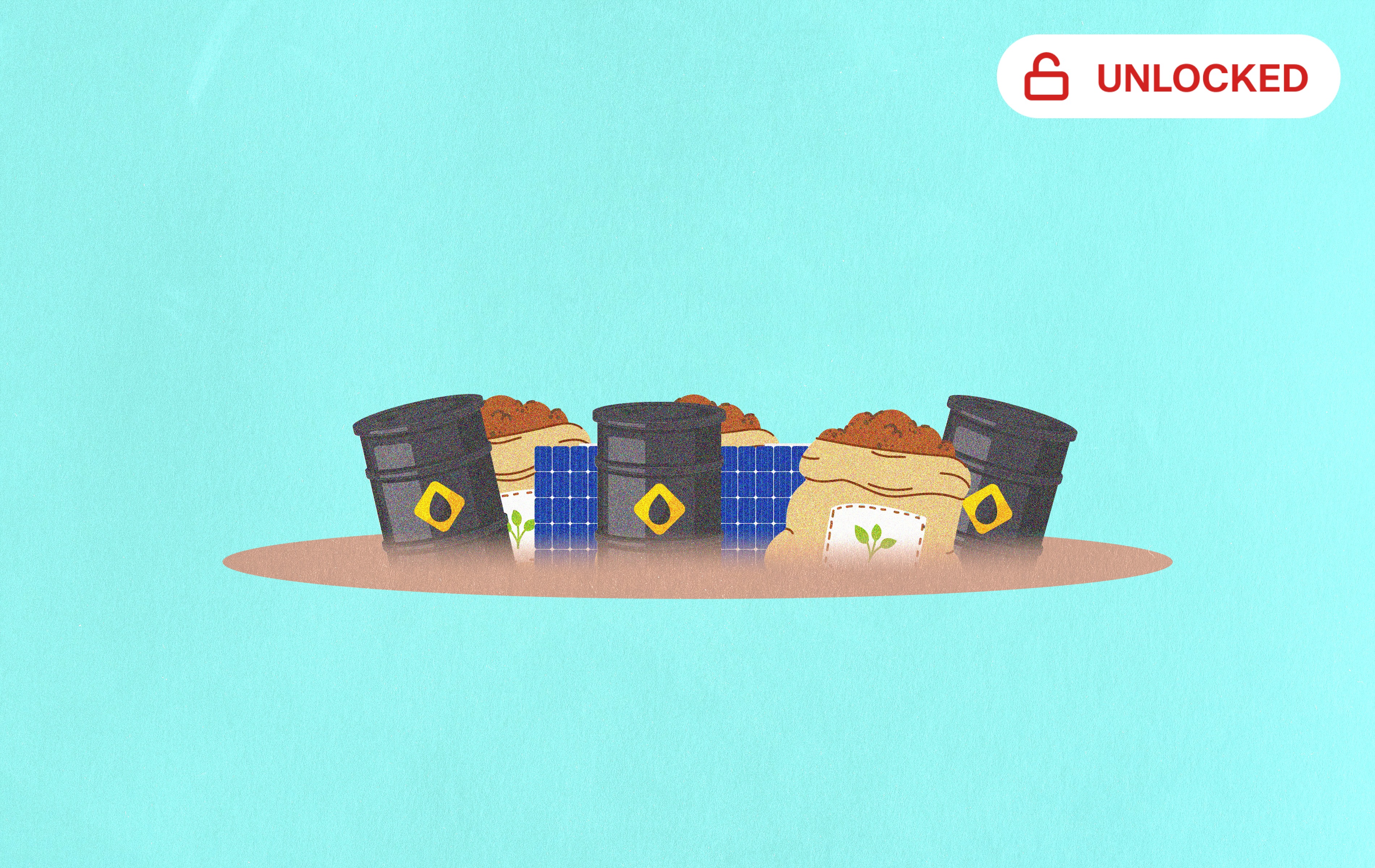
Turn any article into a podcast. Upgrade now to start listening. Members can share articles with friends & family to bypass the paywall. You’re reading Dispatch Markets, a weekly dive into the forces driving economic growth—and those holding it back—featuring Scott Lincicome, Kyla Scanlon, Karl Smith, Marian Tupy, and Adam Ozimek. One of the least-discussed errors in policymaking today is the assumption that a bold policy experiment could be quickly undone when its failures become apparent. Sure, we are often told, this tax, subsidy, nation-building experiment, or whatever ignores or even contradicts the mainstream view, but the policy might work for us. And, even if it doesn’t work, it won’t cost much, the status quo stinks, and we can just reverse it all later. All too often, however, American politicians who find themselves in a self-made hole don’t reverse course; they keep on digging. This is certainly not a new failing. Every tariff, subsidy, mandate, and waiver creates winners who stand to lose big if the policy goes away, and the politicians who created the policy stand to lose at the ballot box if they ignore the winners’ pleas and publicly admit error. Once a policy is enacted, it acquires lobbyists, congressional champions, and regulators with a stake in its survival. So, the political response to the policy’s effects—even very predictable ones—is usually another intervention, not backtracking or repeal. In this way, these policies are much more like quicksand than a simple hole: Once you’re stuck, it’s incredibly hard to get out—and the more you struggle, the deeper you get. The White House in 2026 has given us a host of new examples. Sinking Fast Illustration by Noah Hickey/The Dispatch (Photos via Getty Images). The (Possible) Diesel Export Ban The diesel export ban now under consideration provides the most salient recent case. Trump’s war with Iran has left the Strait of Hormuz semi-closed and significantly reduced Middle East refinery runs and diesel exports. This foreseeable outcome, along with Ukrainian airstrikes on Russian refineries and a Russian export ban, has crippled global diesel supplies because refineries everywhere (including here) are already running full steam and can’t pick up the slack. World market prices, in turn, have hit historic highs, and energy producers warn the situation will persist for another year even if the war stops tomorrow. The United States makes a ton of diesel but has still been affected. Diesel prices here are closely tied to global prices, so the Iran supply shock has driven the national average above $6.50 a gallon, almost a full $3 above where it was last year and hurting a wide range of U.S. firms that rely on the workhorse fuel. High diesel prices are especially bad for American farmers, who are now heading into harvest season, when they burn the most diesel. Their fuel bills have increased by tens of thousands of dollars per month, and suddenly deep red places like Iowa and Kansas, where farmers and ranchers were already miffed by U.S. trade policy (more on that in a sec), are in play for Democrats. Instead of ending the standoff with Iran (if he even could), or at least broadening the Jones Act waiver (which he unfortunately narrowed last month), the president says he is “thinking very seriously” about banning diesel exports, which have boomed in response to the global supply void. The White House insists no decision has been made, but the indecision hasn’t stopped experts (including my Cato colleagues) and industry groups from widely agreeing that a ban would be a huge mistake. Fuel prices are set on global markets, and the U.S. doesn’t have sufficient transport capacity—pipelines, ships, etc.—for all regions to consume only U.S. production, which is concentrated on the Gulf Coast. An export ban would therefore leave U.S. refiners with nowhere to send their product, so they’d eventually reduce output, thus causing domestic diesel prices to eventually match the now-higher global price. Some Americans would see a few weeks of price relief, but it would land in the wrong places: The biggest price increases are in places—the West Coast, the Rockies, the Midwest, and New England—that need to import at least some fuel from abroad, where diesel prices would rise in response to the export ban. (Oxford Economics, a global economics advisory firm, estimates that European wholesale prices could jump 40 to 50 percent.) Over the long term, new Washington-made risks to U.S. oil production and profitability would discourage investment in the domestic energy sector, while the global price hike would anger allies and encourage foreign customers to find more reliable suppliers, including Chinese ones. In short, diesel export restrictions would deliver a small, temporary price break to the Americans who need it the least, while making things worse in the medium and long term. Indeed, U.S. fuel export bans of the 1970s depressed domestic production and raised prices before Washington repealed them. No wonder, then, that even Energy Secretary Chris Wright has called export restrictions a blunt tool that won’t work. Most of the alternatives on the table—“voluntary” export curbs, a suspension of the federal diesel tax, and state-level relief—are more of the same quicksand. Each treats the diesel price, which is a symptom, instead of causes that Washington controls: Iran, record biofuel blending mandates, the Jones Act, and a permitting regime that discourages or even blocks new pipeline construction. As my Cato colleagues explain, fixing the pipeline problem would actually lower diesel prices without wrecking export markets, but they’re not the quick, politically palatable fix the White House wants. That’s why a Jones Act waiver that’s helped coastal areas access huge amounts of U.S. diesel now requires slower, case-by-case approval and is scheduled to expire in mid-November. So, since Trump can’t or won’t end the war, we might get an export ban—and sink deeper into the very mess the administration’s bad decisions helped create. And then there’s trade. The diesel ban hasn’t happened yet, of course, but the administration has followed through on plenty of other quicksand policies. Most notable are its attempts to “fix” the predictable problems caused by Trump’s tariffs and trade wars, which not only raised prices but also cut U.S. farm exports to China to their lowest level since 2007 and, as I wrote last week in the Washington Post, have become a major midterm problem for campaigning Republicans because of their wide and growing unpopularity. The Trump administration has nixed a few tariffs to address affordability issues, but the vast majority of them remain. And the Trump administration has dug even deeper through a series of policies that attack the tariff regime’s predictable results, spend more taxpayer money (that we don’t have), and further expand the administrative state: Farmers, hurt by lost exports and higher input and machinery prices, got billion-dollar bailouts: $12 billion last December, after $23 billion in the first term. They also got the ethanol bailout they’ve been demanding (to offset tariff harms): The EPA issued an “emergency” E15 waiver for this summer and finalized the highest biofuel blending requirements in the program’s history for 2026 and 2027, which will require output to rise by more than 60 percent over 2025 levels. Ironically, these mandates raise American refiners’ costs, which is why my Cato colleagues suggest relaxing them to lower U.S. diesel prices. Fifteen years of solar tariffs have failed to produce a booming domestic industry, so the administration followed up with the seventh major solar trade action in that span (and the fourth legal authority used to impose it) and an effective tariff rate on solar imports nearing 100 percent. It also proposes tariffs, minimum import prices on polysilicon (the main input used to make solar cells), and an unprecedented effort to stop U.S. importers from predictably stockpiling ahead of the polysilicon restrictions’ implementation date. Multinational companies’ lawful attempts to mitigate Trump’s tariffs (and keep prices lower for American consumers) have produced a new battalion of federal tariff-evasion cops. As the president’s senior trade counselor, Peter Navarro, acknowledged in the New York Times, these moves have been driven by tariff arbitrage, i.e., companies logically shifting their supply chains from higher-tariff countries to lower-tariff ones. Navarro’s big plan: more customs scrutiny of firms’ supply chains (including an AI system named—I kid you not—“Detective Border”), an executive order targeting importers, and new U.S. trade deals that police tariff “circumvention” (i.e., inputs from China and other high-tariff countries being incorporated into “not-China” products in other countries). As we’ve discussed, some of this stuff is surely fraud, but most of it is perfectly legal—and has been well known and well documented for years (great new research here). It’s also utterly unsurprising: As I explained in May 2025, high and variable tariffs like the ones Trump imposed would inevitably prompt companies to rearrange supply chains, exploit loopholes, and engage in illicit transshipment. That’s exactly what happened. Then there’s Trump’s absurd plan to replace potash (fertilizer) from our new trade enemy Canada with imaginary supplies from landlocked (and Russia-allied) Belarus. Canada supplied about 90 percent of last year’s U.S. potash imports, yet Trump announced he is negotiating a “massive Deal” with Minsk for substantially cheaper supply. Belarus’ own president has already said that the country lacks the volumes because everything is contracted, mostly to Asian buyers, but because Trump’s trade war with Canada has imperiled the stable potash supplies Americans get from their next-door neighbor (and close ally), he desperately needs to offer alternatives—even if they’d have to travel through Russia to get here. (This one is also an example of the havoc wreaked by the Iran war: CNN ties the scramble to fertilizer costs surging alongside diesel.) None of it makes any sense, but Trump just likes tariffs, so here we are, doing the same kinds of crazy, ineffective trade workarounds that Trump did during his first term, only on a much grander scale. But wait, there’s more. As the Wall Street Journal just reported, the president’s price-increasing policies (tariffs, Iran, immigration restrictions, etc.) and total disinterest in fiscal restraint have combined with a longer-term, bipartisan refusal to deal with the federal debt’s systemic drivers to push up inflation, U.S. bond yields, and interest rates. Most notable in this regard is the rate on a 30-year mortgage, which topped 7.5 percent this week and surely added to voter angst over housing affordability. The Journal reports that, per White House advisers, the debt barely registers with Trump, who instead (and bizarrely) thinks that interest rate cuts would be a magical shortcut to shrinking the government’s bill, which is partly driven by now-trillion-dollar interest payments. So, instead of pursuing any semblance of fiscal restraint, the administration has turned to gimmicks. As we discussed in February, Trump ordered Fannie Mae and Freddie Mac to buy $200 billion of mortgage bonds, which only dented rates for a couple of days (they now sit more than a full percentage point above their late-February low). More recently, Treasury Secretary Scott Bessent has tried bond buybacks to lower Treasury yields, tripling the size of his department’s normal operations. Yet the 10-year yield actually rose after Bessent’s most recent announcement, and institutional investors openly warn that Treasury’s moves could undermine its credibility and (rightly) signal that the government is unserious about taming the debt, perversely pushing yields even higher. Lessons abound. In case after case, the Trump administration has moved to “fix” bad policy with even more bad policy, instead of addressing what got us here in the first place. Often these fixes make matters even worse, and—outside of maybe a broader Jones Act waiver (inshallah!)—they’re always pushing the government deeper into the U.S. economy. This policy quicksand certainly isn’t limited to Republicans in 2026. As I wrote in 2021, both Trump and Joe Biden repeatedly tried to paper over the effects of their economic interventions with even more interventions, often making things worse—and undermining better reforms—in the process. A year later, the fossil-fuel antagonist Biden responded to the 2022 gas/diesel price spike with a call for gas tax holidays and a scolding letter to refiners, and his administration issued E15 waivers in 2022 through 2024, which Trump has continued. Earlier presidents did similar stuff, and Congress surely isn’t blameless, either. On the bright side, most of the White House’s moves right now are executive actions rather than statutes and thus not certain to last beyond Trump’s term, if even that long. But they still raise real risks. Any “temporary” policy that delivers goodies to politically powerful groups—farmers, steelmakers, homebuyers, whatever—becomes difficult to reverse once a constituency starts depending on it and a politician starts viewing the scheme as a shortcut to reelection. These Band-Aids also let politicians avoid fixing the underlying policies—on trade, foreign adventurism, or anything else—that created the problems the political pacifiers supposedly ameliorate. As the classic Milton Friedman quote indicates, this dynamic is common, and we’re seeing it again right now, as farm groups lobby to make E15 permanent after five straight years of “temporary” waivers. Denying them would cost votes in critical states, so the safe money’s on E15 sticking around. The policy’s long-run damage—to our engines, food supply, economy, and political system—will likely never show up on a ballot, and the policies that actually hurt American farmers in the first place will likely remain in place indefinitely. This quicksand risk should factor into all discussions of economic and foreign policy, especially in widely studied areas like taxes, tariffs, and debt, where we have a very good idea of how market players will react. Yet it rarely does, and we’re all worse off for it. Considering the risk doesn’t mean the government should stop making policy altogether, of course, but it does urge caution about enacting “bold” new policy experiments that contradict a well-earned consensus. The problem is not only that the experiment might fail, but that the policymakers who enacted it will, instead of admitting fault, enact even more bad policy to hide their mistakes and win the next election. That’s an option the market thankfully doesn’t offer to private parties who make similar errors, and that’s yet another reason to favor it over whatever scheme the guys in Washington come up with next. Markets FTW Northern Ireland has strict alcohol regulations that prevented the German-owned supermarket chain Aldi from selling beer and wine at one of its Belfast locations. So, the company did the smart thing: apply for a pub license and build a giant pub inside the store. Now the pub, called the “Middle Ale” (get it?!), is wildly popular with locals. “It’s a good excuse to go shopping,” said one patron, “If I forget the toilet roll, I can just come back for another glass of wine on the way.” Sounds divine. Chart of the Week Worth Your Time Disclaimer: The opinions expressed above do not necessarily reflect those of the presenting sponsor. Scott Lincicome is an author of the Dispatch Markets newsletter, vice president of general economics and trade at the Cato Institute, and a visiting lecturer at Duke University Law School. He wrote the Capitolism newsletter at The Dispatch from 2020 through 2026.
The White House Digs Deeper Into the Policy Quicksand
Full Article
Original Source
Read the full article at Thedispatch →KhanList aggregates and links to publicly available news content. We do not host full articles from third-party sources. Always verify important information with original sources.