
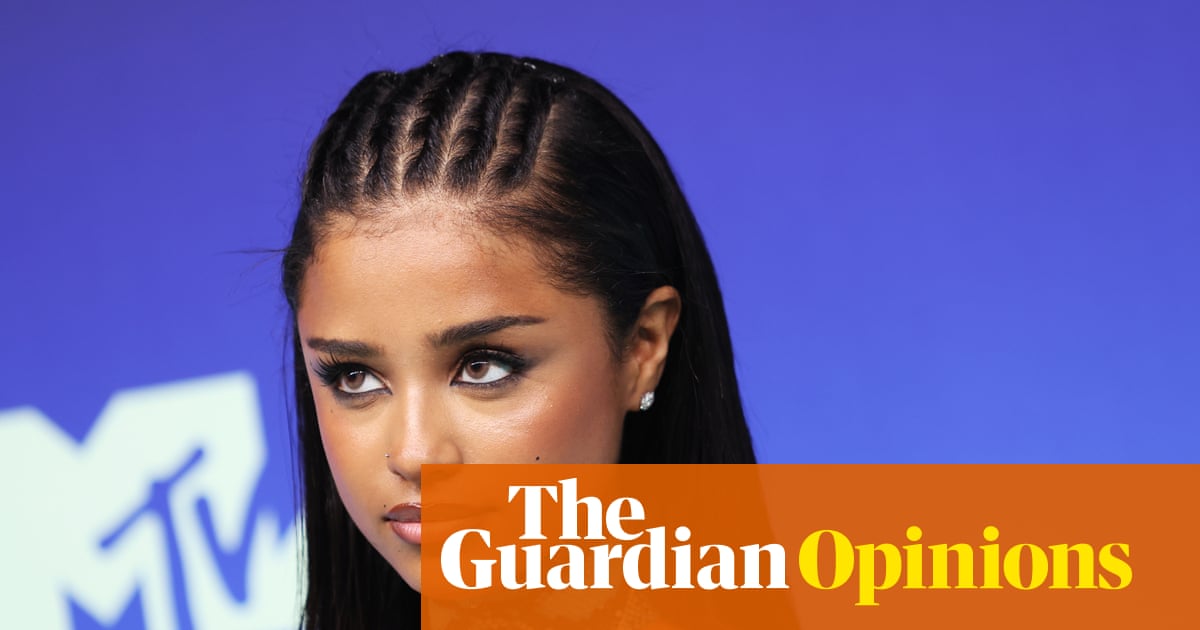
In 2024, South African pop star Tyla won the best Afrobeats award at the MTV VMAs. Beaming in a yellow dress, she began her acceptance speech in a celebratory tone. “This is such a big moment for African music. The global impact of Water,” – her hit single – “proves that African music can be pop music.” But as the audience’s cheers swelled, she became more sombre, describing the moment as bittersweet. “There’s a tendency to group all African music as Afrobeats,” she continued. “Even though Afrobeats has opened so many doors for us, African music is so diverse. I come from South Africa, I represent amapiano”, referring to the country’s rolling, sensual dance subgenre. Her passionate entreaty notwithstanding, months later she’d reprise her win in the Afrobeats category of the American Music Awards.Tyla is hardly the only African artist to rail against the Afrobeats tag. Tems has spurned the term, describing her music as a cocktail of “Afro, R&B, soul and alternative elements”. Likewise, Burna Boy prefers to call his music Afrofusion, a fitting characterisation of the smorgasbord of sounds that converge in his music. Wizkid, Ckay, King Promise and Davido have also chafed at the term Afrobeats, yet it persists and holds back African music.The term emerged in the early 2010s as an umbrella label used to categorise contemporary dance music from west Africa, such as D’Banj’s Oliver Twist, spreading across European cities. London-based DJ Abrantee – per reporting in the Guardian – appended an “s” to Fela Kuti’s Afrobeat, creating a catch-all to market these sounds on radio and a burgeoning streaming marketplace. In recent years, however, as African music has exploded globally – underscored by hits like Water as well as Rema’s Calm Down or Moliy’s Shake It to the Max – Afrobeats has become the de facto label for all African pop, dance, rap, R&B, gospel, highlife and a sizeable amount of the continent’s alternative music scenes.This might come across as a minor quibble to be slugged out by music buffs, and “Afrobeats” has undoubtedly been successful as a brute marketing strategy – when the UK Official Charts Company introduced a chart for African pop in 2020, it was named Afrobeats. But what happens when a western description becomes the dominant way a culture understands itself? Grammy award-winning Nigerian producer and singer Bloody Civilian, who heads out on tour with Tyla in October, says the label is “deeply limiting” and finds it “confusing that westerners continue to box the numerous ways Africans experiment with sound”.Western popular music is allowed to exist across a wide spectrum of genres, while the music of an entire continent is routinely shoehorned into this single category. This does more than obscure its diversity; it flattens the nuances of distinct musical traditions and, in doing so, disconnects artists from those traditions. West African music, which has the biggest range of artists dubbed as Afrobeats, has also disproportionately felt the effects of the term: artists and producers from the region continue to synthesise new genres but these innovations are often treated as fodder for the larger Afrobeats machine, sustaining hype until they are discarded for the next shiny thing.Consider Mr Eazi’s “banku music”, a sound synthesised from Nigerian pop and Ghanaian highlife. Mr Eazi, a Nigerian who had attended university in neighbouring Ghana, vaulted to continental fame in 2015. It is difficult to overstate how much his languid, yearning music riveted west Africa, and banku music had many of the characteristics of a genre in its own right: its laid-back tempo and distinctive four-stroke kick-drum pattern engendered a vibrant culture around the sound. Artists such as Runtown and Tekno adopted its sonic vocabulary and put their own spins on it, while university students across the region embraced Mr Eazi’s distinctive style of dress: a straw hat and dashiki.Mr Eazi. Photograph: Michael Oliver LoveIn another world, banku music, like South Africa’s amapiano (which emerged around the same time), blossoms into a cultural force and perhaps spawns other genres. Instead, it wasn’t marketed to the west or contextualised locally as a distinct sound, so it faded into obscurity rather than developing into a culturally specific musical form. Countless other genres and styles have faced a similar fate: azonto, zanku, cruise, afropiano. Culture journalist Tiléwa Kazeem explains that international publications often find these nascent genres and styles to be “esoteric”. Afrobeats, he argues, “has not just obscured other genres but also affected their documentation”.The west seems increasingly unwilling to engage with the richness of African music: the Afrobeats category was dropped from the MTV VMAs this year, but not on the grounds that the term was limiting, and now there is no African music category at all. But Kazeem adds that west African publications, used to the Afrobeats label, also hesitate to substantially document new genres and styles, similarly viewing them as esoteric.New styles continue to emerge, ranging from the spiritually minded afro adura to mara, an explosive fusion of street pop and electronic music. But for them to take hold in the way, say, grunge or hyperpop have done in the west, “there has to be enough documentation, enough lore, enough intentionality around them,” says Dolapo Amusat, founder of Nigerian music and creative network WeTalkSound. “Mara is a good example of what that can look like when people who genuinely care about the sound start building substantial identities so these sounds can stand on their own.”That responsibility falls on those marketing this music in the west, but also on the artists, and those in the African music and media industries. “There’s a tension between culture and commerce,” culture writer Dennis Ade Peter says. “Afrobeats artists and stakeholders routinely rail against the term, but still market their music as Afrobeats and validate awards and events where their music is described as such; it’s paradoxical.” As bell hooks noted in her essay collection Art on My Mind, Black people “must be held accountable when we do not make needed critical interventions” required to correct insular views around Black art.Just as stalwarts like Kuti and King Sunny Adé were allowed to float new genres that continue to define contemporary African culture today, a new generation – who have proved themselves just as charismatic and musically adept – must be given the same opportunity.
The west has a blinkered view of African music – and it’s hurting the whole continent’s culture
Full Article
Original Source
Read the full article at Theguardian →KhanList aggregates and links to publicly available news content. We do not host full articles from third-party sources. Always verify important information with original sources.