
For years, Ukrainians have lived with a war raging not only along the front line, but above their heads. In Kyiv, the battle in the sky has become part of daily life, measured in air-raid alerts, the sound of air defence and the explosions that follow. ADVERTISEMENT ADVERTISEMENT At an air-defence position protecting the capital, the work begins before anything appears overhead. Soldiers prepare their weapons and scan for threats that can arrive at radically different speeds and from different directions. The challenge is no longer simply the number of weapons Russia can put into the air. Its attacks increasingly combine different threats: Shahed-type attack drones arriving in large waves, ballistic missiles that leave defenders little time to react, and new, faster drones that have added another danger. Routes change. Timing changes. Weapons approach from different directions. The aim is to find gaps and overwhelm the layers of defence protecting the city. For the soldiers watching the sky, it has become a technological race. Whenever Ukraine finds a cheaper or more effective way of stopping Russian drones, Russia adjusts how its weapons fly, how fast they travel or how they approach their targets. Ukraine adapts. Russia adapts. And the cycle begins again. Pavlo Tsugunov, an anti-aircraft battery commander, has watched that evolution from the ground. “The past few weeks have seen constant attacks on Kyiv, its suburbs, the city centre, the Kyiv region and the Chernihiv region,” he said. “In other words, on the homes where our loved ones live.” Tsugunov believes the pressure on civilians is itself part of Russia’s strategy. “This tactic is most likely intended to intimidate the civilian population,” he says. “As they are currently failing to make any headway in direct combat operations on the front line, they are attempting to intimidate the population so that it stops supporting the army. And, consequently, so that the army will agree to surrender.” But the limits of air defence can be seen across Kyiv. Outside a kindergarten damaged in an attack, a young boy points at the building and tells Euronews he watched the drone strike it. “The drone flew right above our heads and hit it here,” he says. When the weapons get through When a weapon gets through, another race begins, this time on the ground. One of Russia’s main targets remains Ukraine’s energy system. At a damaged electricity facility in the Kyiv region, repair crews are working to restore the network while the threat of another attack continues. They work for DTEK Kyiv Regional Grids, the distribution system operator responsible for the network that carries electricity through power lines and substations into communities across the Kyiv region. Crews can begin repairing the damage only when the security situation allows. After an attack, they must wait for clearance from the military and emergency services before entering damaged sites. Serhii, a repair technician, said residents were waiting for electricity to return, but repeated air-raid alerts were slowing the work. “People are asking us to turn the lights on, but we can’t do that because the alarms are going off constantly, every day, all day long,” he says. As he speaks to Euronews, explosions can be heard nearby. Another drone is heading towards the area. “Let’s move a bit further away from the site, because you can hear what’s going on,” Serhii says. It is a dilemma that has become familiar to Ukraine’s energy workers: the same attacks that knock out the electricity can also prevent the crews from safely restoring it. Moreover, often they target the people fixing the damage. DTEK Kyiv Regional Grids says its teams have restored electricity to more than700,000 homes in the region after Russian attacks. In some cases, crews have had to return power to the same households more than once. Previous winters have also changed the way the company prepares for the next one. Protecting infrastructure is only part of the task. Being able to repair it quickly after another strike has become just as important. Oleksii, head of high-voltage network operations at DTEK Kyiv Regional Grids, described the relationship between those trying to stop the weapons in the air and those tasked with repairing the damage when they get through. “I very much hope that our air defence systems will help us by shooting down the vast majority of the weapons currently being used,” he says. “And after that, it’s up to us. We will repair whatever has been damaged.” He said the crews have already been through the most complicated case in the past years, when Moscow deliberately tried to freeze the people, leaving them without electricity, heating and even water. Preparing for another winter For Ukraine’s energy workers, preparations for winter never really stop. DTEK Kyiv Regional Grids says that since the beginning of the year it has repaired more than 1,200 kilometres of power lines and upgraded more than 400 energy facilities across the Kyiv region. It has also been building reserves of replacement equipment and materials, strengthening protection around energy facilities and preparing emergency crews to respond rapidly when something is hit. Those crews can move in only once the security situation allows. In a winter of repeated attacks, the ability to restore power quickly can matter almost as much as the preparations made beforehand. But there is a limit to what preparation can achieve. No electricity network can be completely protected from missiles and drones. Behind those power lines and substations are millions of ordinary routines that depend on them. After several winters of war, Ukrainians no longer need to imagine what prolonged power cuts can mean. Electricity can disappear. Heating can become uncertain. Communications can become harder. Ordinary life begins to depend on batteries, generators and whatever electricity is available. And so households are preparing too. “Everyone is getting ready for winter,” says Anna, a Kyiv resident. “Everyone is preparing very well. Even my parents, even my friends.” Some of the preparations are strikingly domestic. With Russia now increasingly targeting food warehouses, people are coming up with new ways of stocking up food for the winter. “My younger friends, they’d never preserved food before, but now they’ve learnt how,” she says. “You could say it’s a good habit. Some people are installing inverters and solar panels, whilst others are installing batteries and stocking up on power banks”. There is something telling in the ordinariness of the list. Preserved food. Batteries. Solar panels. Inverters. After years of attacks on Ukraine’s energy system, measures that would once have seemed exceptional have simply become part of preparing for winter. Anna has already fled Russia’s war once. She left Luhansk after Moscow’s first invasion in 2014. She stayed in Ukraine when the full-scale invasion began in 2022, in part because of her elderly parents. But after the hardships of last winter, she says she is now considering leaving the country for the first time. “If the situation gets really dire, I’ll go. I’ll go because I’m worried about my child.” For her 10-year-old son, this is the second phase of Russia’s war he has lived through. Born in Luhansk, he was a small child when Russian-backed forces seized the city in 2014. “I think that’s really frightening. Some people don’t speak like this even at 25, the way children do now,” Anna admits emotionally. “When they talk about something going ‘boom’ somewhere, they say: ‘If that’s my death, then I’ll accept it.’ Children are already saying things like that. My son says that to me too. “My son tells me that if that’s my death, I’ll accept it. And if not, then, of course, I’m a lucky one.” Growing up under attack For Maryna, another Kyiv resident, survival begins with the sound coming from her phone. “I always turn up the volume on my phone so I can tell exactly what sort of alarm is going off,” she says. If the warning is for missiles, the calculation is immediate. “Then we have two seconds to get out into the corridor. We can’t make it down to the shelter. We don’t have that time, because within two seconds we’re out in the corridor or the bathroom, and the loud, powerful explosions have already started.” Her daughter Emma is nine years old. She has never known school without war and doesn’t remember peaceful days. For children of her generation, the vocabulary of air raids has been absorbed into childhood. They know the alerts. They can even differentiate the sound of explosions above their heads and recognise their nature. They know where to go. And they have their own ways of describing sounds that adults immediately recognise. Asked what it sounds like when air defence is active near her school, Emma answers simply: “Like popcorn.” “Air-defence interception sounds like popcorn popping?” “Yes.” It is a child’s description of a sound that has become part of growing up in wartime Kyiv. The battle for Ukraine is still being fought in trenches and towns along a front stretching hundreds of kilometres. But the same war is being fought in the skies above cities far from that front. And as another winter approaches, what happens in that sky will help determine what happens below it: whether homes stay warm, whether the lights stay on, whether children can remain in their classrooms and whether ordinary life can continue. Ukraine has learnt to adapt. But so has Russia. And for millions of Ukrainians, the question is brutally simple: When the next missile comes, will there still be something there to stop it?
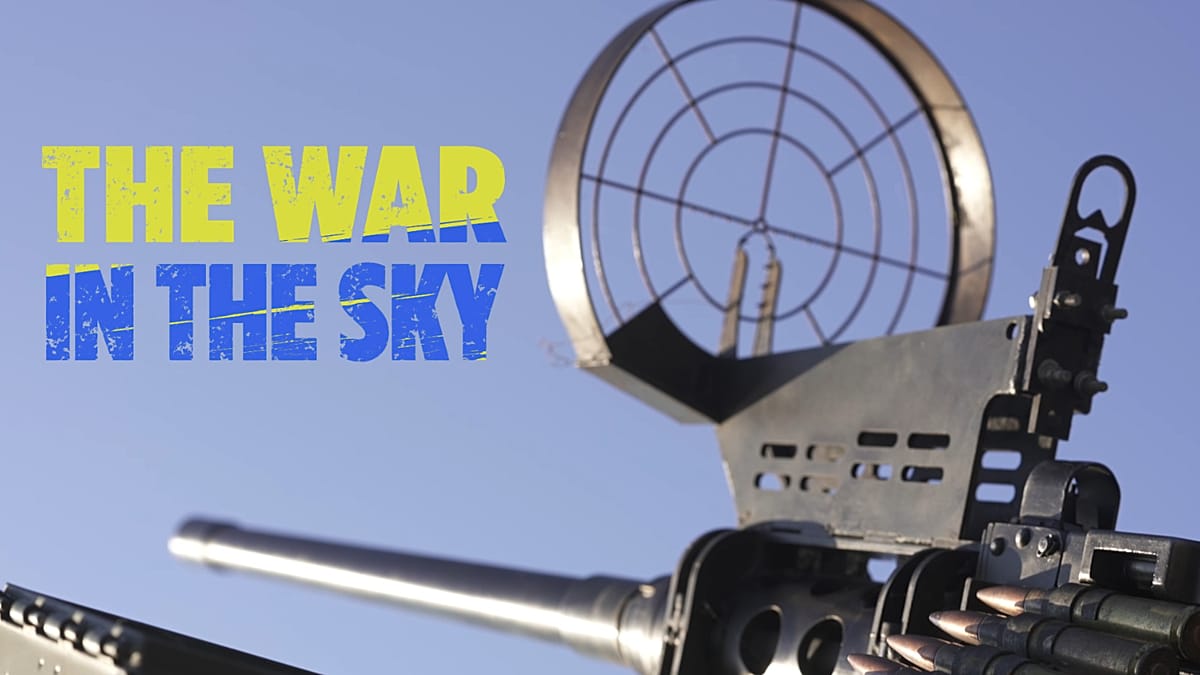
The War in the Sky: Kyiv braces for another winter of Russian attacks
Full Article
Original Source
Read the full article at Euronews →KhanList aggregates and links to publicly available news content. We do not host full articles from third-party sources. Always verify important information with original sources.