
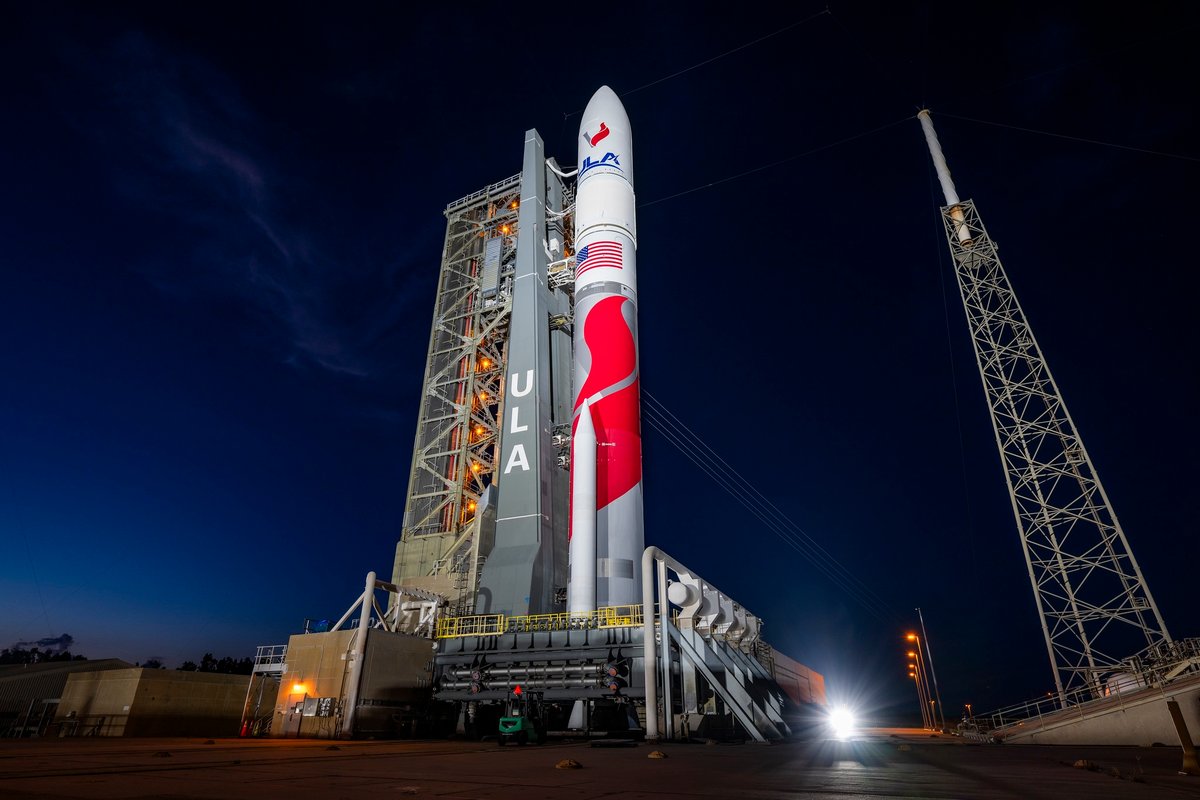
On the afternoon of November 15, the United Launch Alliance’s (ULA’s) Vulcan rocket suffered a mission-ending malfunction 10 minutes after blasting off, destroying its payload of satellites for broadband Internet from Amazon subsidiary Amazon Leo. This marks the first total mission failure for ULA, a joint Boeing–Lockheed Martin venture seen as a space industry stalwart—and is also a significant setback for Amazon.Both companies are struggling to catch up to their launch and satellite communications competitor, SpaceX. The failure also may affect NASA’s race against China to land astronauts on the moon and build a base there. And it has national security implications as well because the U.S. Space Force is, alongside Amazon, Vulcan’s main customer.The loss is only the latest in a longer string of interconnected misfortunes. This was intended to be Vulcan’s triumphant return to flight: the launcher had been grounded after its previous flight, in February, had worrisome malfunctions in a Northrop Grumman–made solid rocket booster. On its first stage, Vulcan also uses two advanced methane-burning BE-4 engines, which are supplied by Blue Origin, another would-be SpaceX rival bankrolled by Amazon’s Jeff Bezos. And Blue Origin is recovering from its own catastrophe in May, when its massive New Glenn rocket—also equipped with BE-4 engines—blew up during a launchpad test. New Glenn is still grounded, but company officials are targeting January 2027 for its return to flight.On supporting science journalismIf you're enjoying this article, consider supporting our award-winning journalism by subscribing. By purchasing a subscription you are helping to ensure the future of impactful stories about the discoveries and ideas shaping our world today.For its part, SpaceX so far seems on track to continue its dominance, with a historic first successful catch of its Starship on its Texas launch tower after that fully reusable vehicle flawlessly delivered a batch of the company’s Starlink satellites into orbit during the test flight. Stymied by Vulcan’s mounting mishaps, Amazon’s competing Amazon Leo service is far behind schedule in its rollout, and the company had already booked 37 more Vulcan launches to deliver more of its satellites into orbit.If Blue Origin’s BE-4 engines are the culprits for Vulcan’s failure, this could compound delays for the company’s Blue Moon lunar lander, which NASA needs for its Artemis program moon landings and must launch on New Glenn rockets. And Vulcan’s second stage, called the Centaur V, is also integral to future flights of the space agency’s Artemis-supporting Space Launch System (SLS) rocket; any significant problems with ULA’s Centaur V could lead to more delays for future SLS launches.Julie Arnold, a ULA spokesperson, tells Scientific American that “ULA exists to provide assured access to space for our nation and for the customers who depend on us. That purpose is why we take on some of the hardest missions in spaceflight and why we hold ourselves to the standard of mission success. Today we did not meet that standard.” The comments reiterated what the company previously posted on X.Vulcan’s return to flight on Sunday initially looked like a routine launch from Space Launch Complex 41 at Cape Canaveral Space Force Station in Florida. Unlike ULA’s four previous Vulcan launches, this one was the first to use six solid rocket boosters rather than two or four. Unlike some of those earlier launches, this one saw no obvious problems with those boosters, which peeled off and fell back to Earth as planned about one and a half minutes into the flight.But at about five minutes after takeoff, Vulcan’s BE-4-powered first stage fired 30 seconds longer than planned. “That’s a long time, because in launches, everything is timed to the second,” says Paul Ronney, an aerospace engineer at the University of Southern California. It suggests that the first stage underperformed and had to continue firing to compensate, he says.ULA appeared to confirm as much in a statement posted on its website on November 17: “Early indications are that just after liftoff the launch vehicle experienced low [first-stage] performance, resulting in stage separation occurring when the vehicle was low in altitude and below minimal velocity to reach orbit,” it said.“Blue Origin is working closely with ULA to investigate and determine the root cause,” a company spokesperson told Scientific American. NASA’s chief Jared Isaacman also expressed support for the investigation in a response on X to ULA’s public statement on the anomaly: “The team at NASA is available to assist in all matters related to the investigation and remediation effort,” Isaacman said. “Artemis, Moon Base, and the nation need ULA. We are in your corner and here to help.”SpaceX head Elon Musk also weighed in, replying to ULA’s post, “Hope you are back to flight soon.”Although ULA’s investigation is ongoing, an additional update from the company released on 11 A.M. EST on November 18 said that the first stage’s issues appeared to be “the result of inadequate fuel supply from the vehicle to the BE-4 engines” rather than a problem with the engines themselves.ULA and Blue Origin have long been working to catch up with SpaceX’s overwhelming lead in launch services, as have other providers such as Rocket Lab, whose first launch of its new Neutron rocket is delayed until 2027. In the meantime, regardless of whether its customers are ready to lose it, SpaceX is planning to retire its prolific Falcon 9 rocket in favor of the company’s still experimental Starship. Yet even if Starship works as SpaceX plans, its launches may mostly be filled with SpaceX’s own cargo—Starlink satellites, as well the company’s proposed orbital data centers. NASA may use modified Starships for multiple Artemis moon missions, including Artemis IV, which is slated for 2028 and is planned to be the first crewed lunar landing since the Apollo era.SpaceX’s Starship pivot poses challenges for potential government and commercial customers, says Clayton Swope, deputy director of the Aerospace Security Project at the Center for Strategic & International Studies, a Washington, D.C.–based think tank. “The first thing is: Does the ‘bus’ have an extra seat? And the second is: Can you fit your butt in that seat? I don’t think SpaceX is going to make you a bespoke bus seat,” he says. Starship presently employs a novel deployment bay that is custom-made to accommodate Starlink satellites—and that its customers’ payloads may not be able to use.That means that if SpaceX phases out the Falcon 9 before Vulcan, New Glenn, Neutron, or other rockets are ready to fill the gap, that could create a launch crisis. “In some ways, this is where we’ve been for 10 years, crossing our fingers and hoping there’s an increase in competition in launch,” Swope says.
The Vulcan rocket failure could haunt U.S. spaceflight for years to come
Full Article
Original Source
Read the full article at Scientificamerican →KhanList aggregates and links to publicly available news content. We do not host full articles from third-party sources. Always verify important information with original sources.