
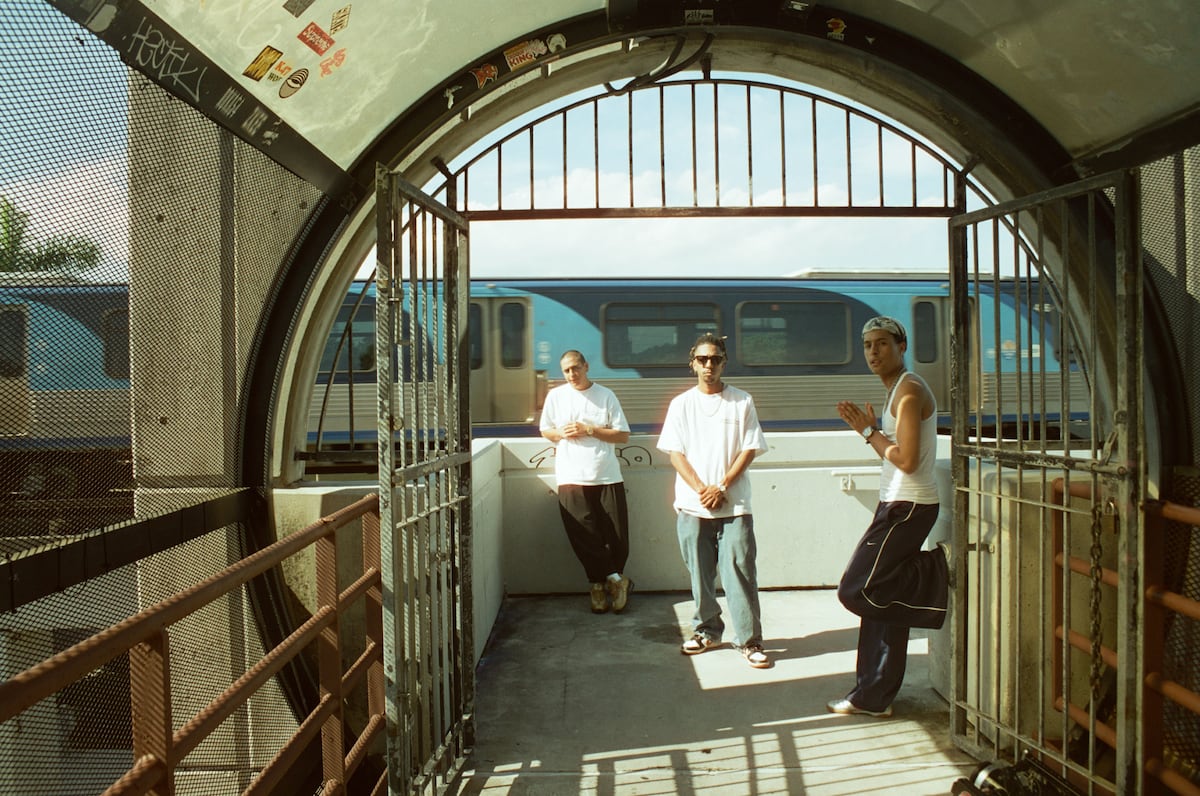
When they received the 2026 Latin Grammy nomination for Best Electronic Music Performance, euphoria was followed by concern: getting from Miami to Las Vegas, where the ceremony is being held this Thursday, would be a major challenge for Isaac Sosa, Dante Escobar and Jack Oliveros. These three Venezuelan artists, who share their first nomination at the Latin music awards, also have pending asylum cases and the uncertainty of living in the United States without permanent immigration status.All three have lived in fear of raids and combine the typical jobs of Miami migrants—restaurants, construction and delivery work—with music. One of those jobs, working as a motorcycle delivery rider, inspired the track that earned them the nomination: Motopirueta.News of the nomination arrived weeks after Escobar was released from a Florida jail following his detention by immigration authorities. They decided it would be safer to make a road trip across the United States to attend the most important night of their careers and avoid another encounter with ICE.Sosa, known professionally as Soucream, and Oliveros, nicknamed JackÖ, share the same migration route. They lived for five years in Argentina before emigrating to Miami. There they met Escobar, the group’s music producer—known in the Venezuelan hip-hop scene as DimeloDante—who had arrived from Caracas a year earlier. Together they formed Funky Du Sou Pai, an artistic partnership with carioca funk influences behind their first Latin Grammy nomination.Before setting off for Las Vegas, they opened a bottle of anise and decreed two things: to stop in every state along the route and to finish the bottle as Latin Grammy winners. Isaac Sosa and his girlfriend, together with Dante Escobar, his manager, and a Venezuelan driver they met while doing deliveries, left first. Jack Oliveros set out the next day. “Thus began the real road to earning a Latin Grammy,” Escobar told EL PAÍS.From a detention center to the red carpetIn June of this year, Dante Escobar was detained in Miami by Border Patrol agents as he left a sporting event. “They turned on the lights and my hell began,” the producer recalls of that night. Although he had a pending asylum case, he was first taken to a cell in Dania Beach, where he spent days sleeping on the floor alongside about a dozen migrants, and then to a Clay County jail, an hour from Orlando, where he shared a wing with common inmates.“There were knife men, drug dealers, abusers of women and many Venezuelan migrants, obviously,” he remembers. On the 24th of that month, two earthquakes shook Venezuela and he had to experience them from jail, alongside other Venezuelans, in absolute despair.“I got out of there thanks to God,” he consoles himself, aware that many cases like his end in immediate deportation. He may be right or very lucky. At his first hearing, Escobar was released with an electronic ankle monitor and a $7,500 bond that was paid thanks to contributions from a GoFundMe campaign. [EL PAÍS contacted the Department of Homeland Security, which oversees ICE, for comment on the reasons and circumstances of Escobar’s detention, which occurred on June 15 in Miami, but has not yet received a response].Weeks later, Soucream was nominated for a Latin Grammy. During a recent ICE visit to his home, after he had completed the minimum 90 days required under the measure, his ankle device was removed, freeing him to travel through seven states and set foot in Las Vegas for the first time.Delivery stunts turned into a songThe group scrambled to raise funds for the trip while creating new music and delivering orders to pay the bills. “I also do delivery work, so I spend my time on a motorcycle,” Isaac Sosa says, referring to things that have not entirely changed for him after the nomination and that are part of a dual reality he shares between Miami and Caracas, the city he left.They created the song in Miami, at the home of Venezuelan producer Héctor Mazzarri, who had just won his first Latin Grammy for the track “Veneka” with the Caracas band Rawayana. It was December 2024 and Mazzarri had a Raptor House beat ready for Soucream—the electronic genre created in Caracas in the early 2000s. Sosa, 25, began laying down verses and Escobar, 33, completed them with lived-in lyrics about the motopiruetas, an urban Caracas phenomenon involving motorcycle tricks that gives the song its name.“We’re here in Las Vegas, mano!” Isaac Sosa shouted as he stepped down from the van that had taken them nearly 2,500 miles in almost two days. Despite the constant threat that it could all vanish, they are hard at work crafting the best possible version of the American dream.Jack Oliveros left Miami a day after his friends and arrived in Las Vegas in the early hours of Wednesday, shielded by his girlfriend’s green card; she was driving. Oliveros put his vision into the video that accompanies Motopirueta, which was filmed in Caracas and aimed to celebrate the city’s culture.“Everything seems written,” Escobar said triumphantly, shaking his dreadlocks over the carpeted floor of an MGM Grand suite, as if getting used to this new twist in his story.Sign up for our weekly newsletter to get more English-language news coverage from EL PAÍS USA Edition
The Venezuelans nominated for a Latin Grammy who drove across the country to avoid ICE
Full Article
Original Source
Read the full article at English →KhanList aggregates and links to publicly available news content. We do not host full articles from third-party sources. Always verify important information with original sources.