
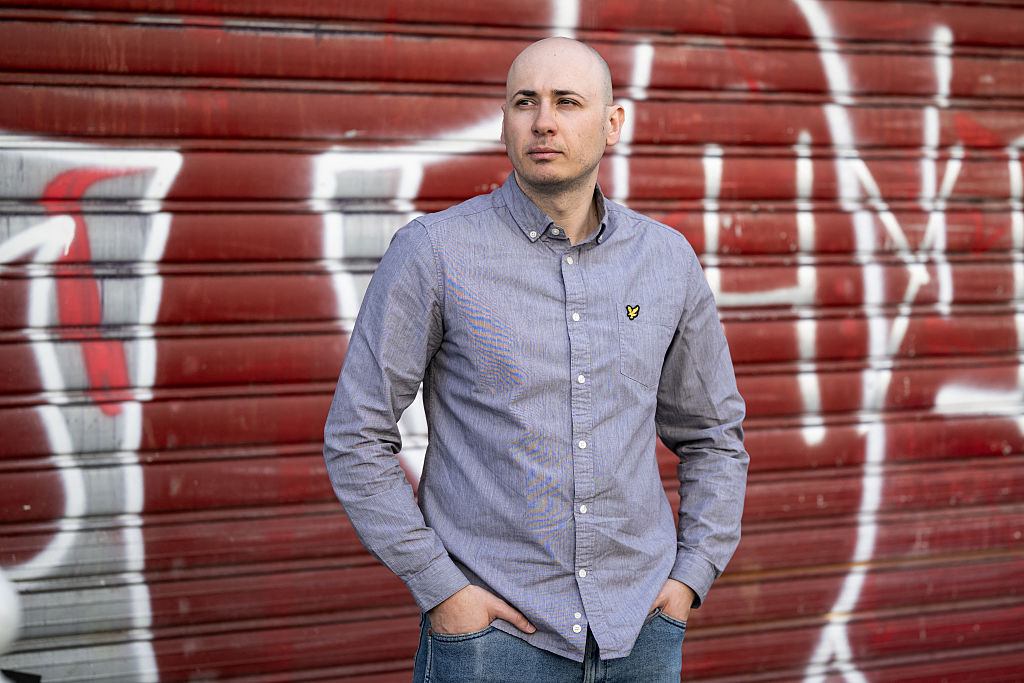
Albanian-born activist Rexhino Abazaj faces imminent extradition from France to Germany, where he is wanted for charges of violent assault against neo-Nazi plaintiffs. One remaining hurdle was France’s Court of Cassation, which this Wednesday ruled in favor of a lower court’s ruling from last month that validated Berlin’s issuance of a European Arrest Warrant (EAW). Abazaj, better known as Gino among friends and allies, could now face up to ten years behind bars if he is convicted in Germany.Beneath the procedural complexities, Gino’s case represents one front in a sprawling legal tug-of-war that began in Budapest back in February 2023. Taking to the streets of the Hungarian capital, he was among the scores of activists that counterprotested that year’s Day of Honor rally, one of the largest annual gatherings for Europe’s ultraright and neo-Nazi scenes.The confrontation quickly degenerated into violent clashes, with the attendees and their antifa adversaries exchanging blows that resulted in several non-life-threatening injuries. According to the evidence cobbled together by Hungarian investigators, the injuries that Gino is purported to have caused resulted in eight days of work incapacity for the victims. For Gino’s supporters, that’s vastly disproportionate to the lengthy prison term he potentially faces should he be convicted in German court.Former Hungarian Premier Viktor Orbán’s government long sought to turn the February 2023 clashes into a morality tale on the specter of left-wing terrorism. Before losing power in this April’s election, Orbán made a pet cause of pursuing activists alleged to have participated in the counterprotests. The most recognizable public face of Orbán’s manhunt has long been Ilaria Salis, an Italian member of the European Parliament who was arrested in Hungary and elected to office during her pretrial detention. When Donald Trump moved to declare “antifa” a terrorist organization in the wake of Charlie Kirk’s murder in September 2025, Orbán rapidly followed suit. “They have come to Hungary, beaten peaceful people in the streets, beaten some half to death,” he said last September.In antifascist circles in Europe, the scandal is sometimes known as the Budapest Affair, referring to over a dozen individuals whom the Hungarian government tried to chase down, with varying degrees of success, from states like France, Germany, and Italy. It has been a litmus test of EU states’ willingness to condone a blatant far-right manhunt. In France, Gino’s cause has garnered the support of major artists and intellectuals such as Nobel Prize–winning author Annie Ernaux and film director Robert Guédiguian.Up to now Gino was among the relatively lucky ones. In 2024, he was facing extradition from Finland but took flight, fearing a sham political trial should he be handed over to Hungarian authorities. The thirty-four-year-old activist, who had much of his upbringing in Italy, found refuge in France, settling in the Paris area. Though he was arrested by a squadron of anti-terrorist police officers in late 2024, he went on to win his first case before the Paris Court of Appeal in April 2025, which blocked Budapest’s extradition order on the grounds that Gino’s right to a fair trial and decent detention would not be respected. (Another extradition request from Budapest, targeting Zaid A., a young Syrian national residing in France, is still before a Paris tribunal, though it is now in limbo amid the political transition in Hungary).Gino had ample reason to oppose the handover. Ilaria Salis, a teacher in Italy before her antifascist activism catapulted her into the political spotlight, was arrested in Budapest in the immediate aftermath of the Day of Honor clashes and endured a grueling fifteen months in Hungarian jail. She was ultimately granted house arrest in Budapest in May 2024, having launched a campaign for European Parliament on a left-wing ticket while in Hungarian custody.When she won office in June 2024, her newfound parliamentary immunity led to the suspension of her trial and her release from house arrest. But even that didn’t stop Orbán. In October 2025, the EU parliament finally dealt Budapest a defeat by voting down its request to waive Salis’s immunity. The vote nonetheless highlighted the inroads made by Orbán’s lobbying: by the narrowest of margins, 306 of the parliament’s members (MEPs) voted in favor of maintaining her protection, against 305 in favor of lifting it.Gino’s April 2025 victory seemed to grant a reprieve from politicized prosecution, but a surprise turn came when his case was revived by Germany’s issuance of its own European Arrest Warrant against the activist. And this time around, the defense’s arguments about the sanctity of legal and incarceration systems — that of Germany, not Hungary — stood on less firm ground. That distinction was confirmed when the Paris Court of Appeal decided in favor of Germany’s request, green-lighting Gino’s handover this past August 19.Still, Gino’s impending handover marks a worrying new precedent. “We have never seen in European Union criminal law a situation when another state basically steps in to remedy the fact that an EAW was not granted,” Matteo Zamboni, a Brussels-based attorney who has represented Salis and is currently advising Gino’s legal team, told Jacobin.In fact, there have long been reasons to doubt Germany’s ability to act as an honest arbiter in the Budapest Affair. Even before it made the move to revive Orbán’s pursuit of Gino, Berlin proved willing to play the Hungarian strongman’s game. In late 2024, it extradited Maja T., a German activist also implicated in the scandal, to Hungary before full rights to an appeal were exhausted. Maja T. appeared in irons before Hungarian court and ultimately received an eight-year prison sentence this February. It was far too late, but the German Federal Constitutional Court eventually issued a retroactive ruling overturning the extradition.As far as Gino is concerned, the deeper problem now is that evidence of what surpassed in February 2023 is tainted by the work of Orbán’s clientelist justice system. Here is a case that was, from the beginning, stitched together by investigators and prosecutors subordinate to Orbán’s political priorities.Evidence that now appears before a German court will likely have been drawn from that compromised source. Germany’s filings in the hearings for Gino’s extradition from France, cited in the August 19 decision that Jacobin was able to consult, try to dance around this. “The Hungarian investigative file was neither forwarded by the Hungarian authorities nor carried out by the German authorities,” reads the summary, adding that, “the exchange of information between the German and Hungarian judicial authorities took place within the framework of European investigation orders.”Gino’s imminent transfer to Germany has the Budapest Affair entering into ever murkier legal waters. “In the decision not to surrender Gino to Hungary, doubts were expressed about the Hungarian legal system as a whole. Given that, how can Germany jump on a case that was built in Hungary? What are the criteria for this? We don’t know,” said Zamboni, arguing that the case should be referred to the Court of Justice of the European Union.After Orbán’s defeat in elections this spring, many hoped that Europe might be turning a new page. The saga of Gino’s ongoing prosecution — and the willingness of justice systems elsewhere in the EU to pick up where Orbán left off — tells a different story.
The Vendetta Against Gino Has Nothing to Do With Justice
Full Article
Original Source
Read the full article at Jacobin →KhanList aggregates and links to publicly available news content. We do not host full articles from third-party sources. Always verify important information with original sources.