
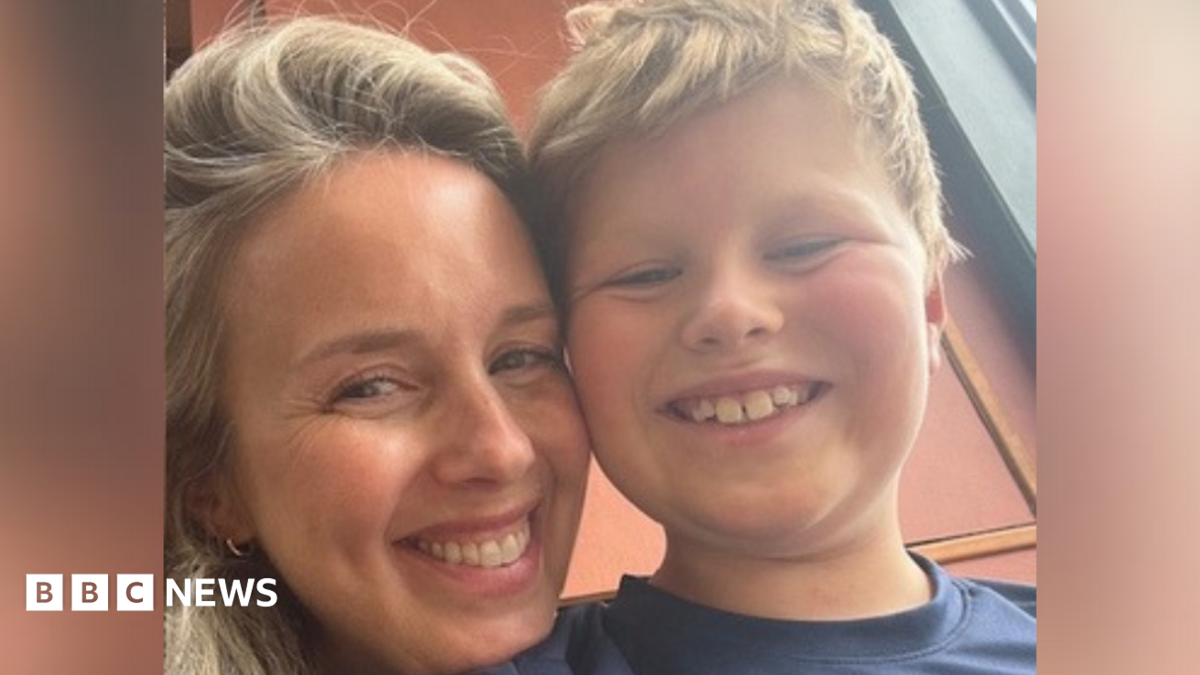
Image source, HandoutImage caption, Laura gave birth to her son Arthur in 2018ByMarcus BootheAlexandra Bassingham and Chloe HarcombeWest of England"Women, since the beginning of time, have birthed and looked after children and I just couldn't be bothered. I thought I was lazy."Those are the words of Laura, 45, from Cheltenham, in Gloucestershire, who weeks after undergoing an emergency Caesarean section struggled so much with postnatal depression that she needed psychiatric care.The NHS says postnatal depression, external, also known as postpartum depression, is a "common" mental health condition that can happen after having a baby."Postnatal depression can happen to anyone and this is why the veil of shame needs to come down, through education or through listening to people," said Laura.If you are affected by any issues raised in this article, help is available at BBC Action LineMore from GloucestershireImage source, Family handoutImage caption, Laura began to suffer from postnatal depression about two months after her son was bornSymptoms can include feeling fearful, anxious or irritable, alongside difficulty concentrating and sleeping. It can also be accompanied by suicidal thoughts and struggling to bond with your baby. An NHS spokesperson advised seeking support from your GP, health visitor or midwife if these symptoms persist, in addition to charities such as Mind and PANDAS.According to the NHS, the condition affects about one in 1,000 new mothers and can include symptoms such as hallucinations, paranoia and depression.The NHS said it should be treated as a medical emergency.Negative thoughtsLaura said her birthing experience with her son Arthur in June 2018 was "traumatic but incredibly quick" after he became "very stressed" in the final stages.About two months after his arrival, Laura said simple household chores triggered negative thoughts which eventually spiralled into suicidal thoughts."I used to think anything I did wasn't good enough," Laura said. "I thought, 'I'm a fraud, they all think I've got something wrong with me'."Laura and Arthur were admitted to the mother and baby unit at the Barberry - a national centre for mental health in Birmingham.There, Laura received 10 weeks of specialist inpatient care which she said had made all the difference.Image source, HandoutImage caption, Jade's birthing experience did not work out the way she had hopedFor Jade, 33, from Sherbourne in Dorset, it was a peri-mental health team and an admission to a mother and baby unit in Bournemouth that helped her to get better.She experienced postpartum psychosis, external about two weeks after she gave birth to her daughter in December 2020.Jade said she had spent almost three days in labour before she was induced and she finally delivered her daughter with the help of forceps."I didn't realise at the time but, after going through therapy, I realise it was quite a traumatic delivery," she said."I experienced tearfulness right away and I think that was trying to process it as I'd wanted a water birth, so it was very different to what I'd envisioned."Image source, HandoutImage caption, Jade said her family and friends did not know what psychosis was or what the signs wereJade sought counselling for her symptoms but was told the NHS was stretched. She was asked if she could seek private help instead.In March 2021, she was prescribed anti-depressants but she suffered her first psychotic episode two weeks later."I was in a completely different reality," she said. "I felt at a loss and things were getting progressively worse."I was getting intrusive thoughts which I was too scared to say out loud."Image source, HandoutImage caption, Jade said she was in "a completely different reality" after she gave birth to her daughter in 2020Although she experienced depression following her return home and a relapse of psychosis in January 2024, Jade said the consistent support from her community mental health team and her care co-ordinator had been a "complete lifeline".Jade said she wanted to share her experience so people knew what the signs of postpartum psychosis were."If a mum is acting out of character... and the unusual behaviour isn't right, it's really important that's flagged and is seen as a medical emergency," she said.Image source, HandoutImage caption, Laura wrote a book to share her experience with postnatal depression and to raise awareness of the conditionAfter her diagnosis, Laura began to volunteer with the perinatal mental health team "as a way to give back" to the NHS, which she said had carried her through "the lowest time of her life".She also wrote the book Something to Live For about her experience to raise awareness of postnatal depression.She said she had received "the most heart-warming messages" from fellow mothers and praise from fathers who credited the book with helping them to understand what their partners may have been going through after birth.Get in touchMore on this storyRelated internet links
'The veil of shame around postnatal depression needs to go'
Full Article
Original Source
Read the full article at Bbc →KhanList aggregates and links to publicly available news content. We do not host full articles from third-party sources. Always verify important information with original sources.