
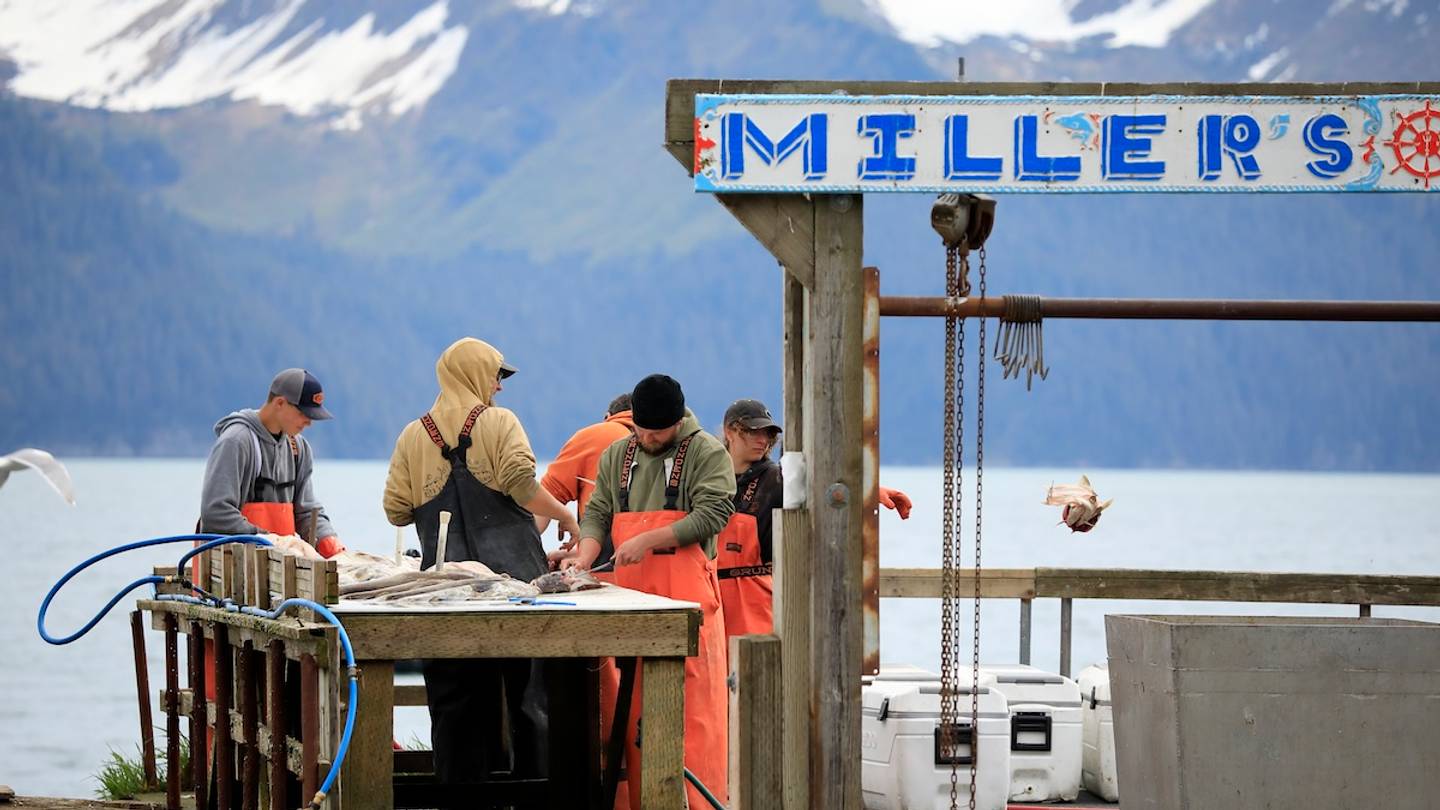
There are more females than males in the United States, but it's close.An estimated 168 million males and 174 million females lived in the U.S. in 2025, according to estimates from the United States Census Bureau. That makes around 49% of the population male, with the additional 51% identifying as female.But that balance varies by state, with more men living in some states while women dominate others. So which states top the list for men and which ones have more women?Colder States Have More MenBundle up if you want to live in a state with more men, starting all the way north in Alaska. The state easily leads the nation with a ratio of 110.6 men for every 100 women, according to U.S. Census Bureau data. The ratio is a little more even in Alaskan urban areas like Anchorage or Juneau, with the western part of the state skewing results. Western Alaska is home to male-dominated industries, including fishing and oil, that push the ratio so high for men.In fact, second-place North Dakota has a ratio of 105.1 males per 100 females. Like Alaska, a local oil boom drew more men to the state to work in the male-dominated field, shifting its overall gender ratio.The five states with the highest ratio of males to females, according to data from the U.S. Census Bureau, include:1. Alaska2. North Dakota3. Wyoming4. South Dakota5. MontanaWomen Dominate in Southern StatesWashington, D.C., leads the nation in female-skewing demographics, driven in part by college-educated women moving to the District. | Joel Carillet/GettyImagesIf you're looking for areas where women outnumber men, look to the South, starting with the District of Columbia, which has a ratio of just 90.6 males for every 100 females. Census Bureau data suggests this gap is partly driven by college-educated women moving to D.C. in higher numbers than college-educated men.This female-heavy imbalance isn't limited to D.C., though. In fact, it's found in several East Coast states. Delaware, for example, takes second place in the U.S. with a ratio of 93.9 males to 100 females. Maryland also makes the list in fifth place with 94.8.Another place with an imbalance is the South. Third-place Mississippi has a ratio of 94.2 males to females, while fourth-place Alabama has a ratio of 94.4 males to 100 females. Women tend to live longer than men, with an average life expectancy of 84.1 years compared to 80.3 years for men, according to data from the Yale School of Public Health. That gap is wider in some Southern states, such as Mississippi, which could contribute to the lower ratio of males to females in those states. In Mississippi, for example, life expectancy for women is 76.6 years compared to 71.8 years for men.The five states that have the highest ratio of females to males, according to data from the U.S. Census Bureau, include:1. District of Columbia2. Delaware3. Mississippi4. Alabama5. MarylandParity Is Spread Across U.S.Wisconsin is one of the closest states to an even male-to-female split, sitting at 100.3 males per 100 females. | Joel Carillet/GettyImagesWhile some states have a larger ratio of males or females, not every state has that type of imbalance.The Midwest has two states, Minnesota and Wisconsin, that barely have more males than females. Minnesota has 100.4 males per 100 females, while Wisconsin has 100.3 males per 100 females, making them the two states closest to parity with a slight male edge.On the flip side, West Virginia and California have near-parity with slightly larger female populations. Both have 99.8 males for every 100 women, making them just barely more female than male.Read More:
The U.S. Male to Female Ratio By State in 2026
Full Article
Original Source
Read the full article at Mentalfloss →KhanList aggregates and links to publicly available news content. We do not host full articles from third-party sources. Always verify important information with original sources.