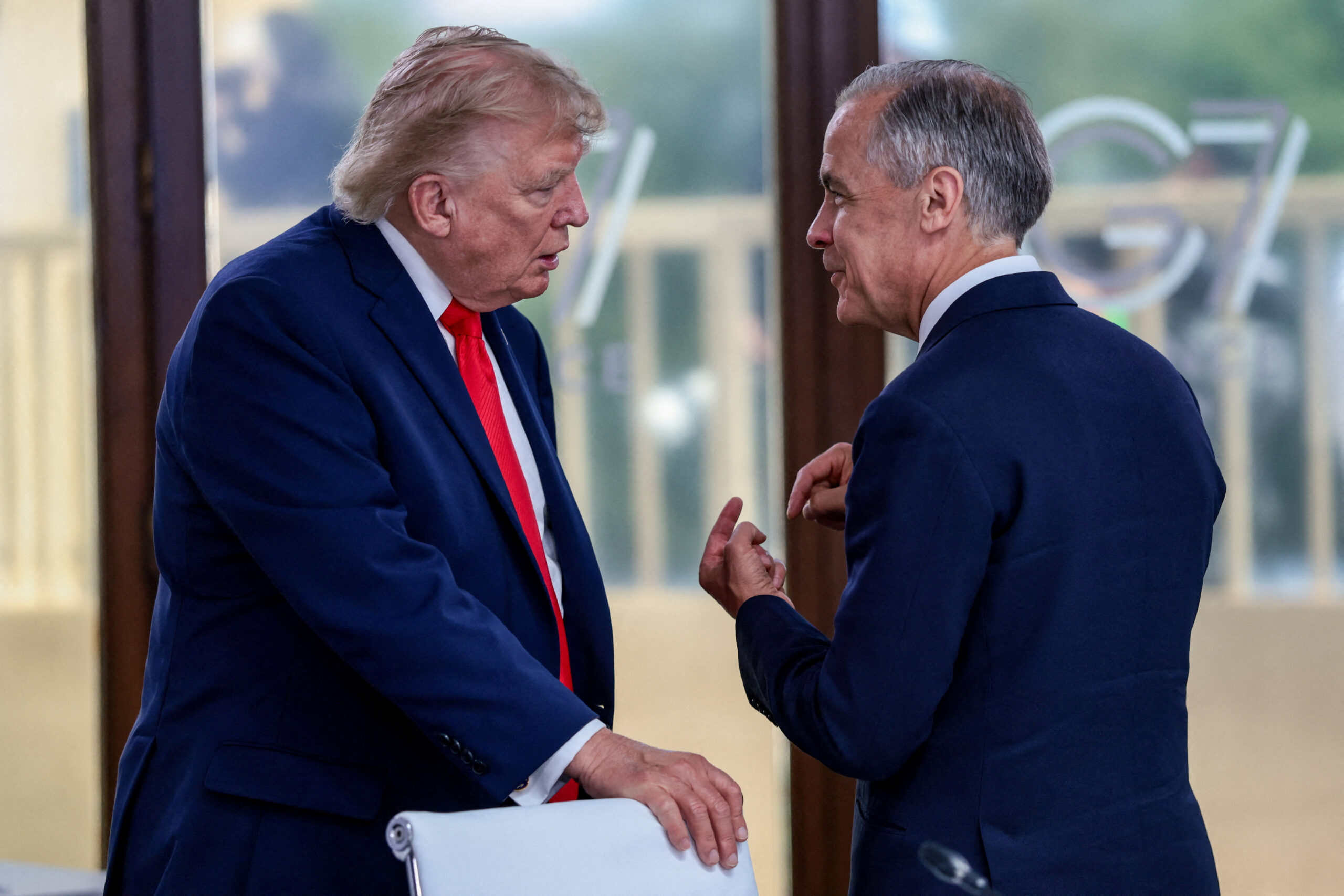
July 22, 2026 • 2:16 pm ET Madeline Chalecki The Trump administration may be running into its own tariff wall. On Monday evening, the White House announced 50 percent tariffs on certain Canadian goods by invoking Section 338 of the Trade Act of 1930—a never-before-used statute that allows for tariffs of up to 50 percent on countries that engage in discriminatory practices against the US. But here’s the catch: the administration’s claims of unfair treatment by Canada are, in part, the result of its own tariffs on Canadian goods. The past year has shown that changes in trade flows have been closely tied to US tariff policies—and those policies have contributed to a cycle in which each Canadian response becomes a justification for even greater US pressure. The latest escalation thus provides an interesting geoeconomic test case—not only for US-Canada relations, but also for the broader US trade strategy. At what point do tariffs stop being a negotiation tool and become an end in themselves? New statute, same strategy US President Donald Trump has used tariffs to drive negotiations since the start of his second term, turning to the International Emergency Economic Powers Act (IEEPA), Section 232 national security tariffs, and Section 301 tariffs. This time, however, the administration has pulled out a brand-new tool. Section 338 is a largely untested statute that does not clearly outline its procedural safeguards. For example, the statute is vague as to whether an International Trade Commission (ITC) investigation is required. It directs the ITC to identify foreign discrimination and make recommendations to the president, but also allows the president to impose tariffs if he finds “as a fact” that a foreign country is discriminating against US commerce. Moreover, the statute provides a rather broad definition of discrimination and appears to imply a proportionality requirement for tariffs—ambiguities that create significant legal uncertainty and may help explain why the administration has avoided using the authority until now. However, wildfire smoke and stalled negotiations over the United States-Mexico-Canada Agreement (USMCA) may have pushed the president to reach for a tool he can deploy quickly and unilaterally. The US moves, Canada responds in kind When invoking Section 338, USTR cited US alcohol, vehicle, and dairy exports that have been affected by Canadian policies. Paradoxically, the alleged harms are, in large part, a consequence of Canada’s retaliation against US trade policies. Following the imposition of tariffs under IEEPA, Canada announced retaliatory tariffs on C$155 billion worth of US imports, ranging from passenger vehicles to dairy products. While those duties never entered into force, Canada today maintains 25 percent retaliatory tariffs on US steel, aluminum, and automobiles—a narrower set of measures broadly aligned with US tariffs. Additionally, several Canadian provinces maintain bans on US alcohol, removing it from shelves and halting new purchases. These policies began after Liberation Day and persisted even after Canada removed most of its federal retaliatory tariffs in September 2025, as the timeline below shows. If this feels like a chicken-and-egg situation, it’s because it is. Each US trade action has prompted a Canadian response, which has then prompted another US action, creating a cycle of escalation. Canada’s refusal to submit to US tariff pressure is no doubt frustrating to Trump, as demonstrated by his most recent decision to impose more tariffs, but it’s not a sign of discrimination. Rather, it shows the limits of using tariffs as a negotiation tool: they may work in certain circumstances and for a limited time, but eventually they risk further escalation and economic harm. The cost of one-upmanship This tit-for-tat escalation hasn’t come without consequences for trade flows. Canadian retaliatory tariffs have affected US exports. Notably, however, export declines are closely tied to the products targeted by Canada’s retaliation lists, signaling that these impacts are a result of the US-Canada trade war, rather than evidence of alleged discrimination. Take autos—Canada has maintained 25 percent retaliatory tariffs on 19 automobile tariff lines. Since their imposition, US exports have certainly dropped, but the decline has been far more pronounced for goods subject to retaliation. Alcohol exports tell a similar story. They were actually rising before Trump’s tariff actions prompted Canadian retaliation, suggesting that the resulting restrictions are a response to US trade policies, rather than evidence of discrimination. Tariffs for tariffs’ sake? The Trump administration’s frustration with Canadian trade measures is clear—and understandable. Unlike most other US trading partners, Canada has successfully implemented and sustained a retaliation framework with economic consequences. As a result, the US-Canada tariff standoff doesn’t seem particularly productive. Instead of bringing Canada to the negotiation table to address longstanding issues, it has driven up import costs on both sides of the border, heightened tensions between the allies, and underscored the limits of a tariff-only approach to addressing geopolitical and geoeconomic issues. When it comes to Canada, tariffs imposed in response to tariffs will not lead to a breakthrough—but only to more tariffs. Madeline Chalecki is an assistant director at the Atlantic Council’s GeoEconomics Center, where she leads the center’s work on trade policy, tariffs, and supply chains, including the Trump Tariff Tracker. Further reading Image: US President Donald Trump meets Canadian Prime Minister Mark Carney. Source: Reuters/Evelyn Hockstein.
The US just threatened new tariffs on Canada. Here’s why they may not work.
Full Article
Original Source
Read the full article at Atlanticcouncil →KhanList aggregates and links to publicly available news content. We do not host full articles from third-party sources. Always verify important information with original sources.