
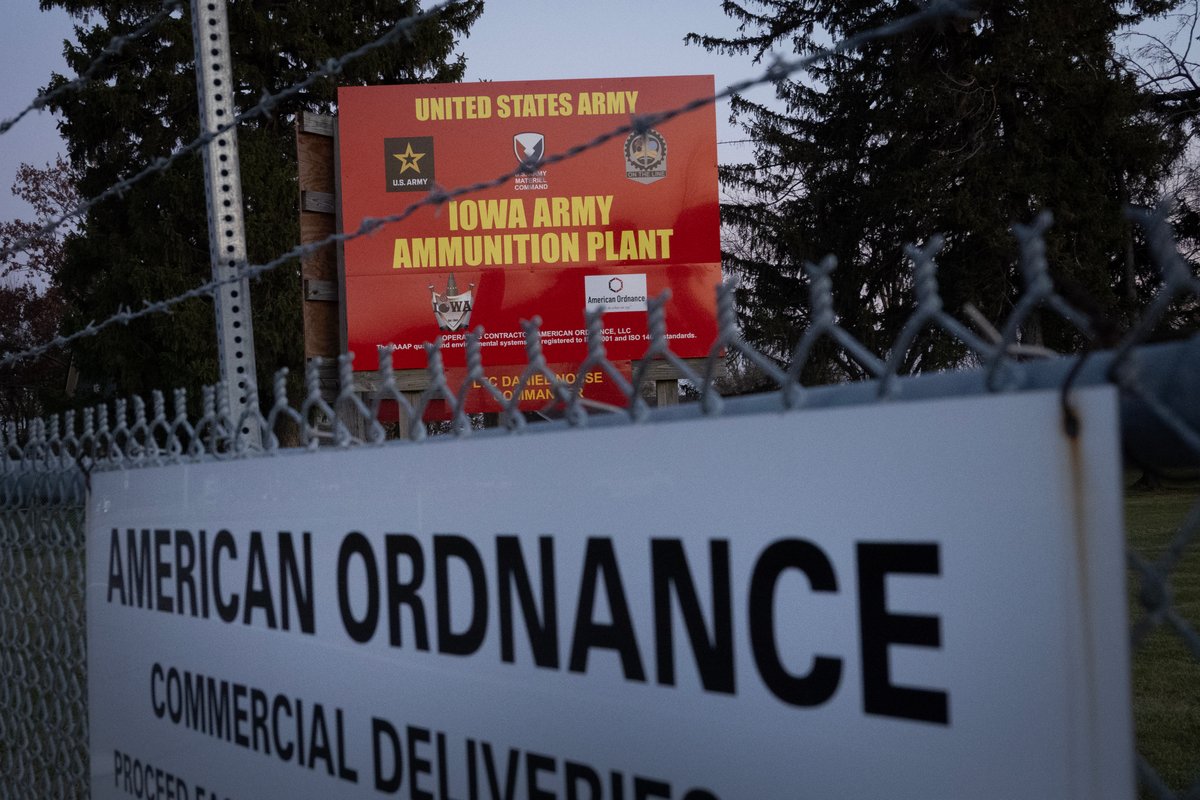
November 25, 20262 min read Add Us On GoogleAdd SciAmThe detonation is necessary, officials say, because the material becomes explosively unstable at certain temperaturesA sign identifying the facility sits inside a fence surrounding the Iowa Army Ammunition Plant on November 19, 2026 in Middletown, Iowa. Photo by Scott Olson/Getty ImagesThe U.S. Army detonated five tons of lead azide, used in munition manufacturing, at a site in Iowa on Wednesday. Any toxic material released by the blast could extend for miles, affecting parts of Iowa and neighboring Missouri, and would pose a significant danger to people's health, experts say.Officials have said they anticipate "zero release" of toxins due to mitigation efforts. Two controlled explosions occurred at 10 A.M. EST. A New York Times reporter on the scene said they saw a plume of smoke rise into the sky and drift south. It is unclear whether any toxic material escaped at this time.Residents in the surrounding area had been urged to evacuate in recent days—but leaving is no longer possible. Now, any remaining members of the public are being told to block and secure their windows and doors to prevent any potential lead released from entering their homes.On supporting science journalismIf you're enjoying this article, consider supporting our award-winning journalism by subscribing. By purchasing a subscription you are helping to ensure the future of impactful stories about the discoveries and ideas shaping our world today.The Army has estimated that exposure to any toxic material could last about one hour after the explosions. State officials have recommended that any residents in the potential blast zone to stay inside with their windows and doors closed for at least 24 hours, however.The explosion is necessary, the Army has said, because the 68 drums of lead azide have degraded in storage, forming unstable crystals that can explode spontaneously at room temperature. It is so unstable, that the material cannot be moved, touched or left in place. In a blog post for Science, chemist Derek Lowe pointed out that crystallization is a "foreseeable problem," and suggests that the lead azide wasn't stored properly in the first place. "The larger picture is that someone, or a series of someones over time, has grievously screwed up," he wrote.Any lead dust released by the explosion poses a danger to health, and especially to children and pregnant women. "Lead is a neurotoxin, which is particularly nasty because it acts as an impostor. Your body mistakes it for what it needs, like calcium, and it jams all sorts of nerve signals," explained Katelyn Jetelina, an epidemiologist, in a recent newsletter post about the explosion. "There is no safe level because scientists have never found a threshold below which lead stops doing harm."The Army has built a mitigation zone around the lead azide in the hope of containing any such dust, including tanks of water and foam blocks, as well as containment screens. Still, the Army has released maps showing the potential path of any dust plume should some of the material escape.Missouri' Governor Mike Kehoe posted on social media after the blast that initial reports suggested the "explosion was well-contained."Environmental Protection Agency head Lee Zeldin said on Tuesday ahead of the explosion that the agency would monitor the area's water, air and soil for signs of contamination in the aftermath of the blast.This is a developing story and will be updated.Subscribe to Support Independent JournalismGreat science journalism requires human expertise, time, effort and creativity. And it costs money. That’s why I and the journalists here at Scientific American hope you’ll join our community.When you subscribe, you are supporting staff and freelance journalists who are passionate about telling science stories that are true, important and compelling. Our editors and reporters are often experts in their fields, which means they understand the nuances of big discoveries and can untangle the breakthroughs from the hype. With a subscription, you are also supporting rigorous fact-checking to ensure the words we publish are precise and accurate. And you’re supporting original illustrations, graphics and photos that bring you closer to an advanced laboratory, an ice sheet in Antarctica or a space mission in orbit. You’re helping us craft other types of high-quality journalism as well: Our newsletters are carefully written, edited and curated by staffers you have or will come to know and love. Our Science Quickly podcast is based on original reporting, collaboration with editors and scientists and exacting production.Subscriptions keep this engine running so we can continue to deliver thoughtful, rigorous and independent science journalism to you. In an era of viral misinformation, this work is crucial. If you value what we do, I hope you’ll consider joining us as a subscriber
The U.S. Army is blowing up five tons of toxic lead azide in Iowa
Full Article
Original Source
Read the full article at Scientificamerican →KhanList aggregates and links to publicly available news content. We do not host full articles from third-party sources. Always verify important information with original sources.