
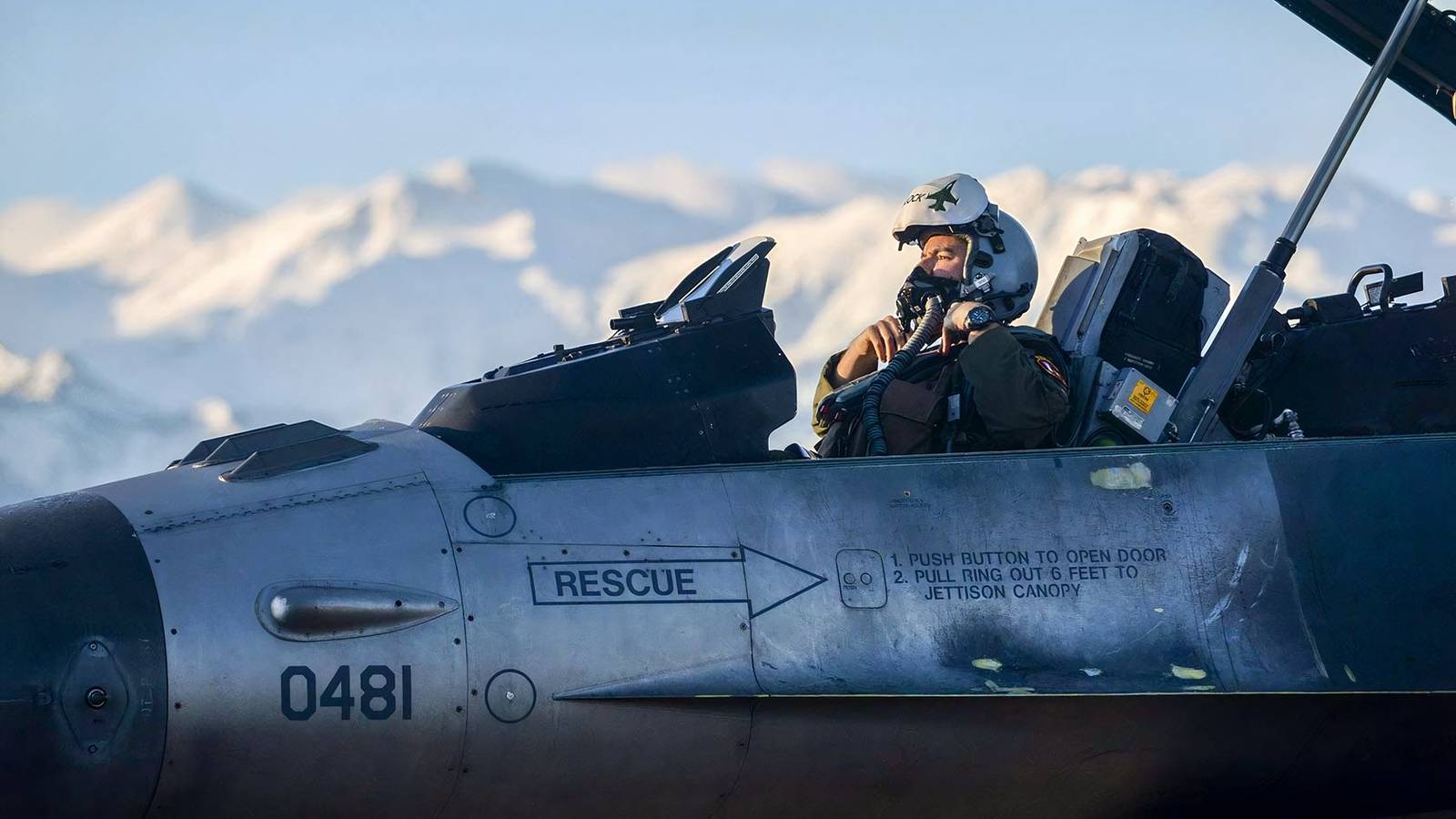
Published Sep 22, 2026, 7:01 AM EDT Chris earned a Master’s degree in Defense and Strategic Studies (Highest Honors) from the University of Texas at El Paso. His graduate work concentrated on Global and National Security, Low-Intensity Conflict, Modern Warfare, and US grand strategy. He also undertook extensive regional studies, analyzing how key regions integrate into the broader US security architecture. This rigorous program provided him with a comprehensive understanding of U.S. military operations, global strategy, and weapons systems. Additionally, he gained a strong appreciation for great power competition.—an increasingly central force shaping international relations and conflict for the foreseeable future. The United States Air Force (USAF) has long competed against the commercial industry to keep its pilots in uniform. Large commercial carriers offer generous pay, flexible schedules, and the ability for pilots to remain close to their families. This is especially true because military pilots can be called to deploy to the other side of the world at a moment's notice. This dovetails with major airlines witnessing record passenger traffic, and that trend is expected to continue for the foreseeable future. This is, in turn, creating a greater demand for new commercial pilots, which is creating a strain within the Air Force's fighter and bomber wings as they are expected to experience a 70% gap in their ranks. This presents a serious readiness issue that must be remedied. The pilot shortage has likely been a driver for the Air Service to develop and field what is expected to be a sizable force of Collaborative Combat Aircraft (CCA). These semi-autonomous drones will provide numerous benefits in combat. However, one of the greatest benefits will be helping to fill the widening void in deployable, combat-effective aircraft. Credit: Delta Air Lines The desire to travel, particularly during the warm months of summer, has generally been a draw among individuals who seek a well-earned break from the rigors of work and everyday life in general. According to an Airports Council International report, an incredible 9.8 billion passengers traveled globally in 2025, a rise of 3.7% over 2024 and 6.5% over 2019 levels, based on data from 2,817 airports across more than 180 countries and territories. These numbers are likely to continue to rise, with Airbus predicting that passenger traffic will grow at a steady pace of 3.6% per year until 2044. This expected increase in travel translates to an estimated 1.5 billion more people who are likely to enter the global middle class and travel on both international and domestic flights. In order to accommodate current demand and the projected increase, airlines around the world are continuing to actively hire new pilots. This is supported by the fact that ATP Flight School, one of the premier aviation programs in the US with a total of 30,000 cumulative graduates, continues to attract and train new pilots every year. To this point, 1,170 ATP graduates have been hired by major and regional airlines over the last 12 months, a 40% increase over last year, with American Airlines leading as the primary recruiter. Supporting the drive for qualified pilots, Boeing predicts that, over the next 20 years, there will be a market requirement for 660,000 new pilots. These market drivers and rising demand for new pilots are creating a perfect storm for the USAF, particularly as it must maintain high operational readiness amid great-power competition, with China as the key competitor. However, with carriers such as American Airlines openly displaying a $90,000 (£66,600) average annual salary, the draw for experienced military pilots can be difficult to ignore. The USAF Is Actively Battling The Airline Industry With Various Incentives Credit: US National Archives In Fiscal Year (FY) 2017, Air Force and airline industry experts expected high levels of hiring to continue for the next decade. Here we are, and that prediction could not have been more correct. That trend has had an effect on the USAF, with the ranks of combat aviators, particularly within the bomber and fighter communities, expected to dip below 70% by 2027, which is fast approaching. To address retention issues, Senators Ted Budd (R-N.C.) and Jeanne Shaheen (D-N.H.) have spearheaded a legislative package that includes two bills designed to keep experienced Air Force pilots in uniform and continue providing their valuable services to US national security. The package is entitled the Retention Enhancements for Tactical Aircrew Initiative, or RETAIN, and the Fighter Aircrew Career Flexibility Act. Within the fine print of this bipartisan effort is a mandate for a maximum of $1,500 (£1,110) per month in aviation incentive pay for aviators with more than eight years of experience. This is important, as around this time in a pilot's career, they have accrued considerable flight time and are susceptible to the pull of the commercial industry. Further, officers with this experience will increasingly be needed for command roles; if they retire early, their respective wings will potentially experience gaps in effective leadership. Additional key points in the RETAIN Act include doubling the maximum cash retention bonus for participating aviators from $50,000 to $100,000 (£37,000–£74,000), providing another incentive for pilots to remain in the Air Force. Along with the generous bonus, the act proposes allowing pilots not tasked with a deployment to request a break from active duty for four to 12 months. During this "intermission" period, pilots who choose to temporarily leave active duty will be placed in the Individual Ready Reserve, allowing them to be recalled in emergency situations. The USAF Needs More Flying Hours To Maintain Proficiency Credit: US Air Force Raging in the background amid the uncertainty of a pilot shortage and competition with big-name airlines is the need to maintain sufficient flight hours. While the Air Force is seeking to increase this vital time in the air, Congress is intent on cutting it back. At the same time, Collaborative Combat Aircraft are edging toward active service as an alternative to piloted aircraft, offering a way to generate additional combat mass as the USAF's manned fleet continues to face personnel constraints. To keep its pilots sharp, the USAF is seeking funding to support more than 1.1 million hours of flying in FY2027, representing the largest request for flying time in four years. The Air Force stated that the "...Flying Hour Program (FHP) is the forge that ensures American pilots remain the most capable and best-trained aviators in the world." Yet, even if its pilots reach the allotted hours, they would still fall short of the 1.3 million hours needed for proficiency. However, lawmakers are moving in the opposite direction, with the House Appropriations Committee recommending $7.144 billion (£5.28 billion) for the Air Force's Flying Hour Program, $121 million (£89.4 million) less than the $7.265 billion (£5.37 billion) requested by the service. The proposed reduction would cut into the Air Force's planned 22% increase in flying-hour funding as it seeks to improve pilot proficiency and operational readiness. Collaborative Combat Aircraft Offer A Potential Solution To The USAF's Pilot Shortage Credit: US Air Force CCAs are semi-autonomous drones or "Loyal Wingmen" designed to accompany fifth- and sixth-generation fighters and bombers on missions, particularly in contested combat zones. These aircraft are set to act as force multipliers for pilots, allowing them to command several drones while extending their reach and kinetic potential. Further, CCAs will expand the sensor network of a force and will likely conduct intelligence, surveillance, and reconnaissance missions. They could even strike targets or deploy electronic warfare effects while taking on some of the risk to which human pilots have traditionally been exposed. In this way, the Air Force can bulk up its combat aircraft wings despite not being able to fill all the billets it requires. To that end, the USAF is requesting nearly $1 billion (£740 million) in its FY2027 budgetto begin purchasing these advanced platforms. Additionally, the air service has requested an additional $150 million in advanced procurement funding to support its 2028 goals for its CCA program. This move is not a new development; since FY2024, the USAF has spent nearly $1.91 billion (£1.4 billion) developing CCAs. This most recent budget request is the first time that it has included procurement funding for this consequential program. The development is being directed at the Air Force's Increment 1, which will cover 100 CCAs to be delivered by 2029. The two companies competing for the final contract are Anduril with its YFQ-44 and General Atomics with its YFQ-42. Either company could be chosen, but the contract will be lucrative, as the USAF intends to operate a fleet of approximately 1,000 CCAs. The Future Of USAF Airpower May Depend On CCAs Credit: US Air Force The Air Force's competition with commercial airlines for experienced pilots is unlikely to diminish anytime soon. As passenger demand continues to grow, airlines will require more pilots, while the USAF must find ways to retain its aviators and provide enough flying hours to maintain proficiency. Financial incentives can help, but they cannot completely eliminate the challenges associated with military service. CCAs could help mitigate these personnel shortages by allowing fewer pilots to command more combat aircraft. However, these systems will not replace the need for skilled aviators. Instead, the Air Force's future force will quite possibly depend on combining highly trained pilots with increasingly capable autonomous aircraft to maintain combat effectiveness.
The US Air Force Is Spending $996 Million On Drone Wingmen Because It Cannot Keep Its Fighter Pilots
Full Article
Original Source
Read the full article at Simpleflying →KhanList aggregates and links to publicly available news content. We do not host full articles from third-party sources. Always verify important information with original sources.