
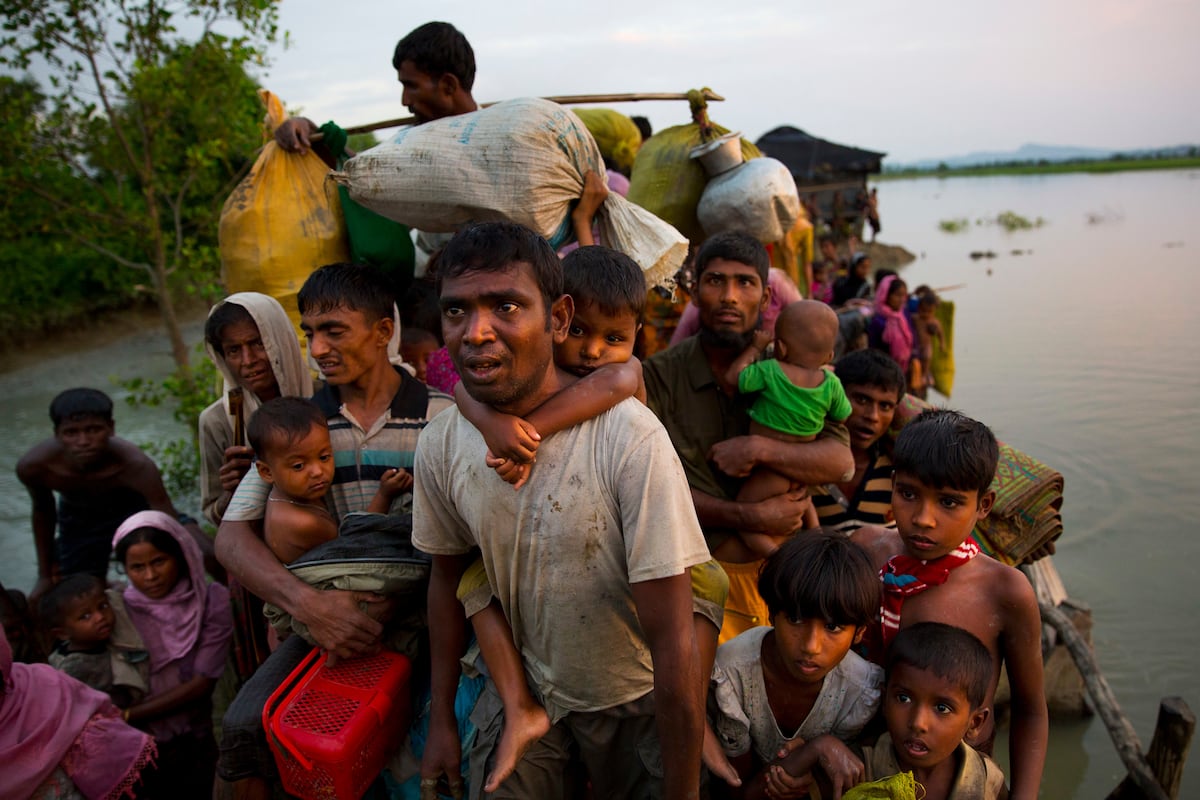
The International Court of Justice (ICJ), the United Nations’ top court, said on Thursday that it was “fully convinced” that Myanmar’s security forces killed thousands of Rohingya, systematically burned their homes, destroyed their villages and committed acts of “extreme violence,” including sexual violence against adults and children, during the 2017 military operations that forced nearly one million members of the Muslim minority to flee to neighboring Bangladesh.The court, based in The Hague, referred to those findings during the public reading of its judgment in the case brought by The Gambia against Myanmar over alleged genocide against the Rohingya, a hearing that had not yet concluded at the time of writing.Presenting the judgment, the court’s president, Japanese jurist Yuji Iwasawa, also stressed there was the intent to destroy “in whole or in part,” the Rohingya Muslim minority in northern Rakhine State, in the west of the country, a key element in determining whether genocide was committed under international law.“The court finds that Myanmar’s security forces killed thousands of Rohingya civilians, perpetrated widespread acts of sexual violence, as well as acts of extreme violence against children, and attacked fleeing Rohingya,” Iwasawa said in a packed Great Hall of Justice. The reading of the 15-judge court’s decision is expected to take three hours.He went on to note that the villages where members of the minority had lived were destroyed in 2017, before those localities were subsequently “colonized” by people from outside the group.In addition to the physical harm caused by the violence, these acts had a serious impact on the physical and mental health of a very significant number of Rohingya, said Iwasawa. Myanmar also adopted measures aimed at “preventing” births within the community and “slowing the birth rate” of the Muslim minority, another of the acts listed in the Convention on the Prevention and Punishment of the Crime of Genocide (1948) that may constitute genocide, the gravest crime under international law.The ruling may have implications for the interpretation and application of the Genocide Convention and for efforts to combat impunity, at a time when the International Court of Justice is also hearing the case brought in 2023 by South Africa against Israel under the same treaty, alleging “genocidal acts” against Palestinians in Gaza.The Myanmar case was brought before the International Court of Justice in 2019 by The Gambia, a West African country located thousands of miles away and with no direct involvement in the events in question. A Muslim-majority nation, The Gambia filed the case in fulfillment of the obligations set out in the Genocide Convention, which requires signatory states to prevent, prosecute and punish violations of the treaty in both times of peace and war.This is a breaking story. Please update your browser for more updates.
The UN’s top court finds Myanmar’s military killed thousands of Rohingya and subjected them to ‘extreme violence’
Full Article
Original Source
Read the full article at English →KhanList aggregates and links to publicly available news content. We do not host full articles from third-party sources. Always verify important information with original sources.