
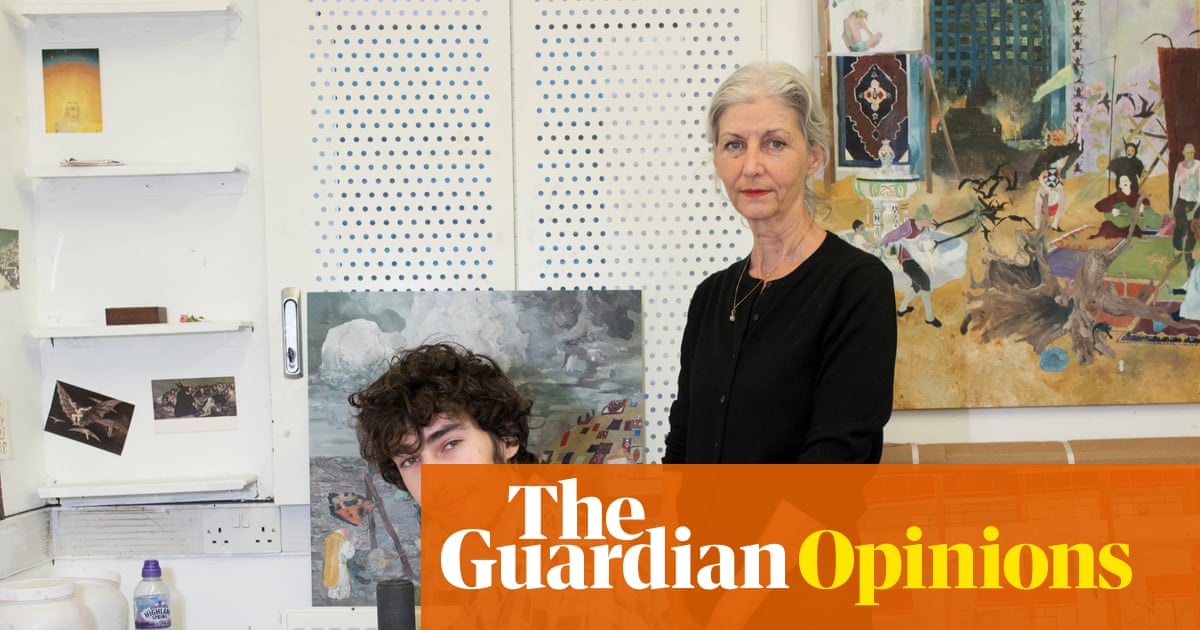
In 2022, a prodigiously talented young artist named Louis Petit was preparing to return to the UK, having been effectively exiled in the Netherlands as a teenager so he could access the medical cannabis he needed to control his epilepsy. Six years earlier, Louis, then 12, had been diagnosed with a rare form of the neurological disease when medical cannabis was still illegal in the UK.But in Rotterdam, where it was legal, doctors helped him discover that a medical cannabis oil called Bedrolite, in combination with the right mix of anti-epileptic treatment, could slow and eventually stop his seizures. This was something his neurologists in the UK had previously considered impossible.By the time Louis won a place at City and Guilds of London Art School in 2022, the UK government had legalised medicinal cannabis, pressed by parents needing the drug to treat their epileptic children – most notably Charlotte Caldwell and Hannah Deacon.Louis assumed his troubles were behind him. “It seems naive now, but I think both me and my mum thought Britain would welcome me back, saying, ‘Thank God you’re better’,” Louis told me. But Louis has never been able to get a prescription for medical cannabis through the NHS. Instead, like almost everyone who needs the drug in this country, his only access has come through the expensive private sector. And now the producer of Bedrolite, a Dutch company, Bedrocan, has declared bankruptcy.This means there is a high chance that, in the near future, the drug that keeps Louis well will stop being available privately, in a huge blow to all patients who rely on it. If this was people with diabetes facing a shortage of insulin, or people with high blood pressure running out of beta blockers, politicians would be falling over themselves to be seen trying to secure the long-term supply. But because this is epilepsy and cannabis – a medicine that has been stigmatised by a 50-year “war on drugs” – successive governments have avoided the issue, allowing this current crisis to develop, despite patients warning for years that they can’t be just abandoned to the private market.Louis Petit in Great Ormond Street hospital in 2018. Photograph: Family HandoutWhen the then home secretary, Sajid Javid, legalised medicinal cannabis in 2018, he stood up in parliament and promised patients who needed cannabis medication that their arduous fight was finally coming to an end. “Having been moved by heartbreaking cases involving sick children,” Javid said, “it was important to me that we took swift action to help those who can benefit from medicinal cannabis.”But these benefits reached a fraction of those who needed help. Since the first few patients received their prescriptions on the NHS, the vast majority of others – including Louis – have been met with a wall of refusal from the healthcare system, with doctors’ requests for public funding to prescribe cannabis medication rarely granted in practice.Until 2025, there were fewer than five prescriptions for unlicensed cannabis-based products such as Bedrolite given out across the entire NHS. In the absence of an accessible NHS route, the private market has become the only route to treatment for most patients, costing them anything up to £4,000 a month for their medicine.The result of medicinal cannabis being handed over wholesale to the private sector is that cannabis has quietly become one of the new growth sectors in Britain, with many cannabis companies getting rich from the boom. Remote online prescriptions, 48-hour door-to-door delivery and targeted advertisements on social media have all helped grow the private customer base.But while private suppliers offer customer-friendly products such as cannabis vape pens and gummies on prescription, Bedrolite is a cannabis oil that was modified specially for children with drug-resistant epilepsy, and can’t be replaced with general cannabis. There is a much larger market for presenting cannabis as the new must-have wellness treatment for the on-the-go millennial suffering from anxiety, sleep issues or chronic pain medicine than there is for trying to treat acute but rare ailments such as complex epilepsy or multiple sclerosis.And there is little commercial incentive for private companies to spend huge amounts of money on the expensive, large-scale, clinical, randomised control trials that are needed to get more cannabis medication licensed and mainstreamed on the NHS. Successive governments washed their hands of this issue once legalisation eased the immediate pressure from families with sick loved ones who were campaigning against an outright ban.This dynamic leaves us in the paradoxical position whereby medical cannabis has become one of Britain’s new growth industries at exactly the same time that the most vulnerable patients, who desperately need the medication, cannot access it.“It’s been one shock after another since we came home,” said Louis’s mother, Emma. “If his neurologists’ funding request to NHS England had been approved last year, his Bedrolite supply would be guaranteed. There is enough stock in the Netherlands to last into 2028. But it’s not available to those without NHS prescriptions.”skip past newsletter promotionafter newsletter promotionInitially, it was feared that the drug would stop being on sale in the UK before Christmas, but last week one UK drug manufacturer, Target Healthcare, told families it will secure a six-month stockpile of Bedrolite, offering temporary relief. However, what happens in six months’ time is anyone’s guess.The possible consequences of epileptic patients such as Louis suffering a forced withdrawal from the medication they use to control their seizures could be severe. The UK government needs to intervene and negotiate with Bedrolite’s manufacturer to secure the supply for all patients who need it in Britain.But beyond this emergency, the UK government needs to stop ignoring the medical cannabis industry and put in place the necessary investment and regulatory frameworks for it to become an accepted prescription on the NHS.Even before the recent bankruptcy of Bedrocan, families and campaigners have been insisting that patients shouldn’t be forced to live at the mercy of the volatile private market, all because politicians are too scared of the negative headlines that might come from mainstreaming a still-stigmatised drug such as cannabis on the NHS.“Health shouldn’t be an issue of whether you are wealthy enough to afford it or even be able to access it,” Louis said to me as we parted. We will see over the next couple of months if the politicians in charge of this country agree. Dr Kojo Koram is professor of law and political economy at Loughborough University and the author of The Next Fix: The Winners and Losers in the Future of Drugs Do you have an opinion on the issues raised in this article? If you would like to submit a response of up to 300 words by email to be considered for publication in our letters section, please click here.
The UK’s legal cannabis market is booming – so why can’t this talented artist get any to treat his epilepsy? | Kojo Koram
Full Article
Original Source
Read the full article at Theguardian →KhanList aggregates and links to publicly available news content. We do not host full articles from third-party sources. Always verify important information with original sources.