
Experience of Britain under aerial bombardment lies at the limits of living memory, with few left alive today able to remember the Second World War. Now, in the biggest conflict Europe has seen since 1945, the UK faces a different kind of threat: from Russia, the country that has brought war back to the continent. As a result, the UK has a pressing need for more weapons to fend off the danger of attack from the skies. Since Vladimir Putin’s full-scale invasion of Ukraine in 2022, Russian warplanes have flown close to UK airspace a number of times. Royal Air Force fighters have been deployed to intercept and monitor them. Shorts These encounters have so far passed off without incident. They are a chance for Russia to score some propaganda points – always an important part of Putin’s way of fighting wars. The Russian air force also wants to test its main rivals’ readiness in case of a conflict. In wartime, however, it would be different. “If there were hostilities you wouldn’t expect aircraft to come particularly close to the UK because they’d be launching their missiles at very, very long ranges,” said Douglas Barrie, a senior fellow for military aerospace at the International Institute for Strategic Studies in London. Parts of Russia’s aerial fleet – Su-35S aircraft and some Su-30SM2s – have been modified specifically with that in mind: their medium-range missiles replaced with longer-range ones, according to a paper published by the Rusi think-tank in January. The paper’s author, Justin Bronk, concluded that this had “significantly contributed to increasing the threat” they could pose to Nato air operations. In short, a future conflict would be very different to any we have experienced, and the aerial threats exponentially larger. There is a sense that both Russia and Nato are still relearning their roles as foes. The end of the Cold War, and the fall of the Soviet Union in 1991, led to a period of peace impossible to imagine during the East vs West confrontation that divided Europe in the second half of the last century. Russian tanks in Moscow last year rehearsing for the Victory Day parade which marks the anniversary of the defeat of Nazi Germany (Photo: Alexander Nemenov/AFP) When the Cold War ended, fighting forces were scaled back on both sides. Russia, stung by the loss of the Soviet empire and the superpower status that went with it, did not have the money for a large military. Western Europe, happy to have avoided the end of the world, focused its resources elsewhere. However, in the Putin era, that process has gone into reverse. The Russian air force may have been reduced in size at the end of Cold War, but it was never mothballed. As a journalist in Chechnya in 1995, I ran for my life from a Russian air strike aimed at separatist fighters. Civilians in rebel-held areas of Syria later came to know well the fear inspired by Russian warplanes. Over the last few years, despite the huge losses Russia has suffered in Ukraine, its air force has, if anything, become a greater threat. “Russian fighter pilots have improved their effectiveness in air-to-air engagements during the war,” the Rusi paper also warned. And with the Russian budget for 2027 focused on providing even more fuel for the Kremlin’s war machine, the air force won’t want for resources. At the same time, a future conflict in the skies between Nato and Russia wouldn’t just be about planes. Ukraine’s ability to launch drones from increasing distances to strike targets far from the front lines has been a major factor in the way that conflict has evolved. Russia is utilising similar weapons to strike Ukrainian cities, including its latest generation of jet-powered Geran drones. The aftermath of Russian ballistic missile and drone strikes on the outskirts of Kyiv in August. The conflict has changed the nature of aerial warfare (Photo: Roman Pilipey/AFP) That war has lessons for the UK, although as Barrie points out, the drones that Russia is using in Ukraine don’t have the range to reach the UK’s shores. However, he said there may be other ways that Moscow looks “at launching similar classes of weapons”. Recent reports have suggested this could include drones being launched from Russian merchant vessels in waters that put them in range of targets in countries like the UK, which have offered political and military support to Ukraine. One aspect of UK defences in particular needs to be improved, according to Barrie. “The real area of weakness is in terms of ground-based air defence, so surface-to-air missiles. We really don’t have nearly enough of those, and we don’t have enough of those to cover the range of threats that the Russians could now deploy against us,” he said. If it did come to war with Russia, the UK would be fighting alongside other Nato allies – but air defences are in short supply everywhere, particularly since the US launched its war against Iran earlier this year, which has depleted available stockpiles. “If you thought it was going to be 36 months before you got your missiles, it’s now going to be five years,” said Barrie. A Ministry of Defence spokesperson told The i Paper that the UK would always defend itself against any threat. “The Defence Investment Plan has made air and missile defence a priority,” they said, “with significant investment to strengthen the UK’s ground-based capabilities, including doubling the number of Sky Sabre air defence missile systems and investing in long-range systems.” However, the threats over European skies are only growing, and our enemies have a lot more recent experience in how to conduct and defend that type of warfare. Russia’s assault on Ukraine has also reminded us that war often brings about rapid technological innovation, in this case a growing aerial threat. Absent any prospect of a drop in tensions between Putin and the West, the wider danger will continue to grow – and the UK’s defences will need to change and improve to meet that unpredictable threat. As a nation, we cannot risk not being ready.
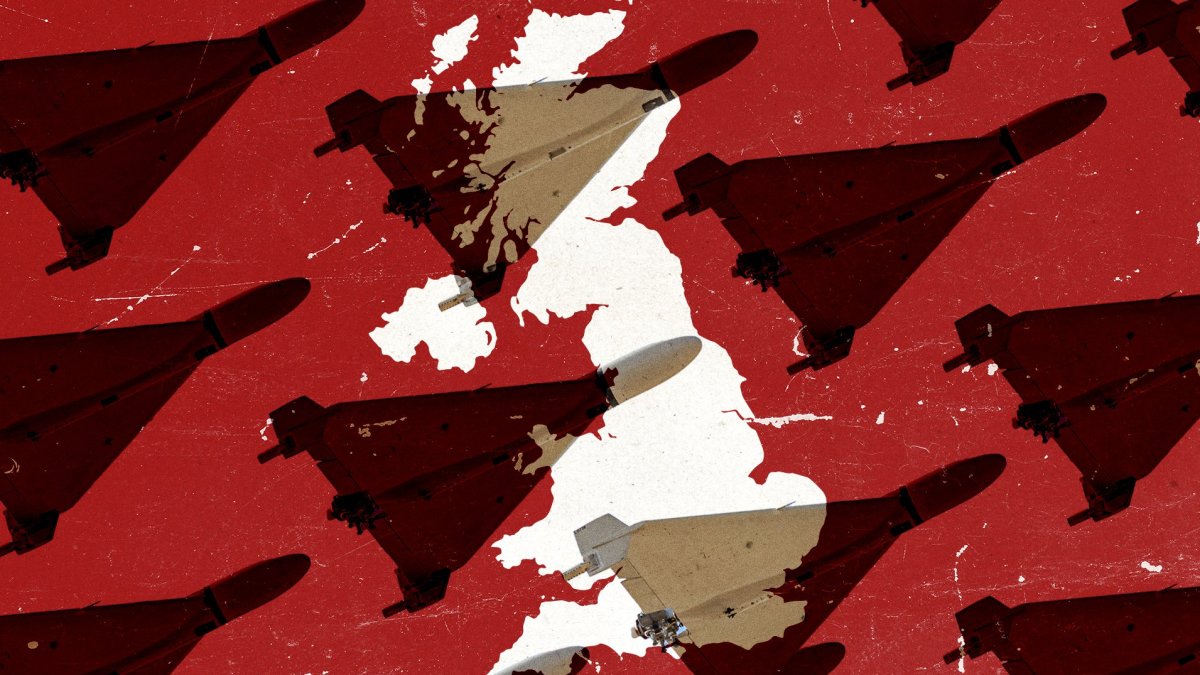
The UK’s air defences are not ready for a Putin attack
Full Article
Original Source
Read the full article at Inews →KhanList aggregates and links to publicly available news content. We do not host full articles from third-party sources. Always verify important information with original sources.