
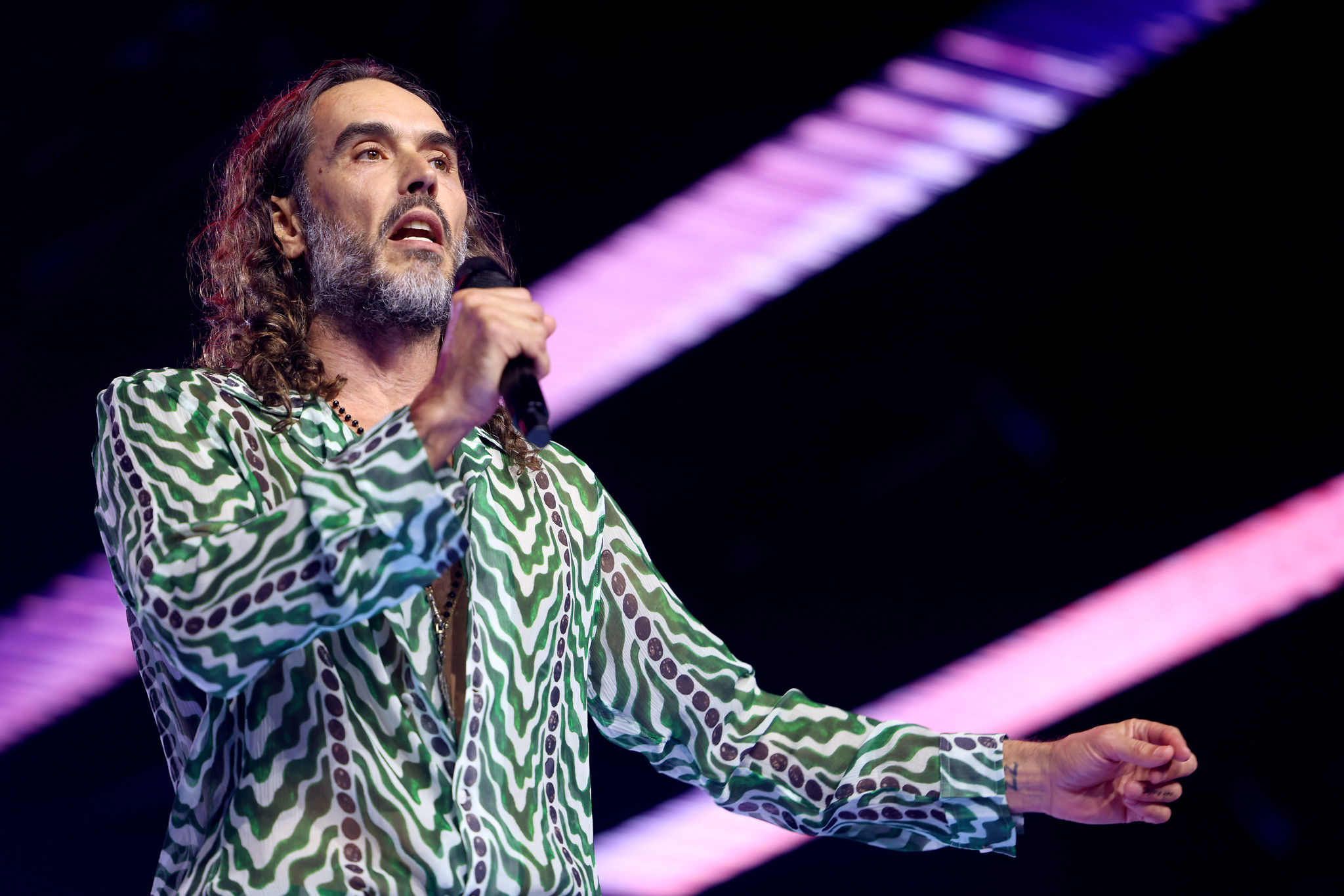
Russell Brand, the comedian and actor-turned-anti-establishment firebrand, was convicted this month of one count of rape and three counts of sexual assault after a trial that drew sharp criticism from his supporters, and was sentenced to 10 years and six months in prison. But now the U.K. is trying to censor him too. On Nov. 15, Laura Brand stared into the camera and read her husband’s defiant message to more than 6 million YouTube subscribers. Russell Brand, now behind bars in a British prison, maintained his innocence. Within days, the British government asked Google to erase his words from American screens, a move that looked very much like an attempt to stifle dissent. This story is about something so much bigger than Brand’s conviction, unjust though it may be: Who gets to decide what Americans can say — or see — online? When foreign governments attempt to dictate speech on U.S. platforms, the First Amendment is on trial. The censorship request came from the prison service via what the BBC describes as an “established mechanism” with tech companies. Reports vary on whether a minister actually met with the company. “It is only right that the Government asks for content that is distressing for victims to be taken down and we strongly believe YouTube should remove this content,” a Ministry of Justice spokesman said. “Removal ultimately depends on the platform’s own terms.” Prime Minister Andy Burnham has called on companies to “show some decency and take these videos down.” Housing Minister Matthew Pennycook admitted to BBC Breakfast, “We don’t have any power to mandate a removal of content. That is up to Google.” But the government has badgered the company to censor the video because it claims “victims shouldn’t have to see this content.” That argument doesn’t hold up. A convicted man declaring his innocence does not cause significant harm to anyone. Defendants maintain their innocence after verdicts all the time, often while appealing, and a free society should let them do so. Nobody is forcing Brand’s alleged victims, or anyone else, to watch his videos. But British leftists can’t help themselves. Labour MP Jess Phillips said a second Online Safety Act is “very likely.” The first, passed in 2023, requires sites with British users, including American websites and search engines, to police “illegal” and “harmful” content, and lets Ofcom, the U.K. communications regulator, fine companies that don’t comply. Conservative leader Kemi Badenoch responded, “Immediately demanding that private platforms take down without looking at whether a law has been broken is not where I would start from.” “We’re aware of the new content and our teams are investigating,” Google told the BBC. The BBC reported that Google had denied the request, but Pennycook has downplayed any suggestion of a refusal. The video was still up as of Tuesday morning. Various Big Tech companies have taken different approaches. Following Brand’s sentencing, Meta disabled his Facebook, Instagram, and WhatsApp accounts, citing a violation of their policies. Meanwhile, Brand’s X account is still live. When the allegations against Brand surfaced in 2023, but before he was charged with any crime, YouTube demonetized his account. At that time, Caroline Dinenage, chair of the House of Commons Culture, Media, and Sport Committee, wrote to Rumble asking “whether Rumble intends to join YouTube in suspending Mr. Brand’s ability to earn money on the platform.” Rumble “emphatically reject[ed]” the request, saying: “We regard it as deeply inappropriate and dangerous that the UK Parliament would attempt to control who is allowed to speak on our platform or to earn a living from doing so.” What started with the British government pressuring Big Tech to demonetize Brand has predictably escalated to attempts to completely silence him — and through American websites, no less. That’s how censorship so often works. The Trump administration has taken steps to prevent foreign censorship of Americans. In May 2025, Secretary of State Marco Rubio announced a policy restricting visas for foreign nationals who engage in censorship of Americans, describing it as “unacceptable for foreign officials to demand that American tech platforms adopt global content moderation policies or engage in censorship activity that reaches beyond their authority and into the United States.” That December, the State Department added five Europeans to its list of banned individuals, including former EU Commissioner Thierry Breton and Imran Ahmed, CEO of the Center for Countering Digital Hate. But thank to Obama-appointed Judge James Boasberg of the U.S. District Court, the policy is on pause. In August, Rep. Michael Rulli, R-Ohio, introduced the GRANITE Act (H.R. 10174), which would prohibit U.S. courts from recognizing or enforcing any “foreign censorship law.” The Constitution, Rulli said, “does not bend to Brussels or London.” With a second Online Safety Act, the questions in the GRANITE Act would stop being hypothetical. This is absolutely not about Russell Brand. What’s at issue is due process. The U.K. can run its own prisons and can protect its victims. What it cannot do is decide what you and I can watch on an American platform. If they can do it to him, they can do it to you. American companies should say no, and they should publish regular reports on the government takedown requests they receive, including who made the request, what content was the subject of the request, and the request’s outcome. Ryan Samuels is a Marine Corps veteran and the host of "The Ryan Samuels Show," a live political commentary program airing weeknights at 9 p.m. ET. Big TechcensorshipCrimefree speechFreedom of SpeechGoogleRussell Brandsocial mediaU.K.YouTube
The U.K. Is Trying To Compel American Tech Companies To Censor Speech Again
Full Article
Original Source
Read the full article at Thefederalist →KhanList aggregates and links to publicly available news content. We do not host full articles from third-party sources. Always verify important information with original sources.