
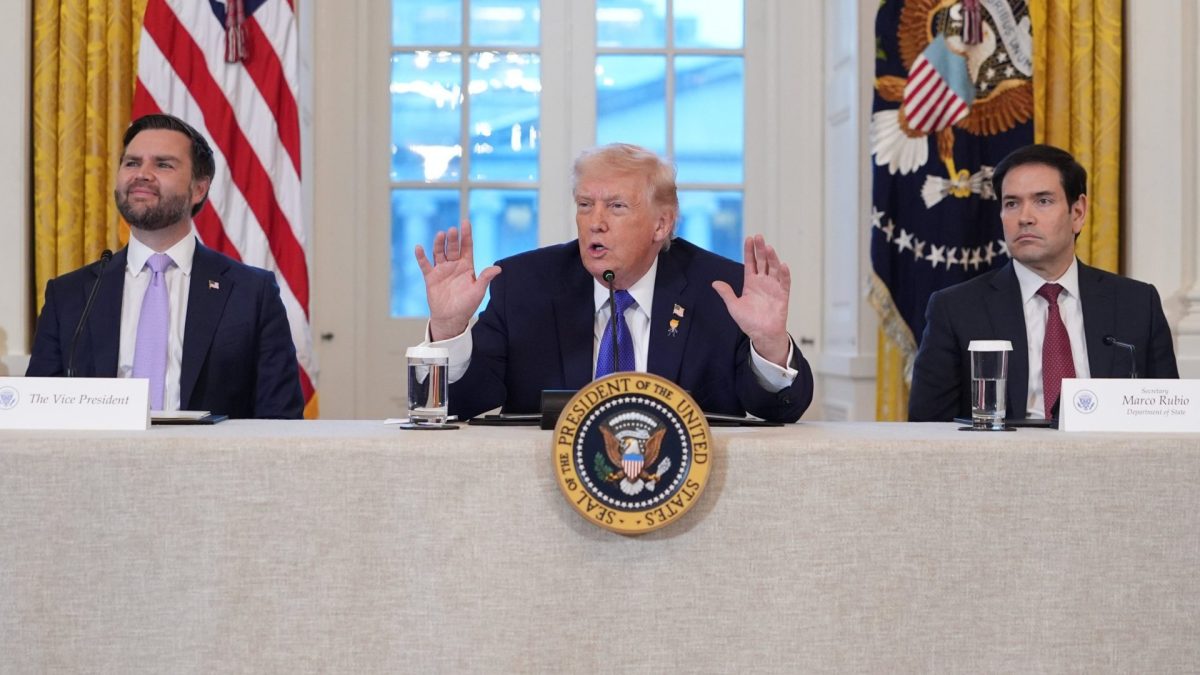
Donald Trump has dominated Republican politics for a decade, but Tuesday was a wholesale rejection of everything that has come to define him. Voters delivered a blistering verdict on his war with Iran, his tariffs, his harsh immigration enforcement, his gaudy renovations and the aura of corruption that voters cited as a major concern in exit polls. Former Trump voters either stayed at home or voted for Democrats, disillusioned by the administration’s failure to deliver on promises – particularly its broken pledge to bring down inflation and make the cost of living affordable. Shorts So where does this rejection of Trumpism leave the 2028 Republican field? The Maga heir apparent was the Vice President. JD Vance has made it clear he has his eyes on the 2028 nomination – but he may now be damaged beyond repair by the extent of Trump’s unpopularity. Vance has been the Maga mouthpiece in chief for President Trump, delighting in lecturing Europeans about how they’re at risk of civilisational erasure, while indulging in culture war theatrics such as encouraging Americans to have more babies. Now the Vice President, who is a gifted debater, must pretzel his way out of an electoral disaster after his own state went blue, when the Ohio Democrat Sherrod Brown ousted Republican Jon Husted – the candidate appointed when then-senator Vance became vice president. Vance made a first stab at dodging the blame on Wednesday with a bombshell post, setting out his anti-war agenda and looking to a time after Trump departs the White House, writing in a lengthy tweet: “The reason we lost is the war. The President himself said so last night.” Vance tried to acknowledge voter opposition to the war in Iran. “If you’d like to argue it was worth it, that losing the Senate for the next 6 years was worth it, then do so. Argue it was a worthwhile cost to pay,” Vance wrote on social media. “Agree or disagree, that’s at least honest. But everyone knows why we lost.” Thus did Vance embark on his perilous mission of the next two years: trying to stay loyal to Trump and not rile him even while admitting his policies are unpopular. Yesterday the President appeared dismissive of Vance’s aspirations to succeed him. Asked whether they had discussed Vance being a potential candidate in 2028, Trump said: “I speak to him about a lot of things, but we’ll see what happens. Maybe nobody’s going to run, maybe he won’t run. I don’t know who’s going to run.” The Secretary of State, Marco Rubio, may be slightly better positioned than Vance for a 2028 run – he’s from Florida, the one state where there wasn’t a Republican wipeout. Rubio mostly stayed off the midterm campaign trail, suggesting he read the tea leaves correctly. But as a key member of Trump’s foreign policy team, he will forever be identified with the unpopular war with Iran that has driven up Americans’ gas prices. It’s another Floridian, the outgoing governor, Ron DeSantis, who may have emerged from the Republican midterm wreckage in better shape. This result was “close to an extinction-level event for Republicans”, “the political equivalent of a meteor strike that went all around the United States” DeSantis said. Pointedly, however, he added that the one state able to “hold the line and withstand that”, was his own: Florida. Florida Governor Ron DeSantis has put the blame for the defeat squarely on Washington (Photo: Umit Bektas /Reuters) DeSantis, who is set to leave office in January, had already warned of the headwinds facing the GOP in various pre-election interviews, describing the Iran war as a big, big drag, explaining why Republican voters were “checked out” and criticising his party for “gaslighting” the electorate by blaming the former president Joe Biden for high prices. DeSantis also wants technology policy to be atop the agenda, warning that Democrats responded more quickly to the backlash against AI and big tech. DeSantis appears more in touch with the popular mood than the President, who told people they’d be “backwards and poor” if they opposed data centres. The multi-ethnic, working-class coalition of voters Trump assembled in 2024 has scattered to the winds. The stunning scale of Democrats’ midterm victory and the virtual collapse of the Trump coalition has scrambled the 2028 presidential race and set off fevered speculation about who will replace Trump in the now gilded Oval Office. The future of American politics is now up for grabs. With their midterm victory, Democrats now have proof they have a whole raft of rising talent that can appeal across the divide. But who is the candidate best placed to harness the febrile mood of the voters come 2028? The emergence of the Christian left – wins for James Talarico in Texas and Adam Hamilton in Kansas – suggests Democrats can win back voters of faith in the heartland, people who were alienated by Hilary Clinton’s infamous description of Trump supporters as “deplorables”. One of the earliest calls of the night was for Jon Ossoff, re-elected to the Senate in Georgia with an 18-point margin of victory over his Republican opponent. No Democratic senator has been more talked about as a 2028 contender. The young, telegenic former documentary-maker won a second term in a Southern swing state with viral video clips about how the cost of living was being elevated by the chaos and corruption of the Trump administration. Ossoff’s use of political rallies choreographed to produce well-shot soundbites of him looking handsome and presidential for social media is fuelling speculation about his future, though he claims to have “zero interest” in running for President. Ossoff has said his Jewish upbringing and values of repairing the world and taking care of the less fortunate have shaped his public service. No Democratic senator has been more talked about as a 2028 contender than Georgia’s Jon Ossoff (Photo: Robin Rayne/Anadolu via Getty Images) But all eyes are on the Lone Star state of Texas, where what Democrats hoped would be a blue wave was in fact a tsunami. James Talarico’s victory speech here was Obama-esque – his argument that Americans were hungry not for “a politics of division but a politics of love” echoed Barack Obama’s 2004 message of hope and change. The young, charismatic, approachable seminarian Talarico showed with his viral videos about the cost of living that he can break through in this fractured media environment in ways which eluded the last Democratic presidential nominee, Kamala Harris, who avoided anything which smacked of the modern communication environment – like Joe Rogan’s podcast. Texas has 40 of the 538 votes in the electoral college, a big haul – so at the very least, Talarico is being spoken of as a possible vice-presidential candidate in 2028. Democrats’ sweep in Texas has thrown up not one but two exciting possible future leaders. Gina Hinojosa, a long-shot for governor of Texas who attracted nothing like the money Talarico’s race raked in, put the culture warriors and the identitarian left on notice when she declared in a campaign ad that her pronouns are mom, Texan, and soon-to-be governor. And now she will be Texas’ first ever Hispanic governor, with chatter about whether she could one day be on a White House ticket herself. The truncated and botched Harris campaign of 2024 seems like ancient history now, a playbook from another era. Josh Shapiro, the governor of Pennsylvania whom Harris briefly considered as a running mate in 2024 before opting for the amiable but ineffective Tim Walz, emerged from last night as a strong contender for a 2028 run. Shapiro is the moderate, bespectacled, technocratic, “get stuff done” governor of a perennial swing state who was re-elected on Tuesday with a whopping 60 per cent of the vote. His coat-tails helped Democrats flip four House seats and take control of the state senate for the first time in more than three decades – handing them their elusive “trifecta” of control of the executive and both chambers of the legislature. The results speak to Shapiro’s ability to win over voters of all stripes and types. Shapiro is Jewish and has navigated Democrats’ internal divisions over Israel and Gaza deftly in ways that could bode well for a 2028 run. He has maintained a pro-Israel stance while criticising Benjamin Netanyahu of overreaching in the military campaign in Gaza. Pennsylvania governor Josh Shapiro following his re-election at the Governor’s Residence in Harrisburg, Pennsylvania on 4 November (Photo: Hannah Beier/ Reuters) Another 2028 contender from the moderate governor wing of the Democratic Party would be Andy Beshear in Kentucky. As Chair of the Democratic Governors Association, Beshear can claim credit for helping expand the party’s electoral map last night with wins in Iowa, Texas, Ohio and Georgia – and he’s just published a book called How We Heal A Broken Country, widely seen as testing a political message ahead of a possible 2028 run. The progressive wing of the Democratic Party can also claim to have had a strong night. Alexandria Ocasio-Cortez (AOC) campaigned vigorously for Abdul El-Sayed in Michigan and Troy Jackson in Maine, both of whom won their Senate races. While not every candidate AOC endorsed won, notably socialist Angie Nixon in Florida, she now seems well positioned to launch her own run for the White House – though questions remain about whether the Bronx congresswoman can really compete in states Trump won by double digits in 2024. Much uncertainty remains over what these two parties will look like in two years’ time. Yet with the conclusion of the midterms, one thing is clear: for both, the countdown to 2028 is well and truly under way.
The Trump allies now lining up to take him down
Full Article
Original Source
Read the full article at Inews →KhanList aggregates and links to publicly available news content. We do not host full articles from third-party sources. Always verify important information with original sources.