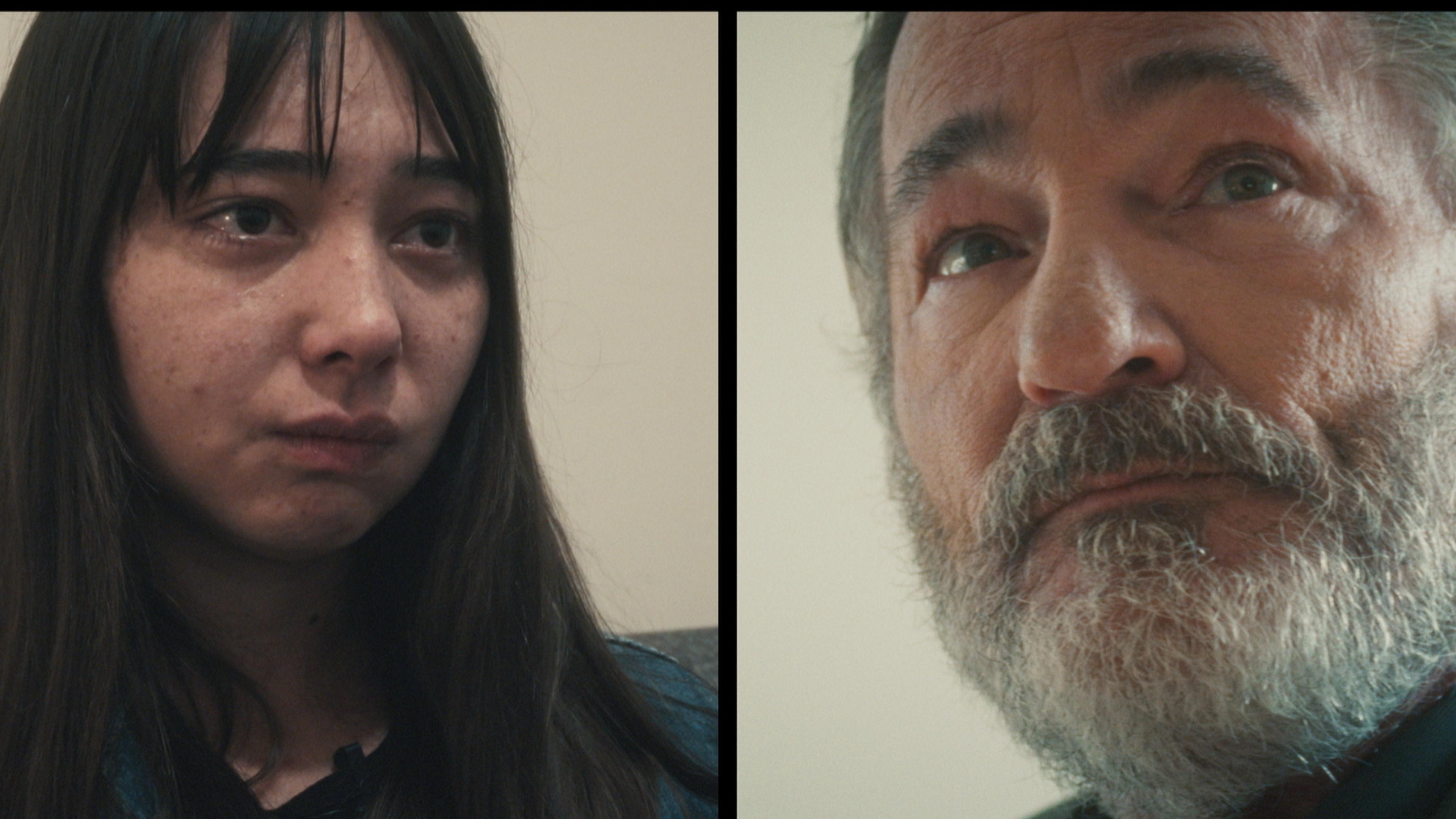
In 2022, Sophia Maddox received world-altering news in the middle of a casual phone call. At the time, the 22-year-old aspiring actor and filmmaker was living in Los Angeles, working various jobs—mostly bussing tables and nannying—as she struggled to find auditions in the aftermath of the pandemic. She’d recently started a production company and directed a short film, but “it felt like my career was going nowhere,” Maddox tells TIME. Then, after feeling sick on a flight home from New York City, she called her dad, Daniel Arguelles, and asked if he could drive her to get a COVID test. As they were catching up on her trip, he suddenly dropped a bomb. “I think I found out who my dad is,” he told her. “It's really dark, and I don't think you're ready to know."Arguelles had been raised by his mother and stepfather, and had never known his biological father. He’d been registered on Ancestry.com since 2015 with hopes of discovering the other piece of his parentage, but over the previous seven years he’d only matched with third cousins. “We kind of gave up on the idea that we'd find his dad,” Maddox says. Until he learned of a new match—to a user named Michael Brunner, who happened to share the same father: the notorious killer Charles Manson.Based on her dad’s language, Maddox immediately assumed it was someone famously violent. “I thought of Ted Bundy right away,” she says. “That was the darkest thing I could think of.” When Arguelles shared Manson’s name with her, once they were together in the car, Maddox didn’t quite recognize it. Her only point of reference was Once Upon a Time…In Hollywood, Quentin Tarantino's 2019 alternate history about the cult leader and the events leading to the infamous 1969 Tate-LaBianca murders. Manson would be convicted on seven counts of first-degree murder; he died in prison in 2017 after serving a life sentence. Though this information would eventually inspire Maddox to make her first film, the new Hulu documentary My Grandfather Charles Manson, the news initially broke her. “It was very much like [the paternity scene] in One Battle After Another,” Maddox says, referring to Chase Infiniti’s character in Paul Thomas Anderson’s Best Picture-winning film. “At the very end, he just put his arm around me as I sobbed while he was driving.” Later that night, she prayed that something had gone wrong with the DNA test, or that the website had made an error. But Brunner and Arguelles retook separate tests to confirm the source. Not long after, Arguelles subpoenaed Kern County, attained Manson’s DNA from his estate, and took another test that came back with a 99.9999 percent positive match. “My mental reality completely shifted,” Maddox says. “My existence changed because of this revelation.”Thus began a cathartic, multi-year journey of self-discovery that Maddox chronicles in her documentary. Co-directed by Alexandra Orton, the film combines Maddox’s personal video diaries, therapy sessions, and exclusive interviews while descending into Manson’s early background and sensationalized media persona as a monster. “I’ve always been the good one,” Maddox cries in the film, reckoning with her contradicting bloodline. “When Sophia told me the story, you just cannot believe it,” Orton says. “Everybody has to come to terms with skeletons in their family in some capacity, but it's never this extreme.”From personal reckoning to making a filmArchival photos of Sophia and her father Daniel Courtesy of HuluThe news didn’t immediately inspire Maddox to make a film. Instead, she spent a lot of time at home alone, lacking much support to process what she was going through. It wasn’t long before she turned to her phone. “I just started recording myself, not because I thought I was going to make a documentary. It was just cathartic,” she says. “You start processing it. You start talking to yourself like someone's in the room with you.” But eventually, she felt like she had a story to tell. Eric Cook, her producing partner, gave her a camcorder to start filming more seriously. Over the next eight months, she recorded interviews—including one with her dad—created more self-tapes, pulled archival material, and compiled research to build a teaser video. “Once we made that sizzle reel together, we realized how helpful those video diaries were and how unfiltered and unproduced they really were,” Maddox says. After a successful pitch to Hulu, Orton quickly joined the project to assist Maddox at the studio’s behest—a way for Hulu to maintain the film's objectivity and fill in any post-production gaps. Orton had previously worked on the genealogy show Who Do You Think You Are? and had experience with subjects dealing with unexpected news. “I was really used to counseling people and filming people as they learned surprising things about their family,” Orton says. “It was fascinating to watch this extremely brave, sharp young woman, who's also creative and expresses herself creatively, navigate everyone's fear on camera.”The pair’s investigation starts at the Indiana boys reform school where Manson spent two years. Through records, Maddox learned her grandfather amassed 28 bad conduct reports, often the victim of (and sometimes the perpetrator of) physical punishment and sexual assault. In her quest for more insight into his personality, Maddox also contacted and interviewed former members of his cult family—including Lynette “Squeaky” Fromme, Dianne Lake, and Stephanie Schram—along with some figures from Manson’s more recent past, including a man who calls himself Blackwolf, who recorded around 800 calls with Manson before he died. Maddox supplements their interviews with expert insights (Stephen Kay, the last living prosecutor during the Manson trial, makes an appearance), old news footage, and the conventional “Helter Skelter” theories that have populated Manson’s mythos, showcasing the contradictions in how the notorious killer was perceived. As she explains, her ambition was to “look at all sides."“I think what makes this film different from any other Manson documentary, besides my personal connection, is that a lot of people don’t bother to look at people on the fringes of society who have a different background and lifestyle,” Maddox says. “I'm not taking their stories as fact. It's just a collection of data. That was always my intention.”“There were definitely some nerves about sending a young woman into these scenarios,” Orton admits, noting that Maddox was always surrounded by a camera crew. “We had a lot of background conversations to make sure we felt adequately prepared and understood where we were going.”Perhaps the biggest insight came from Maddox’s attempts to speak with law enforcement and contemporary historians of Manson. The filmmakers found that even mentioning her bloodline repelled potential subjects from agreeing to be interviewed. “They would hear ‘granddaughter’ and immediately make a judgment about her that had nothing to do with who she is,’” Orton says. “She's an amazing, trustworthy, kind human being who has nothing to do with her grandfather.”The impact on a father-daughter bondAn archival image of Manson in My Grandfather Charles Manson Courtesy of HuluThe relationship between Maddox and her father provides the documentary’s most complicated and emotionally compelling throughline. As a kid in Southern California, Maddox lived in separate homes with her divorced parents, with Arguelles cultivating her love for the arts. But as she grew older, she became more curious about her father’s upbringing, often asking her grandmother, Darlene, about who her dad’s biological father was. As Maddox explains in the documentary, Darlene, who died in 2020, had a brief romantic encounter with “Charlie Dear,” whom she met at a bus stop when she was 17 years old. Ten years after Arguelles was born in 1959, Darlene realized Manson was likely the father when his name began popping up in headlines. The resemblance is striking. “Manson’s picture popped up, and that's when I went, ‘OK, yeah, that's your dad,’” Maddox remembers. Early on in the documentary, Arguelles is open about sharing his background and his feelings about the recent revelations, but as Maddox dives deeper into her investigation and learns more about the shared connections between Manson and her father’s mental health issues and own traumatic childhood, she shares how he begins to shut her out of his life. “Every time I find out something new about Charles, my dad breaks a little,” Maddox says in the film. “What I gleaned from this process was that there are definite mental health issues that run in our family,” Maddox says. “I had a good childhood where my dad loved me very much and told me I was a good person. He said all the things he never heard as a kid. He wanted to give me the childhood he never got, and he did the best he could without a handbook or an example. I always told myself that my dad's capability for love was innate. I don't know where he got it from.”Maddox says she has yet to speak with her father since their falling out in the middle of documentary’s production, but “my door is always open, and I still love him,” she says. “I'm going to keep being an artist and doing what I was doing way before I found out my grandfather was Charles Manson. I'm going to keep doing what I love.”“I still don't know how Sophia did it all,” Orton says. “I joke to her a lot that whatever movie she makes next is going to feel so easy.”
The True Story Behind a DNA Test, a Family Reckoning, and My Grandfather Charles Manson
Full Article
Original Source
Read the full article at Time →KhanList aggregates and links to publicly available news content. We do not host full articles from third-party sources. Always verify important information with original sources.