
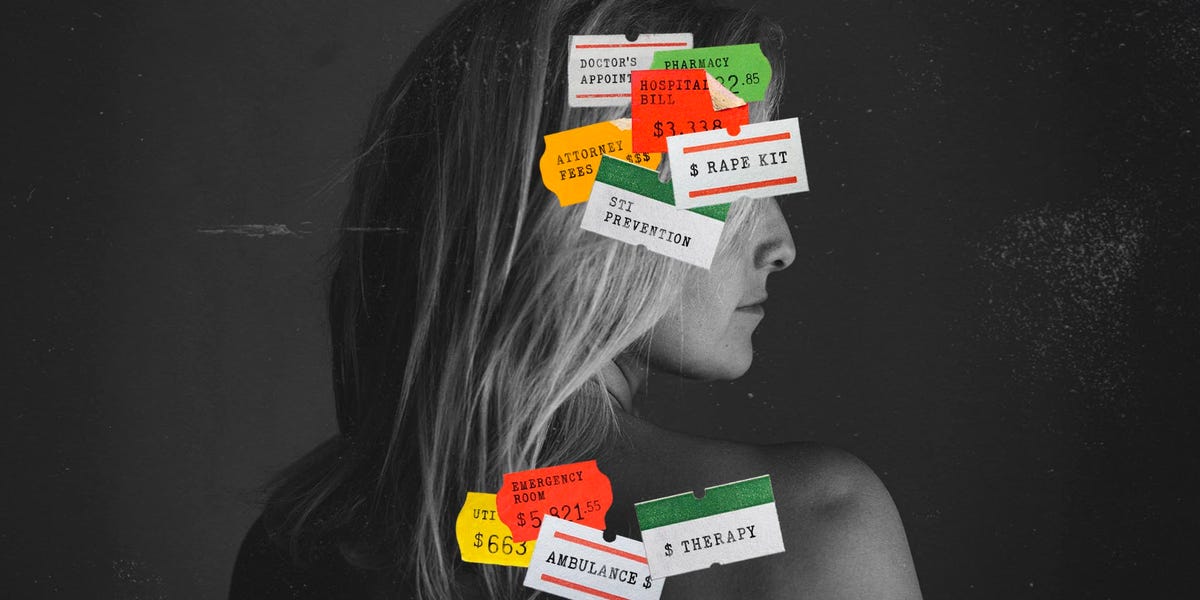
Content warning: This story contains descriptions of sexual assault. By now, we’ve all seen the story: the horrific alleged 2024 drugging and assault of 20-year-old “Jane Doe” by seven male Cornell University students. The vile alleged details just released in her 2026 lawsuit (how the so-called Cornell Seven discussed violating Jane on Snapchat, how the assault lasted hours and hours) and the school’s allegedly feeble response have sparked rightful outrage on social media and spawned hundreds of think pieces calling, once again, for crucial social and legal change.It’s a familiar story for those who remember Columbia University student Emma Sulkowicz carrying a mattress to classes to protest the school’s handling of her assault, Chanel Miller’s statement when her Stanford University attacker was convicted, or Summer Willis’s crawl to the Texas Capitol protesting the too-little progress this country has made against campus sexual assault. Familiar, too, is what has happened to Jane Doe after: She dropped out of college and is now being forced to relive the experience as it churns through both the legal system and court of public opinion.There’s a line in her complaint, though, that acknowledges something that typically goes unaddressed by all: Jane “has and/or will become obligated to expend sums of money for treatment.”The reality in America is that being sexually assaulted isn’t just a traumatic, life-altering violation—it’s also very expensive. The economic fallout can be harsh, as our government currently expects people to pay up after being raped, thereby traumatizing them all over again. Like most survivors, Jane will be literally paying for her assault for the rest of her life.83 percent of women who received a sexual violence diagnosis were billed for treatment.This summer, TikTok creator xo, simone went viral after she itemized the thousands of dollars ($12,780, to be exact) she had spent on care after a sexual assault. Other survivors weighed in with their own post-rape costs: “Louisiana told me the [rape] kit was free; they charged me $1,200 for it,” one commented. “It cost me $7,000 for the hospital, therapist fees still ongoing,” wrote another.Fees associated with medical care were commenters’ most common complaint, which makes sense considering how massive emergency room and mental health bills can be (because, again…America). Allegedly, sexual assault victims get some reprieve via the federal Violence Against Women Act (VAWA), which covers the cost of rape kits used to collect evidence. But even well-meaning hospitals that follow protocol can have billing-office fumbles, and many survivors wind up with a rape kit on their tab, says Usha Ranji, associate director of women’s health policy at KFF, a health policy research nonprofit. That’s not to mention fees associated with everything else, including STI tests, HIV prevention, emergency contraception, stitches, and antibiotics (unless a state specifically prohibits it, hospitals can legally charge survivors for all of this). Also not factored in are how bills may differ depending on where you’re sexually assaulted; who’s employed at the hospital, clinic, or emergency room you enter; and your insurance, assuming you have any.And immediate financial charges are just the tip of the iceberg. There are also the costs of missed work or school, attorneys’ fees, mental health care, and follow-up doctor’s appointments. As the Trump administration continues to cut funding for federal anti-violence initiatives, sexual assault survivors will likely have to bear even more costs like these on their own while simultaneously processing the assault itself.Cosmopolitan talked to four survivors and seven experts to reveal exactly what that toll can look like.$3,338 for the Emergency Room, a Pregnancy Test, and STI and UTI Tests ($451.06 After Insurance)If someone is sexually assaulted and needs medical care, wants a rape kit, or wants to report the crime, here’s what would ideally happen at their nearest emergency room:A sexual assault nurse examiner (also known as a SANE), who’s trained to administer a rape kit, collect evidence, and care for victims of rape and assault, would see them right away. There would also be a victim advocate ready to take notes and distract them during a dehumanizing forensic exam. That advocate would deliver a change of clothes, since the survivor’s clothing would be collected as evidence. They’d then provide info on how to navigate the criminal justice system and find free therapy.After the forensic exam, the ER’s medical staff would administer STI-, HIV-, and pregnancy-prevention medication. If the survivor needs stitches, an X-ray, or any other medical care related to their attack, they’d get it then. Everything would be free of charge, because why should a survivor of a brutal crime have to pay to recover?Everything on this list would help a survivor leave the hospital feeling more like a person than a crime scene, says Tonya Vega, chief nursing executive at SANE Health Services, a nonprofit that provides SANE nurses to hospitals in and around Kansas City, Missouri. But the majority of the 68 percent of women and 29 percent of men who are sexually assaulted in their lifetime never experience this level of care—not even close.I was so unbelievably angry. I was like, ‘You mean it cost me $450 to get raped?!’When Leah, 25, and her mom went to the emergency room at her local hospital in rural Oklahoma late at night last spring, she was still processing what happened.Days before, a guy she’d met on a dating app had offered to make her dinner at his place, but her lost memories and the worsening bruises on her body, including a handprint on her arm, made her suspect that he had drugged her hard seltzer and assaulted her instead. So when a friend suggested she go to the ER for a forensic exam to collect DNA evidence via a rape kit, she felt it was the right thing to do.When Leah arrived, she learned the hospital didn’t have a SANE. The nearest hospital that did was 45 minutes away. Because she was already admitted, she told the doctors she might have a urinary tract infection and that she wanted to be tested for sexually transmitted infections. She gave her statement to a police officer who arrived to file her report, then she and her mom drove 45 minutes to the next ER. There, she waited hours for the SANE and victim advocate before being photographed and swabbed to complete her rape kit.A few weeks later, Leah received an email from the first hospital. It was a bill for $3,338, including $663 for lab work and a pregnancy test she hadn’t asked for. She hadn’t been charged for the rape kit, but the price of just checking into the ER was $2,241. After her parents’ insurance was applied, she owed $451.06.“I was so unbelievably angry,” she says. “I lost it. I was like, ‘You mean it cost me $450 to get raped?!’”Most people don’t realize this care might not be covered, says Vega, who has worked as an emergency room nurse, emergency room director, and a SANE. But that’s actually common: KFF analyzed a sample of insurance claim data from 2016 to 2018 (the most up-to-date data KFF has) and found that 83 percent of women who received a sexual violence diagnosis were billed for treatment. Another analysis of emergency room department data from 2019 found that the average bill for sexual assault survivors was $3,551, according to the New England Journal of Medicine.$5,821.55 for the Emergency Room and $82.85 for Pharmacy Fees ($3,247.10 After Insurance)Federal law only states survivors don’t have to pay for rape kits. For everything else, where you’re assaulted determines what care you’re charged for. Some states, including Illinois, Ohio, and Indiana, cover things like antibiotics, HIV prevention, STI testing, and other medical services related to the assault as part of the forensic examination kit. Many others only pay for evidence collection.After Shannon, now 25, was assaulted at home in Colorado, she did exactly what she learned in college orientation: Preserve as much evidence as you can. Don’t shower, don’t brush your teeth, get to the emergency room for a forensic exam right away, and bring your underwear.I went from being an athlete at the highest level to struggling to get out of bed and brush my teeth. When she arrived at the hospital with the friend who drove her, Shannon told the front desk she needed a rape kit. Thankfully, this ER had a SANE on staff who saw Shannon right away. She got an exam, emergency contraception, and medicine to prevent STIs before she headed home in the early morning hours.Shannon had already told her parents what happened by the time the bill arrived at their house about a week later. She owed $82.85 to the pharmacy for the medications and $5,821.55 for admission to the emergency room. After her parents’ insurance was applied, the total came to $3,247.10.In theory, this is where a state could swoop in to cover expenses like Shannon’s ER bill. In Colorado, sexual assault victims can apply to have their medical costs reimbursed, along with ongoing mental health care bills and other nonmedical expenses, like unpaid time off work or changing their locks.Mary Fama / Getty Images*Not an actual bill.However, “programs intended to help survivors financially are really, really difficult to access,” says Rebecca Loya, PhD, who studies the economic costs of sexual assault for survivors at the Institute for Economic and Racial Equity at Brandeis University. If survivors didn’t work with a SANE or victim advocate in the ER or call a rape crisis hotline, they may not know these programs exist or how to apply. What’s more, these programs typically require survivors to file a police report. Since a majority of people who are assaulted never report it, most aren’t eligible for the money set aside to help them.Also, most of these systems are set up to reimburse survivors, meaning survivors have to pay out of pocket before a lengthy application process begins, something that’s impossible for many people with low incomes.An economic need is going to slow down someone’s recovery.Plus, states, territories, and counties occasionally misinterpret federal law when creating rules for reimbursement programs, explains Marnie Shiels, a former attorney advisor for the Department of Justice’s Office on Violence Against Women who investigated complaints about illegal billing for assault survivors. And if no one reports the problem to the DOJ, it goes undetected.Then there’s all the admin work, a slog that would be challenging for anyone. In a state like Shannon’s, survivors may have to:Create a profile on the submission site.Gather documents and receipts related to their attack.Make a case for reimbursement. Be ready to respond ASAP if the program sends additional questions.Wait up to 60 days to be approved or denied. Wait up to 10 days to be contacted. Shannon has spent most of her life training to become an Olympic figure skater. She’s used to mentally pushing through hard moments, but life after her assault was unlike anything she’d ever experienced. “I went from being an athlete, where six days a week, my job was to train at the highest level, to, all of a sudden, struggling to get out of bed and brush my teeth,” she explains.She remembers filling out something to apply for reimbursement but says there was no response. In the end, her parents covered the cost—a privilege she acknowledges many don’t have.$6,000 in Lost IncomeEven if you can afford medical care immediately after an assault, the financial and mental toll of sexual assault can lead to unpaid bills, losing a job, or even becoming unhoused. “Sometimes the domino effect goes too far, and there’s nothing to stop it,” says Loya.Before Danielle, now 27, was raped in college, she’d never seen a therapist. But after filing a formal complaint with her school’s Title IX office (the same process Jane Doe at Cornell followed) and enduring a two-year investigation into her assault, she had multiple panic attacks a day. When it became too much, she took time off in the middle of a semester, surrendering the class credits she paid for but didn’t complete. Danielle was prescribed various mental health medications ($40 to $50 a pop) and saw therapists sometimes twice a week over the next several years.Danielle had to drop her minor to graduate on time, but the consequences of her assault didn’t end there. Years later, she launched a company that organizes and hosts raves. One night, a guy grabbed her while she was working onstage. In that moment, all of the trauma from her previous assault came rushing back. She filed a police report, but the cops said they could not find her attacker in time to prosecute him. Though this incident wasn’t the same as the one in college, in some ways it felt more traumatizing because it happened at her job where she was the boss, she says.Less than a year later, Danielle was assaulted again at another one of her events. This one broke her. She immediately went home, canceled the next month of programming, and issued ticket refunds. It ultimately cost her $6,000 in income.“Maybe a normal person could get over this, but I still have depression and anxiety. So when these things come up again, I’m not able to handle it,” she explains.For others, the long-term economic losses are harder to calculate. Before Shannon was assaulted, she was on track to becoming an Olympic athlete. Her life was dedicated to training, which her family had invested in for more than a decade.Wake up. Rape. Go to the kitchen to eat. Rape. It was in between every single thought. The brain space being sexually assaulted takes up is very expensive, and you can’t get it back. Six months after her attack, she quit. She was consumed by thoughts of her assault, she says: “Wake up. Rape. Go to the kitchen to eat. Rape. It was in between every single thought. The brain space being sexually assaulted takes up is very expensive, and you can’t get it back.” She couldn’t keep up with her training. “That future is now gone because I couldn’t function as a human being, let alone a high-level athlete,” she explains.This bleak reality is why researchers like Loya are investigating new compensation or reimbursement programs that support survivors more effectively as they heal. With these programs, if someone needed money for childcare costs after moving to a safer place, help paying for rent, or grocery money, it’d be covered. They’d also help survivors apply for public assistance services, making the paperwork process less daunting for those just trying to get through the day. “The program acknowledges that an economic need is going to slow down someone’s recovery. It doesn’t matter if that need came before the violence or after,” Loya explains.Sadly, at least in the short term, financial support for sexual assault survivors is likely going to shrink rather than grow. Since the beginning of Trump’s second term, whatever half-decent process there was has become a disaster. In April 2025, the DOJ cut millions in grants for hotlines that help survivors find resources, advocates who support survivors during their forensic exams, and nonprofits that make it easier for non-white survivors with low incomes (who are more susceptible to assault and its economic impact) to access care. Research on more effective reimbursement programs was also chopped.Among the devastating consequences? The only organization responsible for training and certifying SANE nurses across the U.S. was ultimately shut down.Shiels, who worked as an attorney adviser for the Office on Violence Against Women for 24 years before retiring in 2025, says she has never seen the funding process in such a dire state.Then, late last year, a record-breaking government shutdown closed the offices responsible for approving grant applications and getting money out the door. That was the first time the Office on Violence Against Women did not send grant dollars on time since it was created. “People give their all to get that money out because they care about victims,” says Shiels. Still, some 2025 funding hasn’t been paid out and the DOJ is proposing a reorganization that would likely eliminate roles held by experts who’ve dedicated their lives to helping survivors.$10,000 (From GoFundMe Campaign) and Countless Dollars From Nonprofit ProgramsIn the aftermath of her assault, the community around Taylor, 41, raised about $10,000 via GoFundMe to pay for the care she needed.With that money, Taylor never had to step foot back into the apartment where she was assaulted by two men who’d broken in. She paid the fees required to break her lease. She hired movers to pack up. She bought new bedroom furniture that wouldn’t remind her of that night. She moved to a safer neighborhood, paid for the STI and pregnancy testing she received weeks after her initial ER visit, and ate the cost of a nonrefundable trip she had to cancel. The $10,000 also gave her the mental and emotional bandwidth to fight with the ambulance and insurance companies that charged her for services that night (she won).But the money didn’t cover the cost of childcare in her new area, which was double what she’d paid before. It didn’t stop potential employers from seeing her case in the news when searching for her name. And it didn’t make finding a job that could accommodate time off to speak to investigators and attend the trial any easier.Our government currently expects people to pay up after being raped.While she had a head start compared to most survivors, Taylor still had to rely on nonprofit programs funded by federal grants to fill in the gaps. (The kinds of programs Trump’s DOJ is planning to cut funding from.) Her local rape crisis center, Metropolitan Organization Countering Sexual Assault, sent an advocate to the hospital for her forensic exam. They assigned a court advocate to call the cops for updates on her behalf. And they provided Taylor with free therapy.“I wish people realized how hard it is once your sense of security in your own body is shattered,” says Taylor. “You have to rebuild your whole identity, and you have to do it while working or going to school and maintaining your life as you knew it before.”The truth is, people who’ve spent most of their lives advocating for survivors do know how hard this is. The experts Cosmopolitan spoke to even have logical solutions based on years of experience and data that could remedy the broken system we used to have and the hopeless one we have now.If Shiels could wave a magic wand, she’d create a federal law that applies to every state and territory in the U.S. No more patchwork of policies, no complicated reimbursement process, no room for misinterpretation.Her law would mandate that survivors of assault receive free medical care in addition to their rape kit: “It’s not a forensic and a medical exam. It’s not a kit. It’s a sexual assault patient receiving health care and medical treatment. And in the process, they’re also going to collect some evidence.”A federal law that prioritizes care for survivors would make it easier to train medical staff across the country on the best practices, create more SANE programs, and reimburse any hospital for that care.And that’s just the bare minimum. Programs that don’t rely on survivors paying first, piles of paperwork, or police reports to fund ongoing healing, like the ones Loya and her team are investigating, could be the future.Until then, it will likely be on survivors and the people who love them to fight with hospitals, insurance companies, and state lawmakers—or to sue for compensatory damages. And along the way, many will remain fighting to make ends meet.If you or someone you know has questions about sexual assault, Take Back the Night’s National Sexual Assault Legal Hotline answers 24/7 with a real person and free, victim-focused attorneys: 567-SHATTER (567-742-8837).
The True Cost of Rape in America
Full Article
Original Source
Read the full article at Cosmopolitan →KhanList aggregates and links to publicly available news content. We do not host full articles from third-party sources. Always verify important information with original sources.