
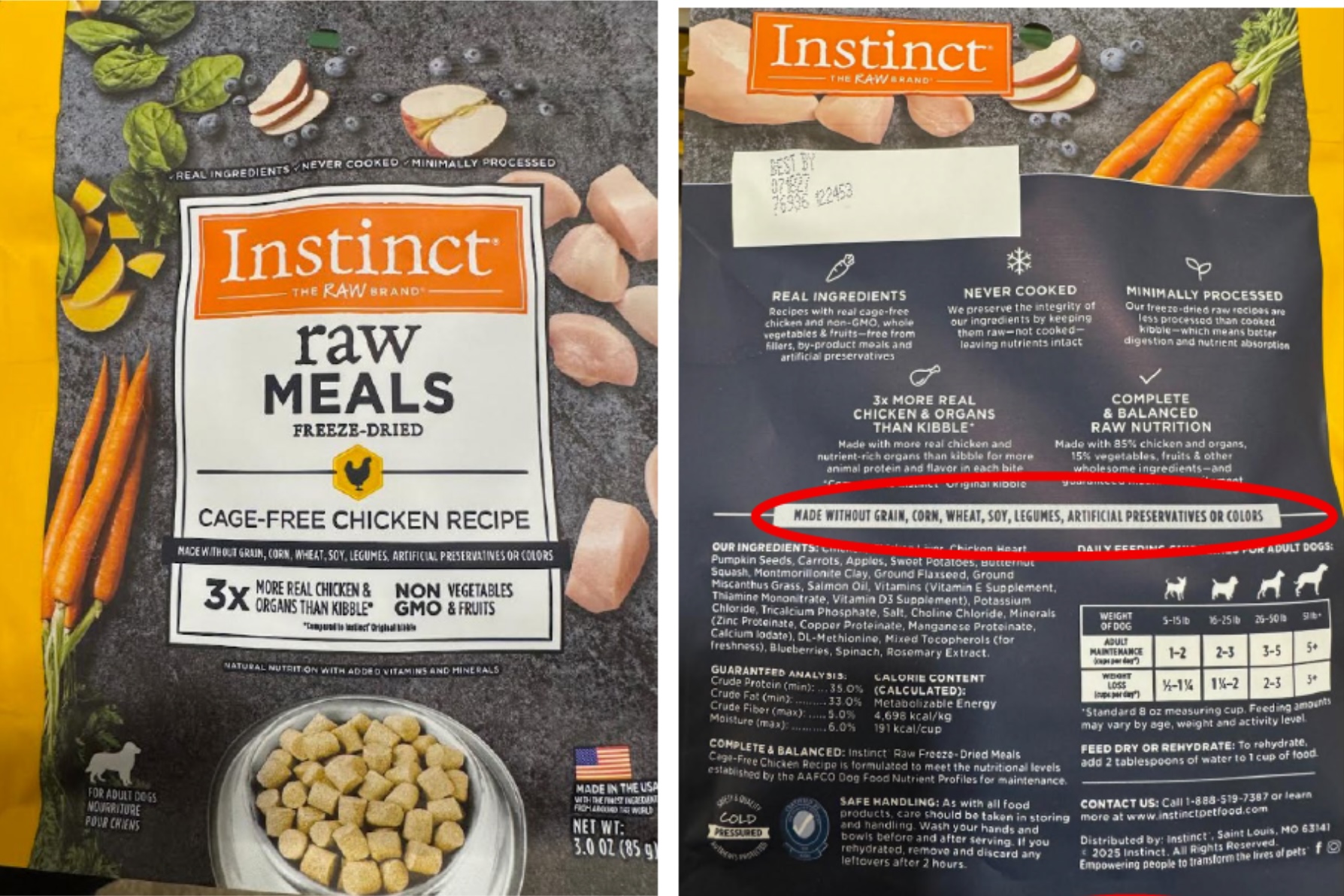
In a recent class action, a consumer accuses an "all-natural" pet food brand of secretly adding synthetic preservatives.LOS ANGELES (CN) — You won’t find Kibbles ’n Bits at the Healthy Spot, a small pet store inside a massive strip mall in Silver Lake, a few store fronts down from a Whole Foods. You won’t find Purina or Pedigree either.The names of the food sold here signal something else — a return to the wild, perhaps. Primal Pet Foods promises to “nourish their primal needs,” while Ziwi Peak sells a “grass fed beef with pumpkin recipe,” made with something called “z-microsteam technology.” An eight-pound bag of K9 Natural “lamb feast,” made in New Zealand, will set you back $289. All the packages feature the words “raw,” “farm-raised,” grass-fed" and swear to you: “no artificial preservatives or colors.”“You want to feed a dog as closest as they would eat in the wild,” an employee at the counter explains. “Like what a wolf would eat.”Of course, the more natural the pet food, the more expensive.While most Americans still go for the big brands like Purina, Blue Buffalo and Pedigree, a growing segment of pet owners are spending big bucks for their pet to eat like a king. Industry analysts estimate the market for “clean label” or “natural” pet foods was worth some $14 billion in 2025, and is expected to grow to $23 billion by 2030.But differentiating the natural from the unnatural isn’t always so easy, for pet owners without advanced degrees in chemistry. If you were to flip over the $289 bag of K9 Natural Lamb Feast, you’d see it contains such ingredients as dipotassium phosphate, magnesium oxide, selenium yeast, copper proteinate and thiamine mononitrate. These hard-to-spell ingredients are listed as different vitamins and minerals, important morsels of pet nutrition. Still, a granola-loving dog owner might get confused.A recent federal class action, filed in August in Los Angeles, illustrates the point. In it, the named plaintiff, a San Diego woman named Nicole Flick, claims Instinct Pet Food contains mixed tocopherols and citric acid — both of which are used as preservatives — despite marketing itself as being made without artificial colors or preservatives. And while there is a natural form of citric acid that can be extracted from fruit, nearly all of the world’s citric acid is manufactured through a cheaper industrial process.As for tocopherols, they too can be found in a natural form, but most pet food makers use “mixed tocopherols” in order to extend their products’ shelf life.“Rather than occurring as incidental constituents of the finished products, they are intentionally introduced as preservative systems to maintain freshness and prevent rancidity,” Flick writes in her complaint. “Plaintiff prefers to purchase foods free from artificial or synthetic ingredients and reviewed and relied on the label statements described above in making her purchase.”M.I. Industries, which owns Instruct, filed a motion to dismiss, arguing that citric acid and tocopherols are chemical preservatives, not artificial preservatives. But Chief U.S. District Judge Cynthia Bashant wasn’t convinced, denying the motion earlier this week.“The regulations are not quite so black and white,” wrote Bashant, a Barack Obama appointee. “Whether the processes used by Instinct result in ingredients that are ‘synthetic’ or ’nonsynthetic’ under the relevant regulations is a question of fact the court is not at liberty to resolve at this stage.”Neither set of attorneys responded to emails requesting a comment on the ruling. The case remains ongoing, and will now proceed toward discovery and trial.Savannah Welna, a canine nutritionist, says anyone obsessing over whether or not tocopherols are naturally extracted or synthesized in a lab is “missing the forest for the trees.”“The word natural is very relative,” Welna said. “A lot of ways a vitamin or mineral might be manufactured is going to be what they consider to be unnatural. And dog food in and of itself — a dog eating the same thing every day is unnatural.”She added: “Commercial pet food is a pretty unnatural process. It’s very hard to formulate a fresh commercial food without some natural additions.”At a dog park by the Silver Lake reservoir, not far from the Healthy Spot, most dog owners said they weren’t worried about the ingredients of pet food. Some said they eschew most store-bought pet food altogether and cook for their dogs.“We want to give him as long as life as possible,” one woman said, although she still gives her dog store-bought kibble at times. “I’m sure they put all sorts of shit in it.”Subscribe to our free newslettersOur weekly newsletter Closing Arguments offers the latest about ongoing trials, major litigation and rulings in courthouses around the U.S. and the world, while the monthly Under the Lights dishes the legal dirt from Hollywood, sports, Big Tech and the arts.Additional Reads
The trouble with ‘natural’ dog food
Full Article
Original Source
Read the full article at Courthousenews →KhanList aggregates and links to publicly available news content. We do not host full articles from third-party sources. Always verify important information with original sources.