
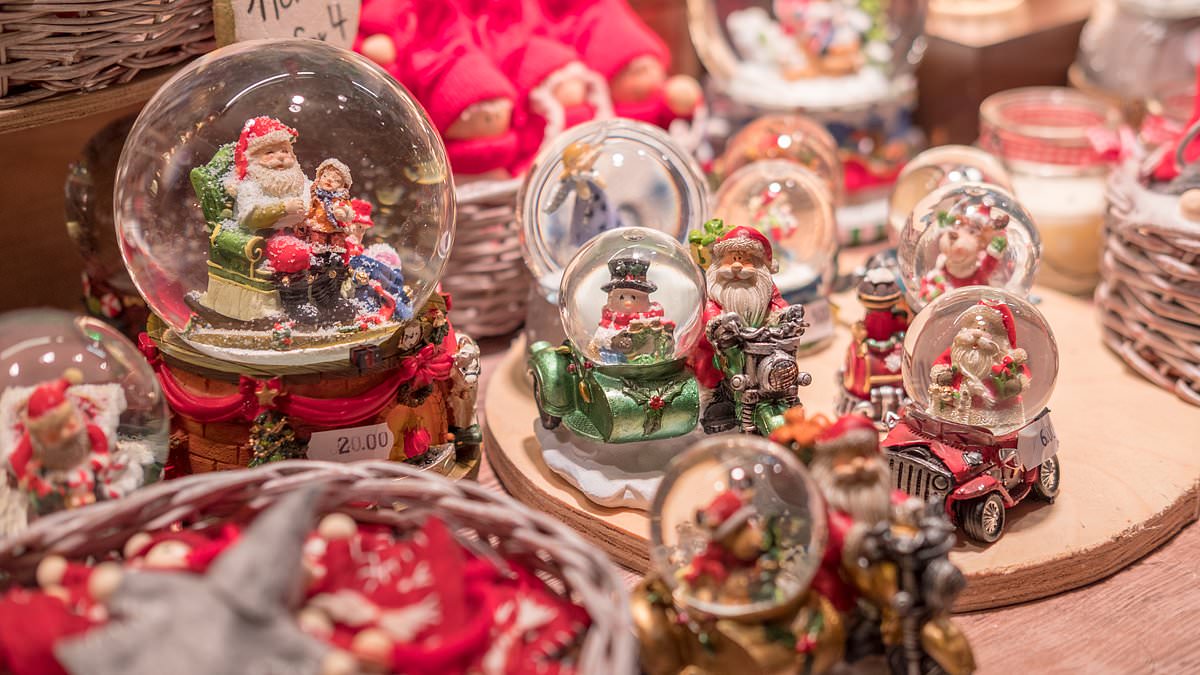
This year's festive shopping season is officially in full swing and the UK's Christmas markets, in theory at least, make the pursuit of gifting a little cheerier – because they feel more authentic than online shopping or a trip to a retail park or high street. The UK's big hitters – Manchester, Bath, York and Edinburgh – began welcoming their first shoppers last weekend, with many of the nation's heritage properties also entertaining festive shoppers. The Christmas Market can be a dicey retail experience though, with less scrupulous stallholders taking advantage of the captive crowd, often with a gluhwein or two down them, by upping prices and selling wares of dubious quality. Dovetailed between them are the more honourable retailers, often artisans who've painstakingly crafted the goods they're selling themselves.So, how do you cut the present wheat from the chaff and end up going home with a shopping bag brimming with creative purchases that your nearest and dearest will love when they unwrap them in a month's time?Expert Helene Sula, aka @heleneinbetween on Instagram, tells the Daily Mail: 'After visiting more than 100 Christmas markets, my rule is simple: if you see the same thing at three different stalls, none of them made it. 'The usual suspects are light-up plastic signs, novelty hats, LED snow globes, and "personalised" baubles that are just a stock bauble with a name painted on' The wares you see a Christmas markets might not be as authentic as they first appear, with traders often taking advantage of a captive audience Personalised baubles can be made for pence and sold at markets for big profits Sula, who was raised in the US but now lives in Germany and hosts river cruises to Christmas markets, adds: 'Real sheepskin slippers are worth every penny; the fluffy polyester pair three stalls down are not. 'If something labelled handmade looks exactly like the one next to it, or the price seems too low for the work that went into it, trust your gut.'British retail and events expert Jessica Ince is both a festive market organiser - and also often an exhibitor with her own organic skincare brand - and she says shoppers need to grill stallholders to be sure they're getting a gift that's worth buying. Ince tells the Daily Mail: 'Firstly, ask yourself: Does it look handmade and authentic? Is it something different to what everyone else is selling? And find out if the person selling it has made it themselves or if they're the retailer.'Anyone who's genuine will love to chat and tell you more about what they do and the love that goes into the products they're selling. 'If a stallholder doesn't know much, then you probably have your answer on whether it's a quality product.'So, how to spot Christmas market tat at 100 paces (even after that gluhwein) and what's really worth spending your hard-earned money on...BEWARE CASH-AND-CARRY FOOD DRESSED UP AS 'HOMEMADE' Christmas markets - particularly larger ones - can promise gourmet foods and festive-themed sweets...but they may well have been bought in bulk and repackagedPerhaps the easiest way to feel ripped off is to unwittingly buy food that looks like it's been handmade – when it's actually just been bought from a cash-and-carry such as CostCo and then repackaged into individual portions to look 'gourmet'. Anything that's easy to divide and re-wrap – brownies, fudge, candy canes – can be a lucrative affair for stallholders. Beware produce – from sliced festive hams to pick-and-mix sweets – where the price you pay isn't easily transparent too: 100g can translate into an expensive affair when you get to the till. What about hot food? Every major event, from sports matches to pop concerts, marks up food when they know they have huge – and hungry – footfall. The aroma of frying onions, bubbling hot chocolate and melting cheese can be hard to resist, but if you're on a serious budget, then don't even think about that £15 hot dog or churros for a tenner. IF YOU SEE THE SAME ITEM AT MULTIPLE STALLS, IT'S A RED FLAG Stalls selling wares that keep cropping up across the market is a major sign that what you're buying is likely to be mass produced One stall (pictured) at London's Winter Wonderland in 2025 selling fun, moving hats of unicorns, pandas and Pokémon's Pikachu for £20There's always a place for novelty presents that'll raise a laugh on Christmas Day – and if that's a mass-produced mug with a comedy slogan, then so be it. However, if you're looking for something more sincere, then avoiding gifts that have obviously been made on a production line is a wise move.How to know if the gift you're spending money on is factory-made? Chat to the people selling them – don't be afraid to ask the product's origin. And look for a makers' mark on the product you're buying too, say the experts. Says Ince: 'Definitely ask questions, because at the end of the day, that's the only way you're going to know for sure. There's a difference between someone who just stands there selling their wares, and someone who's really passionate about what they do.'CANDLES AND BEAUTY PRODUCTS: HOW SAFE ARE THEY?The cash-and-carry trick also applies to beauty products, with multi-pack products often separated and repackaged with decorative wrapping to up profit margins. Ince, who owns her own organic skincare brand, Sacred + Wild, and has vetted stallholders ahead of The Wild Atelier Conscious Christmas Market she's holding next week at Bingham Riverhouse in Richmond-Upon-Thames, and says shopping for popular gifts such as candles and skincare can be a minefield. Ask questions to be sure the skincare or wellness product you're buying isn't low-quality. Looking for Soil Association Certification is one way of easily seeing whether a product that claims to be organic actually is If a product is claiming to be organic, she says, then it's worth checking for the evidence to back that up. If it has Soil Association Certification, 'the gold standard' for organic products, says Ince, then you know the skincare you're buying is likely to be high quality. Candles are hugely popular at festive markets, the retail expert adds, but often they're made from paraffin, essentially a non-renewable fossil fuel, which may not be in line with the values of your giftee. Even soy wax candles, often considered a better-for-the-planet alternative, are still washed with chemicals, says Ince. If you want a truly natural option, then look out for African beeswax, which is considered a much more natural option 'that actually cleans the air'. A CHRISTMAS MARKET EXPERT'S GUIDE TO WHAT YOU SHOULD BUY Helene Sula has been to more Christmas markets than most, counting more than 100 visits to major market destinations, including London, Paris, Prague, Rome and Heidelberg. Here's what she thinks you should spend your money on: Sula says: 'The best buys are the things a region has been making for centuries. In Germany, that's the wooden folk art from the Erzgebirge mountains: nutcrackers, nativity sets, the candle pyramids that spin from the heat of the candles, and the Schwibbogen candle arches. 'Look for the 'Echt Erzgebirge' seal so you know it's the real thing and not an imitation. These are heirlooms, not souvenirs. Helene Sula moved to Germany with her husband in 2016 and has visited over 100 Christmas markets, she says taking home the Glühwein mug you've paid a deposit for makes for a great cut-price souvenir'Hand-blown glass ornaments, hand-knitted wool mittens and the little packets of spices for Gluhwein all make beautiful gifts too, and for the food lovers on your list, you can't go wrong with gingerbread, Stollen or candied nuts. She adds: 'Truly, anything consumable is a great thing to bring home. My mother always asks that I bring her hot chocolate from St. Anna No. 1 - they have a stall and a storefront in Heidelberg.'Cheap buys? 'My favorite budget buy is the Glühwein mug. You pay a small deposit with your drink, and if you keep the mug, that deposit is the price of your souvenir. Many markets change the design every year, so it's a gift that's genuinely from that market, that year. 'My favorite is the one from the Angel market in Cologne.'Read Helene Sula's full guide to what to buy at Christmas markets here BEWARE THE 'ARTISAN GIFTS' YOU CAN BUY ON TEMUIt's a story as old as time in retail, opportunist buys mass market goods and sells them off at a higher price to make a Christmas killing. What looks like a quality gift under glowing seasonal lights might actually be a low-quality item snapped up at half the price, or less, on online marketplaces such as Temu, AliExpress and Shein.So sophisticated have copycats become that even gifts that appear hand-painted/carved/crafted might not have quite the wholesome story you'd hope for. Beware the faux artisan gift - at Leeds Christmas market last year, one stall sold cute wooden ducks for nearly £20, but a similar version (pictured right) was found on Temu for just £2.74At Leeds Christmas Market in 2025, for example, a Daily Mail reporter found plenty of items that appeared to have been made by independent craftspeople but similar items were later found on cheap online marketplaces. For example, one stall was selling wooden presents included duck figurines wearing brightly coloured polka dot wellies. Costing £19 to purchase, a duck was almost seven times the price of a similar version found on Temu for just £2.74.Again scrutiny is key, says Ince. 'You can't always tick every single box and say that a product is, for example, ethical, handmade, female-founded or free of microplastics - but you can try, and it'll leave you feeling like you've made a better choice.' AVOID SELLERS USING AI-CREATED POSTERSYes, we know AI is part of our world now but, in retail, it can be the first indicator that the gifts you're browsing could be of questionable quality. It's worth remembering that traders with AI-created posters and merchandise have probably spent minutes rather than hours making the product you might be buying. For example, Christmas cards, mugs or t-shirts featuring images of your local town that have been given a festive makeover using AI, might just feel phony to those on the receiving end of it. AI posters are increasingly common at Christmas markets - but are they heightened illustrations turning consumers off? Fake: Images shared online by organisers seemed to paint a different picture to what visitors actually experienced . Pictured: a poster created to promote Kernow Christmas Market in Cornwall, which was accused of 'false advertising' this week Already the use of AI has undone one Christmas market in 2026. Posters advertising the Kernow Christmas Market in Cornwall showed a cosy, seasonal venue but organisers faced a deluge of criticism when the first customers arrived, with the reality proving far from the glossy images promoted online. Photographs of the event showed a bare-looking warehouse with concrete flooring with some traders even displaying their wares arranged on sheets on the ground. The market has since closed.
The tricks traders at Christmas markets use to swell profits - including repackaging cash-and-carry gifts, selling 'gourmet' food by weight and candles made from cheap paraffin
Full Article
Original Source
Read the full article at Dailymail →KhanList aggregates and links to publicly available news content. We do not host full articles from third-party sources. Always verify important information with original sources.