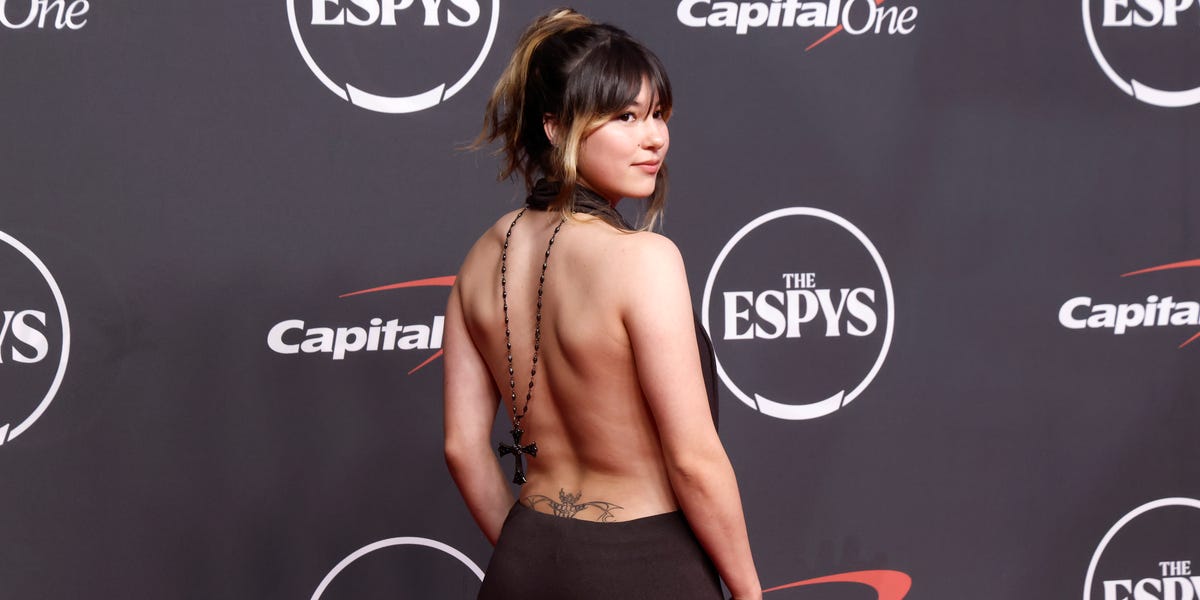
Taylor Hill//Getty ImagesTattoos have long been considered a form of self-expression and individuality in many parts of the world, but that wasn’t always the case. Consider ancient Greece, for example, where tattoos were used to permanently distinguish slaves and criminals. Marking these bodies was a way to isolate them from others in the community, and even today, a similar stigma is associated with certain types of tattoos.We are talking about the tramp stamp, a term that refers to tattoos on the lower back, just above the tailbone. The term tramp stamp itself—coined between the late 1990s and the early 2000s—is of course derogatory, reflecting a sexist view of an aesthetic choice that was widespread among young women of that era. But thanks to the nostalgia for the ’90s in recent years (as well as the allure of everything Y2K), the tramp stamp tattoo is making its return, dusting off not only the aesthetics of the era but also the meaning associated with them.Jeff Kravitz//Getty ImagesAll our favorite celebs of the late ’90s and early aughts had a tattoo on their lower back. Britney Spears had a little fairy; Angelina Jolie a Bengal tiger; Kate Moss a pair of birds. The celebrity culture of those years managed to teach an entire generation of young women that it was okay—even iconic!—to rebel against the social and gender expectations imposed on them and their bodies.Add Cosmopolitan as a preferred source in your Google search results.Use your Google account to add this to your settings.Even so, the tramp stamp remained stigmatized. Although it inspired an aesthetic that was at once sexy, rebellious, and fun, it was most often seen as an indelible marker of sexual deviance, promiscuity, impulsiveness, and irresponsibility. In short: The tramp stamp was largely deemed tacky and embarrassing.But in the past few years, that has changed. Gen Z celebs have recently started embracing the taboo tattoo placement once again, both as a fun nod to the 1990s and early 2000s and as a way to reclaim a heavily stigmatized trend.Gilbert Flores//Getty ImagesSeeing the tramp stamp return on the backs of feminist icons like Alysa Liu, Doechii, beabadoobee, and Chappell Roan is both a pleasure for the eyes and a balm for the heart. People on TikTok have even taken to calling lower back tattoos “cake toppers” instead of “tramp stamps” to strip away old negative stigmas.The return of the tramp stamp in 2026 feels both surprising and promising—and while it likely won’t change the narrative around women’s bodies, it feels like a good start.
The Tramp Stamp Revival Is About More Than Nostalgia
Full Article
Original Source
Read the full article at Cosmopolitan →KhanList aggregates and links to publicly available news content. We do not host full articles from third-party sources. Always verify important information with original sources.