
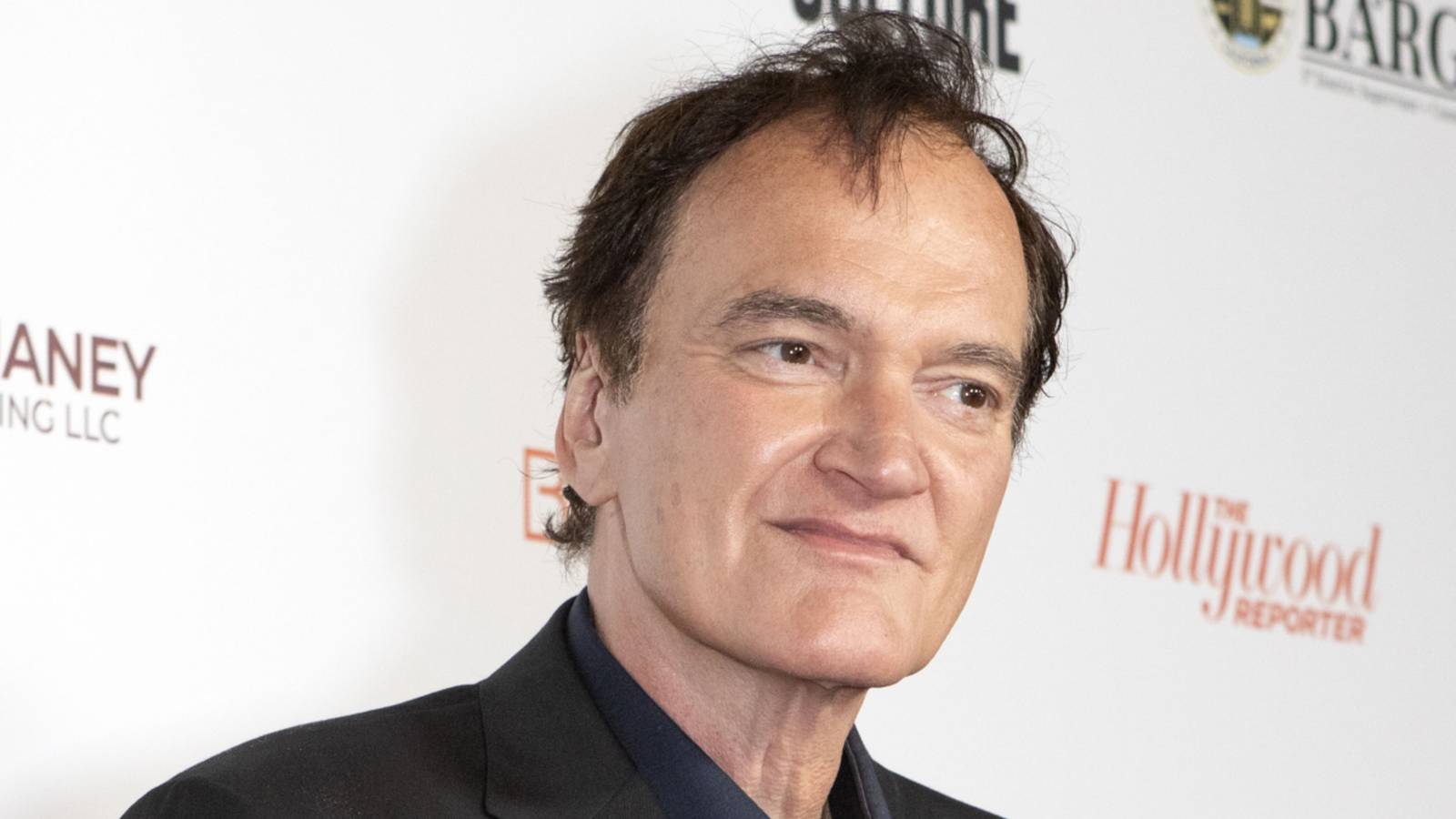
Published Sep 1, 2026, 9:30 AM EDT Richard Craig is a Senior Author at Screen Rant covering film and TV. Richard has also written extensively about horror and film soundtracks, contributing a chapter to the first major academic collection on the folk horror genre, The Routledge Companion to Folk Horror. Richard is also a performing musician and holds an MA in Music and Sound Art. Netflix has finally brought back a movie that Quentin Tarantino called the “greatest of all time.” One of the most important blockbusters in Hollywood history is back on Netflix, making it the perfect time to revisit a thriller that changed the way studios approached movies. The streaming service is adding all four entries in the franchise, meaning subscribers can watch the original alongside its increasingly questionable sequels. That alone would make this a worthwhile addition, but the first movie has an even stronger endorsement from one of modern cinema's most passionate film fans. Quentin Tarantino has spent decades demonstrating an encyclopedic knowledge of genre cinema, from obscure exploitation movies to major Hollywood classics. When he was asked to name the greatest movie ever made, his answer was surprisingly straightforward. Tarantino is no stranger to giving blunt and precise answers to questions regarding cinema, and he deliberately chose the word "movie." He said it might not be the greatest "film," but it was the greatest "movie," making the distinction central to his argument. That distinction makes sense when considering what the blockbuster actually accomplishes. Nearly five decades after its release, the movie Tarantino considers unbeatable is Steven Spielberg’s Jaws. It is an enormous commercial entertainment designed to make audiences scream, laugh, and cheer, yet it is also meticulously directed, beautifully shot, and packed with carefully constructed character work. Finally, Jaws is back on Netflix, alongside three sequels that certainly don't share its reputation. Why Tarantino Called Jaws "The Greatest Movie" Ever Image courtesy of Everett Collection Tarantino's distinction between a "movie" and a "film" isn't simply about quality. His comments suggest that a "film" can be understood as a more artistically driven work, while a "movie" represents the complete entertainment package: something made to captivate a broad theatrical audience. That's why Jaws is such a fitting choice. Spielberg wasn't making an austere art-house experiment. He was making a giant Hollywood thriller about a great white shark attacking Amity Island. Yet the commercial ambition doesn't diminish its artistry. Spielberg's suspenseful direction, John Williams' score, the performances from Roy Scheider, Richard Dreyfuss and Robert Shaw, and the decision to keep the shark largely unseen all demonstrate extraordinary craftsmanship. Tarantino's point seems to be that Jaws is the rare blockbuster where virtually everything works in service of entertainment. Jaws Invented Summer Blockbusters - And Still Holds Up As One Of The Best Jaws forever changed Hollywood's release strategy. Before 1975, summer wasn't automatically treated as the most lucrative period for major studio releases. Spielberg's movie became a phenomenon and helped establish the modern summer blockbuster model. Its production problems arguably made the finished movie better. The mechanical shark repeatedly malfunctioned, forcing Spielberg to find ways of creating terror without constantly showing the creature. That limitation produced one of the film's greatest strengths – the anticipation. The opening attack, the ominous underwater camera shots, and Williams' instantly recognizable two-note theme prove that audiences don't need to see a monster for it to dominate their imagination. Nearly 50 years later, Jaws remains a remarkably efficient thriller because its suspense doesn't depend on visual effects that can age badly. Jaws' Sequels Also Hit Netflix, But Are They Worth Watching? Every Jaws sequel is absolutely worth watching – but definitely not because they're as good as Jaws. Jaws 2 is comfortably the best sequel. Roy Scheider returns as Martin Brody, and it contains several effective sequences, particularly its increasingly desperate group of young swimmers trapped at sea. From there, every Jaws sequel gets exponentially more ridiculous. Jaws 3-D is considerably sillier, moving the action to a SeaWorld-style marine park. Its ancient 3D effects are laughable today, but that dated spectacle gives the movie an undeniably entertaining so-bad-it's-good charm. Then comes Jaws: The Revenge, which takes the franchise completely off the rails. Jaws: The Revenge suggests that a great white shark is specifically targeting the Brody family, turning a natural predator into some sort of aquatic serial killer out for revenge against the whole Brody clan. It's one of the most ridiculous blockbuster sequels ever made, which makes it worth a watch for its own sake. While it was never going to be able to match Jaws, seeing Lorraine Grey’s Ellen Brody take center stage makes it a delightfully fun bookend to the franchise. Release Date June 20, 1975 Runtime 124 minutes Director Steven Spielberg Writers Peter Benchley, Carl Gottlieb Producers David Brown
The Thriller Quentin Tarantino Called "The Greatest Movie Of All Time" Is Back On Netflix
Full Article
Original Source
Read the full article at Screenrant →KhanList aggregates and links to publicly available news content. We do not host full articles from third-party sources. Always verify important information with original sources.