
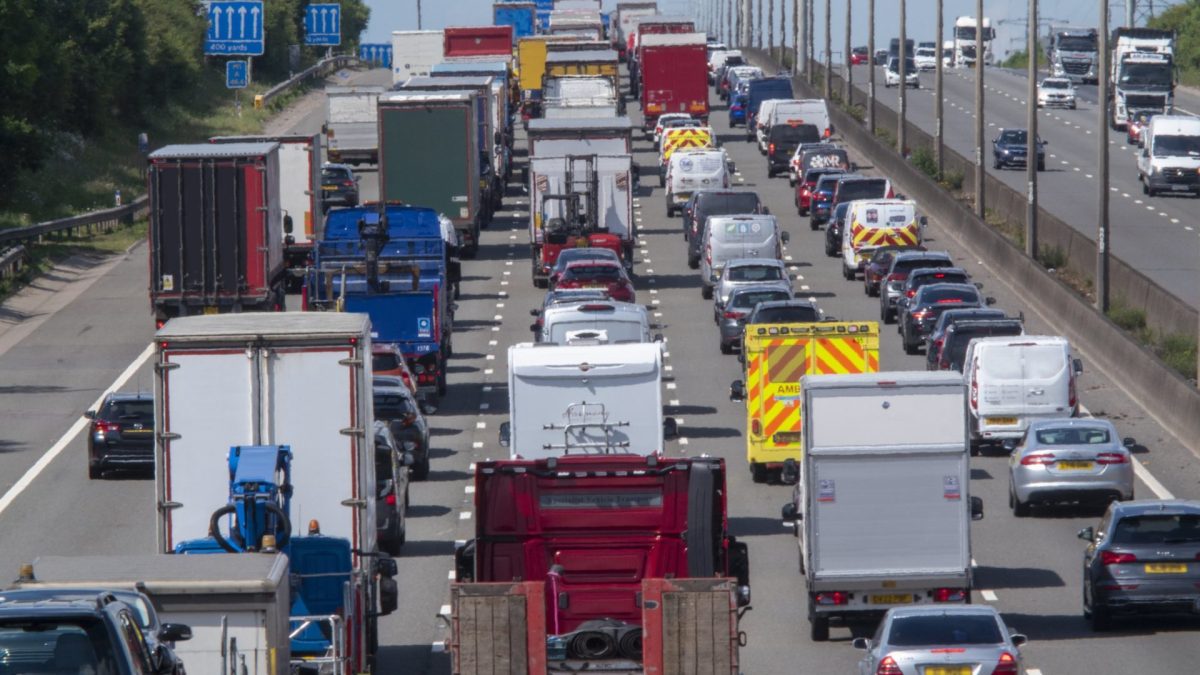
Holidaymakers are being warned to allow for extra time when travelling amid fears the EU’s new border checks could cause delays. As the UK summer holidays begin, travel services are preparing for one of the busiest periods of the year. Travel association, ABTA, estimated 2.2 million holidaymakers will head away this weekend. Shorts Despite issues with the EU’s Entry/Exit system (EES), Spain remains one of the top destinations for summer travel. In addition, data from Cirium, an aviation analytics service, states Palma de Mallorca, Alicante and Malaga airports are expecting some of the highest numbers of arrivals this weekend. Dublin and Amsterdam are also projected to be some of the most popular. Earlier this month, Ryanair identified Alicante, Malaga and Palma de Mallorca as the airports with the longest queues due to EES, along with Tenerife South, Milan Bergamo, Krakow and Paris Beauvais. Mark Tanzer, ABTA’s chief executive, said: “For many heading overseas, this will be the first experience of the EES in Europe, and for some, though not all, it may take longer than usual to get through passport control. As always, leave plenty of time to get to your departure point when travelling out and returning.” Both Heathrow and Gatwick will be two of the busiest airports this weekend, while approximately 250,000 passengers are due to depart from Manchester Airport and 220,000 from London Stansted, ABTA said. After Brexit, British nationals are now classed as “third-country nationals” and must provide fingerprints and facial biometrics when crossing the border into Schengen area countries. The issues with the EES have caused airline bosses to call for the system to be paused, while ministers from multiple EU states have asked for a provision to allow checks to be proactively suspended – the EU rejected the measure. Passengers (pictured at Malaga Airport) have reported missing flights home after being stuck in huge lines to undergo the EU border biometric checks (Photo: John Calladine) Road traffic to be the highest since 2016 On the road, the RAC said the number of trips planned by drivers will be the second highest since their records began in 2016, only surpassed by 2022 after the Covid lockdown. They warned of a “Saturday summer scramble” last week, with numbers of holidaymakers only set to reduce marginally going into this weekend. A recent survey by the AA found that 6.3 million drivers are planning a road journey of more than 100 miles between 24 and 30 July, with a total of 9.8 million planning trips during this period. The same survey found that 21.6 million have driven in the first week of the school holidays. In a statement, they reminded drivers that hot weather and heavy loads can put extra strain on vehicles. They advised that “tyres should be checked for pressure, tread and condition before long journeys, with pressures adjusted for extra loads where the vehicle handbook recommends it. The AA also urged drivers to allow extra time for journeys due to closures along the M42 from 9pm on 24 July to 5am on 27 July. The northbound M42 will be closed between junctions 5a and nine and the southbound carriageway will be closed between junctions six and nine. Those looking to cross the channel by ferry can expect it to be busy, with the Port of Dover saying that 10,000 cars are expected to travel on Saturday. The port said this morning that there is currently a 40 minute processing time at the crossing. Last Saturday, around 9,000 cars made the journey, but port bosses said that despite the increase in customers, the process remained “smooth.” Despite an increased number of travellers, the Port of Dover says that the first weekend of the summer holidays ‘went well’ (Photo: Alicia G. Monedero/Getty) “We are very pleased that the first weekend went so well and we were able to facilitate 100,000 customers with a positive start to their well-deserved summer holidays,” the statement said. Contingency plans at Dover The port says this was helped by customers adhering to its advice to arrive no more than two hours before their sailing time, having a confirmed booking and sticking to the main routes (A20 and A2) to the port. However, it warned that the effects of the EES are still “uncertain” for British holidaymakers. Given the expected disruption over the summer, the former Folkestone racecourse has been earmarked as an emergency site for holidaymakers stuck in queues from the EES system. A second contingency traffic layover site for 1,200 vehicles at Lydden Hill motor racing circuit, off the A2 about six miles from Dover, is already in place. P&O Ferries posted on X that they “are in the busiest time of year for travel through Calais Port” and said that the processing time is approximately 60 minutes from arrival to loading lanes. For those travelling from London St Pancras by train to continental Europe, a Eurostar spokesperson said: “All is running as expected on our end; it’s our summer period, and we’re ready and prepared to support our customers as always.” Meanwhile, rail networks are predicted to be busy this weekend. Planned engineering works mean that no Southeastern trains will stop at Charing Cross or Waterloo East from 26 July until 16 August. Whilst a higher percentage of holidaymakers than usual are planning to stay in the UK, airports are still experiencing an influx of passengers. A spokesperson for Heathrow Airport confirmed that it is “currently operating as normal” whilst a spokesperson for Gatwick Airport said that its busiest day is set to be Sunday, with around 900 flights scheduled. It comes as the UK is expected to see highs of 29°C on Friday, 26°C on Saturday and 24°C on Sunday (albeit with light showers).
The three Spanish airports at risk of EES delays as millions head for holidays
Full Article
Original Source
Read the full article at Inews →KhanList aggregates and links to publicly available news content. We do not host full articles from third-party sources. Always verify important information with original sources.