
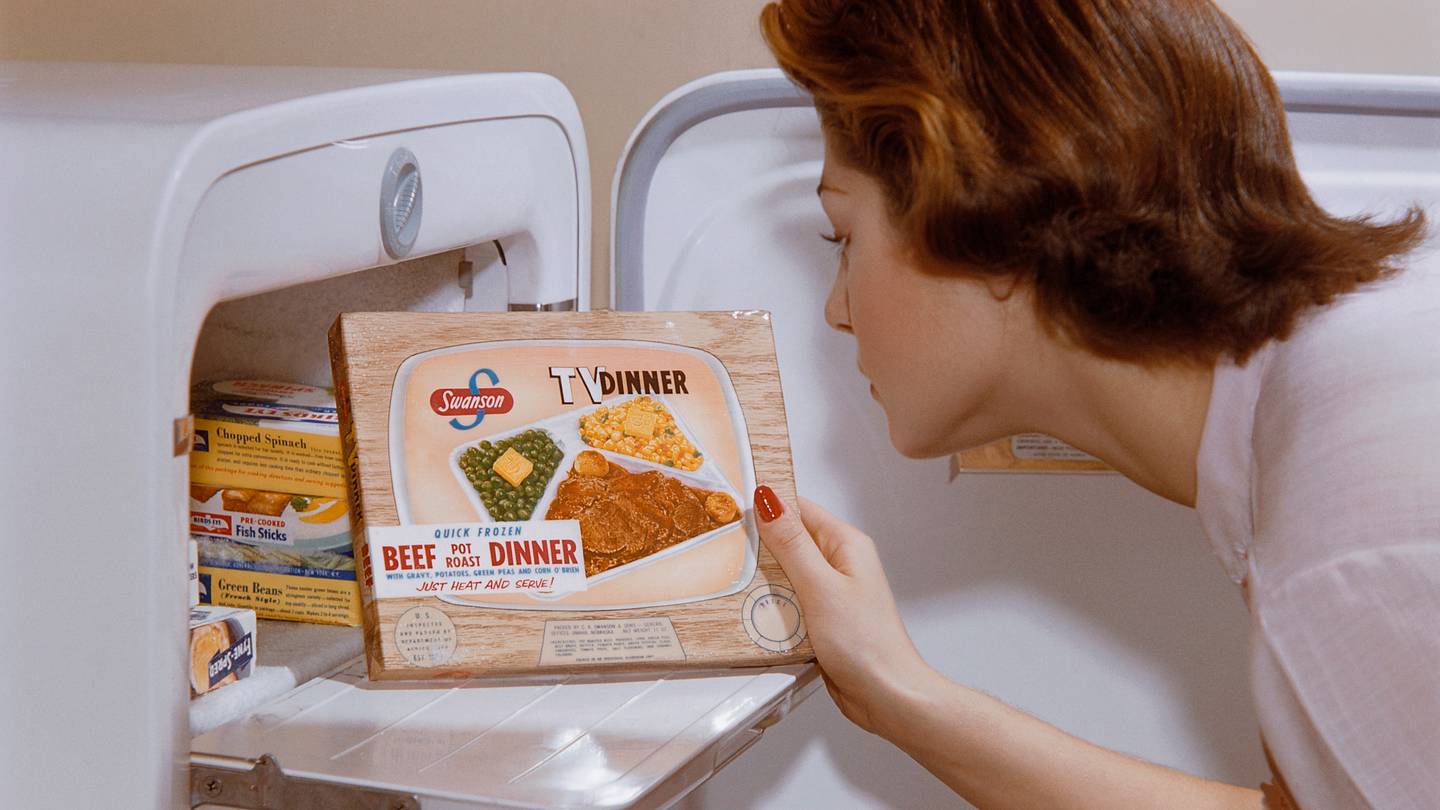
American history can be split into two definitive eras: before and after TV dinners.All gobbles and giggles aside, Thanksgiving 1953 was pivotal to the rise of pre-made meals. All it took was 260 tons of turkey and one salesman with an idea to change the way Americans ate dinner forever. TOO MANY TURKEYSTurkey | Jeffengeloutdoors.com/GettyImagesIn the last week of November 1953, Swanson had an equation to solve: roughly 160 million Americans plus 260 tons of excess turkey presented the need for a solution, and fast, lest precious meat go to waste.So the company turned to salesman Gerry Thomas, who couldn’t have predicted that his brilliance would still be stocking supermarket freezer shelves in 2026.According to Smithsonian Magazine, Thomas had 5,000 aluminum trays and a dream. After setting up an assembly line and a few sides to go with the turkey (sweet potatoes, peas, cornbread, and dressing with gravy, of course), Swanson had officially created the first TV dinners. Better yet, the refrigerated railroad cars full of turkeys didn’t have to be discarded as holiday scraps.By 1954, ten million of these new-age meals had sold for just 98 cents a pop to Americans eager to stuff their faces in front of a screen; a revolutionary concept. What started as a solution to excess turkey swiftly upended the traditional dinner table as we know it, rendering it no legs to stand on. SEASONED AND SIMMERED INTO SOCIETYTurkey and stuffing TV dinner | Lynne Mitchell/GettyImagesBefore TV dinners, meals were enjoyed at the dining-room table; food was prepared, conversation was shared, and dishes were passed from person to person. All of that changed in 1953.Sure, many households still insisted on eating at the table to instil proper manners, but others took full advantage of the convenience of these flashy TV dinners, initially marketed as a fancy grocery item.Gone were the days of women preparing food hours in advance, meticulously spreading it out on the table, and then facing the inevitable task of washing and drying all the plates and utensils afterward. The no-muss, no-fuss trays could be popped in the oven, heated in under half an hour, and savored while watching your favorite program (in color, if you had an RCA or Westinghouse TV). And when you were done eating, all you had to do was toss the tray in the trash! Because TV dinners were so popular, special tray tables eventually hit the market, and when microwaves (and microwavable trays, thanks to Campbell's) became widespread, there was no going back. Over time, Americans were spoiled with both single-serving and family-sized options: Banquet's Salisbury steak, Stouffer's pasta, and, in 2024, Blue Zones Kitchen's more health-conscious alternatives. There was even a version marketed to children: Kid Cuisine, with its chicken tenders, macaroni and cheese, and brownie: a meal '90s kids all but begged for in the frozen-food aisle.Whether a time-saver, the beginning of the end of dinner table conversations, or maybe both, TV dinners are infinitely baked into American culture; just don’t forget to take off the plastic wrap. Read More:
The Thanksgiving Accident That Created TV Dinners
Full Article
Original Source
Read the full article at Mentalfloss →KhanList aggregates and links to publicly available news content. We do not host full articles from third-party sources. Always verify important information with original sources.