
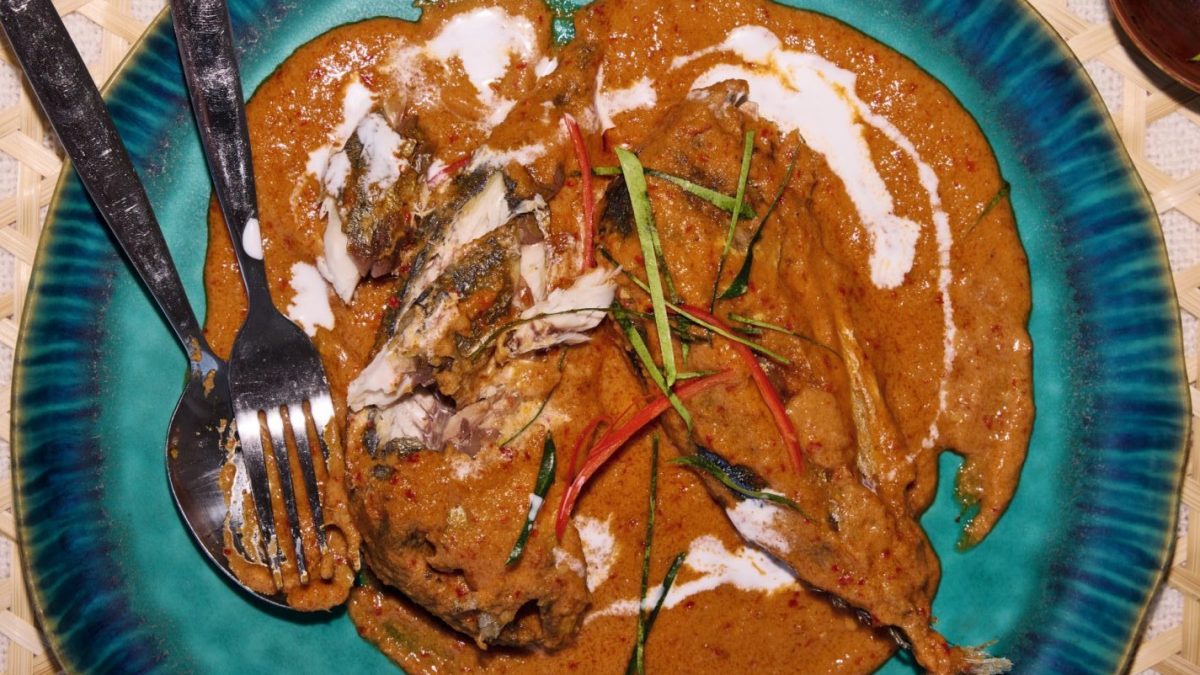
There are few cuisines that stimulate the tastebuds quite like Thai food, but the dishes go way beyond the green curry, or pad thai that we are all familiar with. Food writer Kay Plunkett-Hogge has shared some of the lesser-known recipes from the country where she was born in her new cookbook Siam: A Thai Cookbook. She has been influenced by different regions, neighbouring countries, street food and home cooking that is full of flavour. Here are some of her favourites. Gaeng tai po pork & makrut lime curry (Photo: Louise Hagger) Gaeng tai po pork & makrut lime curry Serves 4 as part of a meal 150ml coconut cream 2 tbsp red curry paste or gaeng kua paste 200g skinless pork belly, cubed, excess fat removed 400ml coconut milk 1-2 tbsp tamarind paste 1½ tsp palm sugar 2 tbsp nam pla (fish sauce) 150g pak boong (Siamese watercress), chopped 6-8 makrut lime leaves, crushed and ripped 1 makrut lime, sliced A good pinch of salt This is a variant on the classic red curry, made citrusy and fragrant by the addition of tamarind and the whole makrut lime. It was originally made with black-ear catfish (tai po in Thai). But people’s tastes change over time – apparently, it’s quite a smelly fish, hence the shift to using pork. The name, however, still remainsthe same. In a saucepan, cook the coconut cream over a medium heat until it simmers lightly and its oil starts to appear on the surface. Add the curry paste and combine well.Add the pork belly and stir through the paste to coat it. Keep stirring for two to three minutes – you don’t want it to catch. Now add the coconut milk, tamarind paste, palm sugar and nam pla. Bring to the boil, then reduce to a simmer for eight to 10 minutes (you may need to add a little water if it’s looking too thick, or if you think the pork isn’t cooked through yet). Add the pak boong and the lime leaves, bring back to the boil, then add the makrut lime slices and return to the boil once more. Simmer for another minute or so. Add the salt, taste and adjust the seasoning accordingly and serve. Kay Plunkett-Hogge hails from Thailand (Photo: Louise Hagger) Chu chee pla Fish curry Serves 4 as part of a meal For the paste 10 dried long red chillies A pinch of salt 1 stick lemongrass, bashed and finely sliced 3 tbsp sliced shallots 11 garlic cloves, sliced 1 tbsp chopped peeled fresh galangal 1 tbsp chopped krachai (fingerroot) 1 tsp grated makrut lime zest 1 tsp kapi (shrimp paste) For the curry 3 tbsp vegetable oil 250ml coconut milk (preferably Aroy-D or Chaokoh brand) 2 tbsp nam pla (fish sauce) 3 tsp brown sugar 2 Indian mackerel (steamed, then fried) or 1 English mackerel (cleaned and deep-fried) 3 makrut lime leaves, thinly julienned To garnish 2 tbsp coconut cream1 red chilli, julienned This recipe comes from Siri Kularbwong, the chef-proprietor of Singburi in Shoreditch, east London. Siri’s dad, Sawong, first opened his restaurant in Leytonstone in 1999 and ran it as a fish and chip shop. He actually comes from Singburi in central Thailand. It’s his recipe. Siri says: “It’s the first thing Dad taught me when I first got serious about Thai cooking.” ‘Siam: A Thai Cookbook’ by Kay Plunkett-Hogge (Photo: Louise Hagger) Start with the paste. Soak the dried long red chillies in warm water for about 10 minutes. Drain, but reserve some of the water for later. Pound the soaked chillies with the salt in a mortar and pestle. Add the lemongrass, then gradually add the other ingredients, pounding until you have a smooth paste. Alternatively, blitz the ingredients together in a food processor, adding a dash of the reserved chilli water as you bring it all together. For the curry, heat the oil in a saucepan over a medium heat and fry off the paste for about two minutes. Add the coconut milk, bring to a simmer, then cook over a low-medium heat until the sauce begins to darken and the oil separates. Add the nam pla, then gradually add the sugar, tasting as you go. Ultimately, you want the dish to be a little bit salty/savoury first and then sweet. When you are happy with the flavour, gently add the cooked fish and some of the sliced lime leaves (reserving a few for garnish). Turn off the heat and make sure the fish is well coated with the sauce. Plate up and drizzle with the coconut cream, then finish with the leftover lime leaves and sliced red chilli. Serve with rice. Pad fukthong kai Stir-fried pumpkin with eggs and basil (Photo: Louise Hagger) Pad fukthong kai Stir-fried pumpkin with eggs and basil Serves 2-4 2 tbsp vegetable oil 2 large garlic cloves, chopped A piece of pumpkin or squash, peeled, deseeded and chopped into 3-4cm cubes (about 400g) 1½ tbsp soy sauce 200 ml vegetable stock 3 eggs A large handful of Thai basil Ground roasted chillies, to serve (optional) This is a super-simple dish, and you can find versions of it all over the country, made with all different kinds of vegetables. I really like this one – I think the pumpkin and the egg play really well together in the pan. Heat a wok that has a lid and add the oil. Stir-fry the garlic until fragrant – do not let it brown. Add the pumpkin or squash and give it a swirl, then add one tablespoon of the soy sauce followed by the stock, bring to the boil and cover. Simmer for about eight to 10 minutes. Check the pumpkin with a fork. You want it really tender and most of the stock should have evaporated. Push the pumpkin aside and crack the eggs into the wok. Scramble until they begin to get firm, then reincorporate the pumpkin. Add the rest of the soy sauce and stir the basil through, reserving a few leaves to garnish. Plate and serve with a sprinkle of ground roasted chillies, if you like, with the reserved basil on top. Recipes extracted from ‘Siam: A Thai Cookbook’ pavilion Books, £26
The Thai recipes you’re not cooking – but should be
Full Article
Original Source
Read the full article at Inews →KhanList aggregates and links to publicly available news content. We do not host full articles from third-party sources. Always verify important information with original sources.