
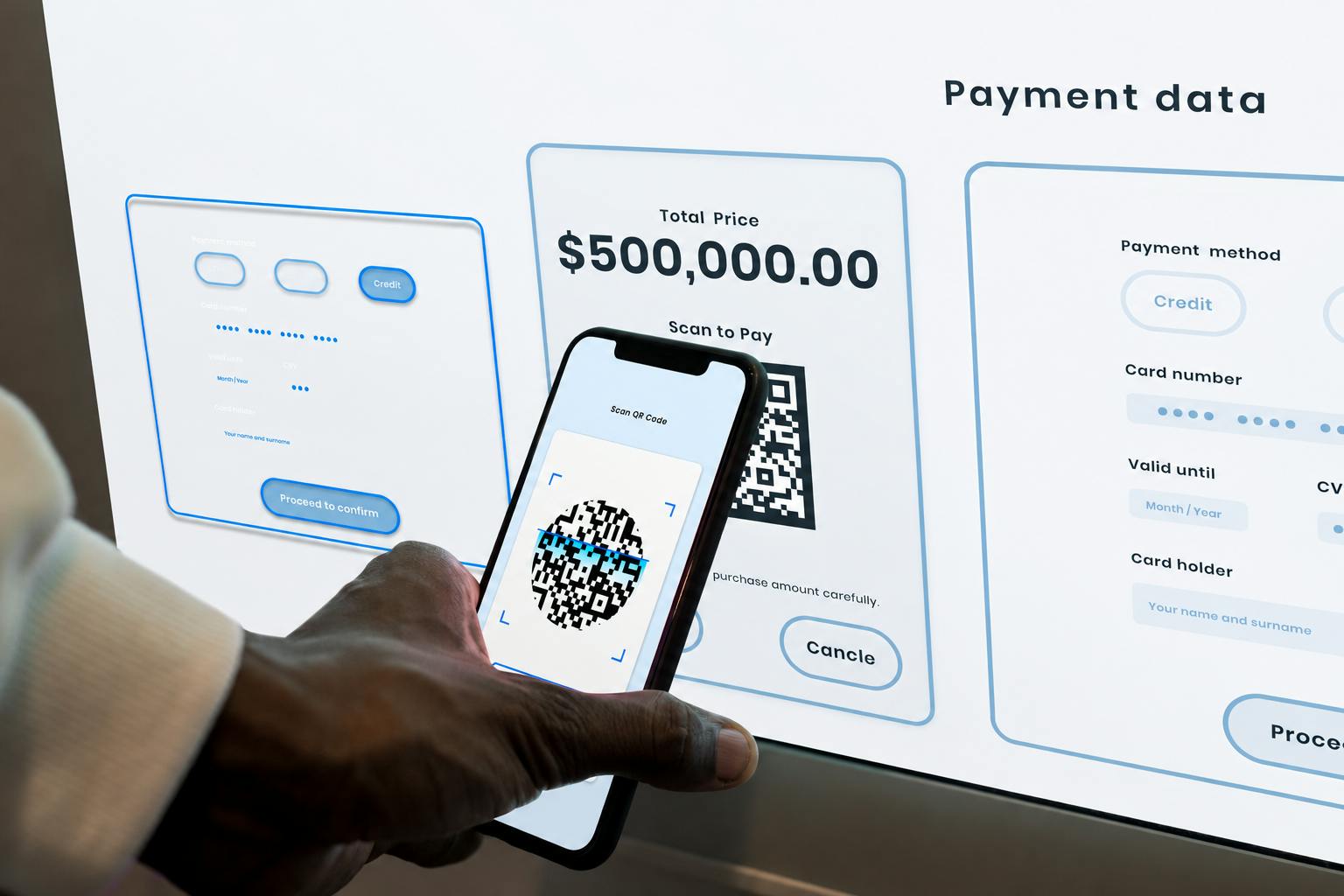
A bank can issue a deposit token on a blockchain and let approved customers transfer it around the clock. But when the recipient uses a different bank, spending that money may require extra steps. Suppose a company receives $500,000 in tokenized deposits from a trading partner. The tokens arrive in its wallet, and the company wants to use the funds to pay a supplier through its usual bank. If that bank cannot accept the tokens, the company must find another way to access the money, such as redeeming the tokens with the issuing bank and transferring the funds through an existing payment system. For a business managing money across several banks, that extra step can limit the usefulness of tokenized deposits. The transfer may be quick, but the recipient still needs a practical way to use the funds. Banks are working on this problem as they bring deposits onto programmable networks. Improving blockchain performance helps, but it does not settle the questions that arise when money moves between institutions. A Token Is Not the Same as a Transferable Bank Deposit A tokenized deposit represents a deposit held in a commercial bank. It means that the deposit stays with the bank regardless of where the transactions related to it are executed on the blockchain. A token issued by Bank A is not necessarily a deposit with Bank B just because it is delivered to Bank B's customer. The recipient bank must understand whether it can accept the token, what rights the holder has and how to process the payment. Let us go back to the firm that receives the $500,000. Its treasury staff can cash out the tokens from Bank A and transfer the funds through a traditional payment method. Alternatively, the two banks can come to an agreement that would enable them to clear the transaction without requiring the recipient to handle the original tokens. Both approaches depend on rules that the institutions recognize and are prepared to follow. Bank B needs to know when it can credit the company's account and what to do in case of a failed transfer or cash-out. In his October 2026 speech, Piero Cipollone from the European Central Bank emphasized that one euro issued by a regulated bank should be exchangeable at par with a euro issued by another regulated bank. For businesses, the concern is practical. Receiving money from a trading partner should not create additional hurdles simply because the payment originated on another bank's blockchain. Follow the Payment Beyond the Blockchain Consider a payment where a customer of Bank A makes a transfer of tokenized dollars to a supplier whose account is maintained at Bank B. First off, Bank B must ascertain whether it is willing to accept the payment. The process requires identification of the issuing bank, and also checking that the token and the transaction satisfy the criteria stipulated in the agreement between the two banks. The banks then need to settle the payment. Depending on the particular system, the banks can settle the payment either by redemption of the token, use an existing payment rail, or settle via a shared platform involving the tokenized central bank money. A correspondent bank facilitates payments between banks without a direct relationship.Bank B is allowed to credit the supplier as per the agreed rules once all necessary conditions are satisfied. Both institutions must also be able to reconcile the payment in their accounting systems. The process of settling payments varies depending on the design. A shared platform may orchestrate several processes, while separate networks may require messages and transactions to pass between different systems. The system needs to distinguish between a payment that has been submitted, one that has been accepted, and actual settlement of the payment in the system. It also needs to account for any separate redemption or account-crediting steps. A blockchain confirmation confirms that a transaction has been executed based on the rules of that particular network.It does not necessarily mean the receiving bank has accepted the deposit or credited its customer. Why a Blockchain Bridge Cannot Settle the Banking Relationship Bridges enable separate blockchains to transact and exchange either assets or information about the transaction. Some lock tokens on one network and create equivalent tokens on another, or employ any other techniques to perform transactions across networks. These tools can help move digital assets between blockchains; however, that will not automatically imply that the recipient bank will accept the deposits issued by another institution. Suppose a bridge makes a representation of Bank A's token available on a second network. That token may be transferable there, but Bank B still has to know what kind of rights are included in this token. Can the holder redeem it with Bank A? Is it acceptable to Bank B? Who should take the responsibility if redemption is delayed or cannot be completed? Creating another token does not resolve such issues. At the same time, bridges also increase technical risks. Depending on their design, they may rely on smart contracts, validators, third-party messaging services or privileged operators. Any vulnerability or bug in a bridge’s logic could lead to unauthorized transfers or inconsistent records. Banks therefore must take into account both technical aspects of linking two networks and financial obligations of the tokens. A bridge can help with the first without resolving the second. The BIS Annual Economic Report 2026 discusses fragmentation across blockchain networks and the operational risks associated with connecting systems that use different rules and governance arrangements. What Happens When a Payment Fails Halfway Through? It is common for disputes to occur when there is a disagreement between the two systems about the transaction status. For instance, Bank A makes a payment request through its network but the confirmation fails to reach Bank B. Bank A detects a time-out in the communication and retries the request since it does not know whether the first request was made successfully. When the receiving system considers both instructions separately, then the supplier might receive the amount twice. If the banks stop processing while they investigate, the funds may remain unavailable until they establish what happened. The payment systems should have mechanisms that can cater for such situations. Idempotency enables the payment request to be retried without creating a duplicate payment request. Having a stable transaction identifier would help the receiving system to identify the retry request the same request rather than a new one. Atomic settlement can enable the two linked operations to succeed or fail simultaneously. Where the architecture supports it, this reduces the chances of one side of the payment being settled while the other one remains unsettled. Atomic settlement is not a guarantee to avoid the above problem since some independent networks have transaction finality conditions which might not be able to coordinate each operation in a single transaction. The system must account for those limitations. Transaction status also needs careful handling. A successful submitted transaction request does not mean a successful payment since there is a redemption or account crediting process after settlement. When the system uses each ledger update entry as confirmation of receipt of money from the receiving bank, it can report a successful transfer while the surrounding banking process is still incomplete. When the outcome is uncertain, the banks need transaction records and reconciliation procedures to establish their respective positions. They also need an agreed process for resolving discrepancies without duplicating payments or losing track of the funds. What Existing Banking Projects Tell Us Two developments show how banks and financial institutions are approaching different parts of the problem. JPM Coin is expanding to more public blockchain infrastructure In November 2025, JPMorgan rolled out its JPM Coin deposit token for institutional clients on Base. On October 19, 2026, the bank also announced the launch of JPM Coin on Ethereum. It makes it possible for eligible institutional clients to transfer JPM Coins within the Ethereum Virtual Machine ecosystem, which includes Base and Ethereum. It enables clients to use the bank's dollar-denominated deposit token on yet another public network. For institutions already using Ethereum-based assets and applications, this can make it easier to use JPM Coin alongside their existing onchain activity. But supporting more than one blockchain does not guarantee the acceptance of the token by any other bank. JPM Coin is still tied to deposits in JPMorgan, and the token is limited to eligible institutional clients. The announcement illustrates the difference between making a token available on multiple networks and making it usable across unrelated banking relationships. Project Agorá is testing coordinated settlement The BIS-led Project Agorá involves the application of more complex approaches to wholesale payments. It brings commercial bank deposits and tokenized central bank reserves on the same programmable platform. In May 2026, BIS published a report on the project’s prototype, which allowed atomic, multi-currency settlement across jurisdictions. Subsequently, the project team conducted the real-value testing in July 2026. According to the BIS project overview, 28 financial institutions and central banks performed transactions totalling approximately CHF 800,000 across 17 scenarios. The test included the transactions related to both corporate and interbank payments, as well as those involving two currencies. This testing revealed the necessity of operational activities needed for the platform. Participants used established payment-message standards, managed the issuance and redemption of tokenized deposits and reserves, and followed predefined procedures for executing transactions. The procedures included the fallback mechanism for situations when certain steps could not be completed as planned. Those details are important because a payment platform must work with the systems banks already use. The ledger is not everything; the institution still needs to manage the corresponding funds, records, approvals, and exceptions. Project Agorá provides evidence that coordinated settlement based on tokenized commercial bank deposits and central bank reserves can work in a controlled setting. It does not imply that all banks accept all other banks' deposit tokens. Wider adoption still depends on the legal, technical, and operational arrangements between participants. What Engineers Need to Build for Portability Portability needs to be considered when designing the payment flow, rather than added later as a connection between blockchains. The system must identify the issuing bank and establish which receiving institutions can accept a particular token. It must define how the payment will be settled, when the receiving bank can credit the recipient, and what happens if one of those steps fails. Redemption and reconciliation need similar attention. When a token is converted back into a conventional deposit, the token balance and the bank's corresponding records must remain consistent. The same applies when a payment uses tokenized central bank reserves or a shared settlement platform. The system must also fit into existing banking operations. Compliance checks, fraud monitoring, accounting, treasury management, and customer account updates remain necessary when deposits are tokenized. Banks need to integrate these processes with the new infrastructure, including the procedures for delayed or rejected payments. Testing should cover more than a successful transfer between two wallets. Engineers need to examine what happens when a receiving bank rejects an instruction, a message arrives late, a network becomes unavailable, or one institution records a transaction while another has yet to complete its part. Those tests help reveal whether the payment flow can recover from failures without duplicating transactions or leaving the institutions with inconsistent records. Faster Transfers Do Not Guarantee Portability JPM Coin's expansion to Ethereum gives institutional clients access to the deposit token on another public blockchain. Project Agorá has tested a shared platform that coordinates tokenized commercial bank deposits and central bank reserves for wholesale payments. The approaches differ, but both show that moving money through programmable infrastructure involves more than recording transactions quickly. A business receiving tokenized dollars needs to know whether its bank can accept them, how the payment will be settled, and when the funds will be available. If redemption requires a separate transfer or the banks cannot agree on the transaction's status, the speed of the original blockchain transaction offers limited help. For tokenized deposits to work across banking relationships, institutions need arrangements that let them recognize the deposits, settle payments, and resolve failures. Until those arrangements are in place, the usefulness of a token will depend partly on which bank issued it and where the recipient needs to use it.
The Technical Challenges of Moving Tokenized Deposits Between Banks
Full Article
Original Source
Read the full article at Hackernoon →KhanList aggregates and links to publicly available news content. We do not host full articles from third-party sources. Always verify important information with original sources.