
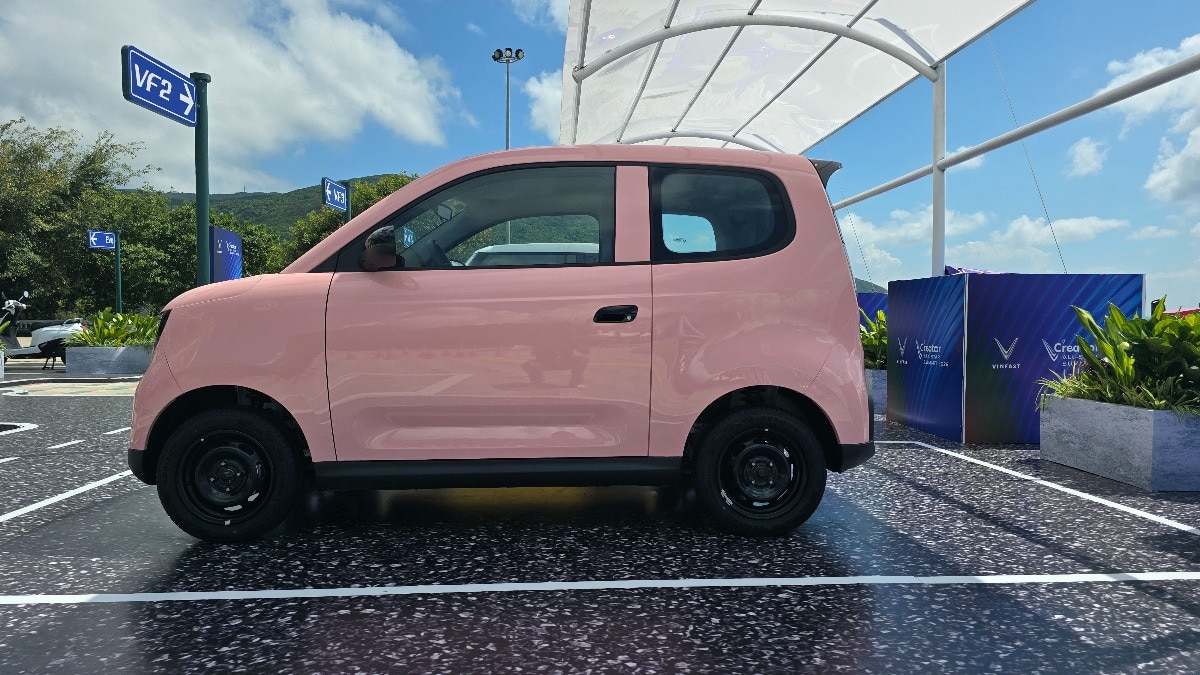
The Tata Nano was envisioned as an affordable, compact car for Indian families looking to move up from two-wheelers. While it could not quite achieve that ambition, its small footprint made it one of the most recognisable cars in the country. Now, as electric mobility reshapes the automotive landscape, Vietnamese carmaker VinFast has a product that brings back memories of the Nano. Meet the VF 2, a tiny electric car designed primarily for urban mobility.VinFast VF 2 dimensions: How does it compare with the Tata Nano?The VinFast VF 2 is a compact electric vehicle based on the Minio Green platform. Its dimensions and proportions make it particularly suited to congested urban environments, where negotiating narrow streets and finding parking spaces can often be a challenge.Measuring 3,090 mm in length, 1,496 mm in width and 1,663.2 mm in height, the VF 2 has a wheelbase of 2,065 mm. These figures put it in familiar territory for anyone who remembers the original Tata Nano. When launched, the Nano measured approximately 3.1 metres in length, 1.5 metres in width and 1.6 metres in height, making it one of India's smallest passenger cars in terms of exterior dimensions. The VF 2 follows a similar philosophy, prioritising a compact footprint while offering seating for four occupants.VinFast VF 2: Design and featuresThe exterior features LED headlamps and 13-inch alloy wheels, giving the little EV a contemporary appearance. The cabin gets a 7-inch driver information display positioned behind the steering wheel, air conditioning, a manually adjustable four-way driver's seat and two integrated speakers with FM radio. The equipment list is relatively basic, but it covers the essentials expected of a small city car. VinFast VF 2: Battery, range and performancePowering the VF 2 is a rear-wheel-drive electric motor producing 30kW (40.2 bhp) and 65Nm of torque. The car has a claimed top speed of 80kmph and gets two driving modes – Eco and Normal.It uses an 18.3 kWh battery pack, offering a claimed driving range of up to 210 km on a full charge under the NEDC testing cycle. Charging is supported by a DC fast charger with an output of up to 24 kW. VinFast claims the battery can be charged from 10 to 70 per cent in approximately 34 minutes.These specifications are in line with the VF 2's intended role as a city-focused electric runabout rather than a vehicle designed for long-distance travel.VinFast VF 2 safety featuresOn the safety front, the VF 2 gets a driver's airbag, anti-lock braking system (ABS), traction control system (TCS) and electronic brakeforce distribution (EBD). The suspension setup comprises MacPherson struts at both ends, according to the specifications provided by the company.Will the VinFast VF 2 come to India?The similarities with the Tata Nano are difficult to overlook. Both cars follow the idea of offering four-seat mobility in a package that takes up very little road space. However, the VF 2 approaches this concept from an electric vehicle perspective, with a small battery, modest performance and a focus on everyday urban commutes.The Nano was intended to make car ownership more accessible to Indian households, particularly those upgrading from two-wheelers. Whether a similarly sized electric car can find a market today will depend on several factors, including pricing, running costs, charging infrastructure and the practical range it offers.For now, there is no confirmation of the VinFast VF 2 coming to India. The company already has a presence in the country with its electric SUV and MPV portfolio, but whether it sees an opportunity in the small electric car segment remains to be seen. If introduced at the right price, the VF 2 could offer an interesting interpretation of the affordable city car for the electric age.Subscribe to Auto Today Magazine - Ends
The Tata Nano of the electric age? VinFast might have an answer
Full Article
Original Source
Read the full article at Indiatoday →KhanList aggregates and links to publicly available news content. We do not host full articles from third-party sources. Always verify important information with original sources.