
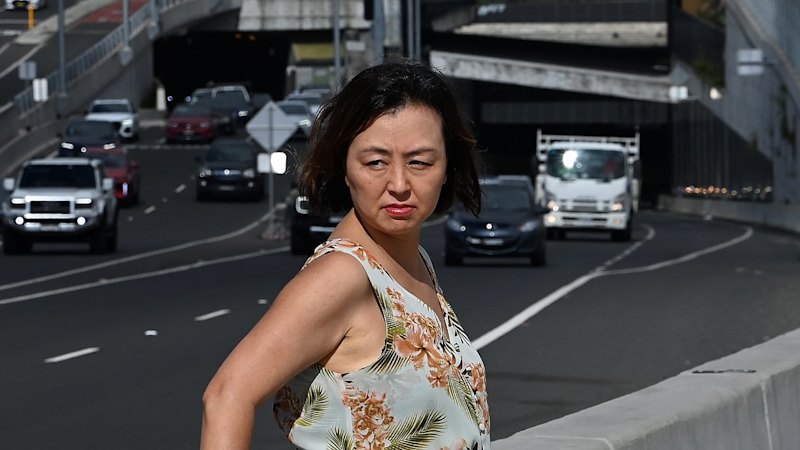
November 9, 2026 — 5:23amOver one week of casual work in September, Jeanitta Lee was fined for four speeding offences on inner-Sydney roads. Two of the offences were just six minutes apart.Nine demerit points and $1268 in fines later, Lee says that the scale of the penalties are unnecessary.Jeanitta Lee at the Rozelle Interchange where she incurred four speeding fines in one week, two while driving through the tunnels. KATE GERAGHTY“I didn’t even make that much money that day,” she said. “I was just incensed.”“I understand people do drive crazy at certain times,” she said. “But I just think the amount is too high.”Dr Raphael Grzebieta, emeritus professor of road safety at the University of NSW, says that enforcement fines are nowhere near enough.Hitting the hip pocket, he says, is the way to make motorists aware of the risks they put others at.“They’re lucky the fines are so low,” he said. “Increase the fines … Maybe the message will get through to people that they should stop speeding.”In the 2025-26 financial year, the NSW government recorded almost $325 million in revenue from speed and red light enforcement fines, from nearly a million infringements issued to motorists.A NSW Transport spokesperson said: “Every dollar raised from camera-detected road infringements is reinvested into measures that help prevent deaths and serious injuries on NSW roads.”The most expensive camera for Sydneysiders is won by Cross City Tunnel East Sydney’s westbound camera, which racked up $10,983,817 from 23,548 fines.The most fines were issued by a southbound camera in the Rozelle interchange, capturing 27,643 infringements, costing $9,969,681 in fines.That camera caught Lee twice. One infringement cost $608 and four demerit points, when she was pictured at 3.22am driving 84km/h in a 60km zone. Three days earlier, she was fined $354 and three demerit points for driving 74km/h in the same zone.Lee recognises that she was going too fast when she was booked for speeding, but is hoping for leniency as she appeals the Rozelle infringements in court. She has requested a review of two other fines issued in the same week, both for driving 50km/h in a 40km zone on Oxford Street.Most of the top 10 moneymakers were cameras situated in Sydney’s underground motorways.Grzebieta says lawbreakers speed on highways because they are convinced they’ll get away with it.“They have implanted in their minds in NSW that you can go up to about 10 kilometres per hour [over the limit] and you won’t get booked, which is a nonsense.”About 60 per cent of fines issued in NSW in the 2025-26 financial year were for exceeding the speed limit by 10km/h or under. Not stopping at a red light constituted another 20 per cent of fines.While speed camera operations resulted in 779,405 fines valued at $204,858,775, red light infringements generated $119,645,734 in revenue through 203,351 fines.According to Transport NSW, speeding contributes to about 42 per cent of road fatalities. A spokesperson said that government reviews showed that road trauma rates were considerably lower at camera locations than pre-installation.“We would rather have all motorists drive safely, follow the rules and stick to the speed limit than receive a dollar of anyone’s money because of a penalty.”Grzebieta says that in the same way drivers were forced to take drink-driving and seat belt laws seriously, NSW must face a culture shift when it comes to speeding.“These machines that we drive around on our streets, these are like weapons,” he said. “If handled incorrectly, they kill and maim. And so we need to treat them with immense respect.”Start the day with a summary of the day’s most important and interesting stories, analysis and insights. Sign up for our Morning Edition newsletter.Siena Fagan is a social media producer at The Sydney Morning Herald.From our partners
The Sydney speed camera raking in $11m in revenue
Full Article
Original Source
Read the full article at Smh →KhanList aggregates and links to publicly available news content. We do not host full articles from third-party sources. Always verify important information with original sources.