
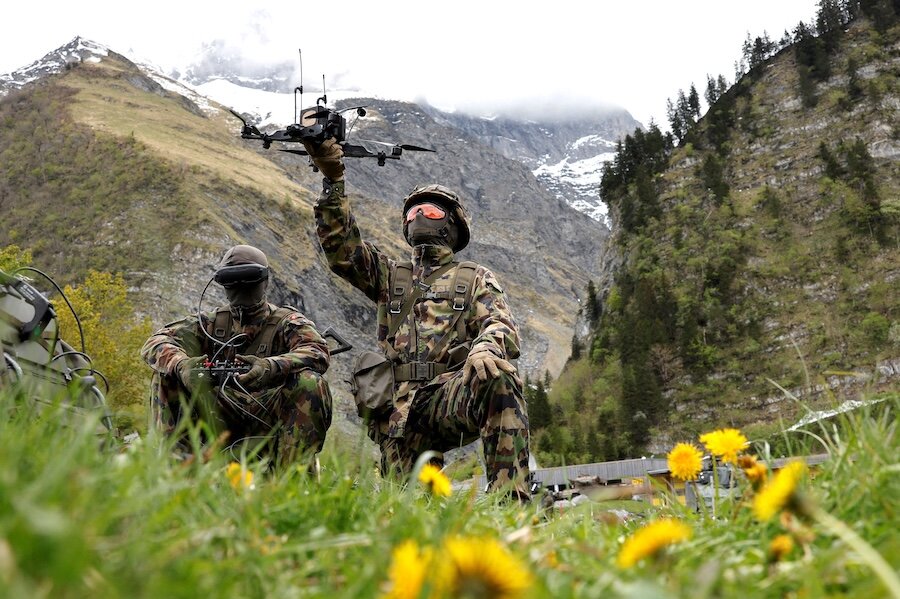
Countries that try to stay impartial in international disputes are having a tough go these days. That’s also true for countries that serve as trusted interlocutors or simply provide safe venues for adversaries to talk. Russia’s full-scale invasion of Ukraine along with U.S. President Donald Trump’s high tariffs on friendly nations and his war with Iran have forced a reckoning of the meaning of diplomatic or military neutrality.On Sunday, the country that epitomized neutrality for centuries, Switzerland, added some clarity to its identity as an icon of evenhandedness. In a referendum, more than two-thirds of Swiss voters rejected a proposal to enshrine “perpetual and armed neutrality” in the country’s constitution. The proposal was an attempt to roll back the Alpine state’s decision in 2022 to join the European Union’s sanctions on Russia for threatening Ukraine’s existence. Young voters especially have sided with Ukraine and, like much of Europe, felt Russia might try to take more nations by force. Switzerland’s neutrality was never absolute and often a la carte, even during many 20th-century wars. Yet its people have slowly realized that the legacy of being a moral bystander at times – such as trading with apartheid South Africa or turning away Jews fleeing Nazi suppression – undercut principles on which neutrality relies: the stability and security that rests on individual rights. As Foreign Minister Ignazio Cassis said during a televised debate: Switzerland would “not look away when we see violations of the very international rules that allow us to live in peace.” The Swiss vote was not much of a surprise in the context of other reactions to Moscow’s threats. Finland, another icon of nonalignment, joined NATO in 2023, while longtime neutral Sweden joined the military alliance in 2024. Many former Soviet states in Central Asia have cautiously moved out of Russia’s orbit. Last year, Kazakhstan’s leader openly said the reasons for the invasion “are not clear to many, including us.” Deepen your worldviewwith Monitor Highlights.Politics with respectGet political stories with respectful analysis.There‘s a world of new ideas in everyBooks newsletter.There‘s more to life, enrich yours withCulture & Learning weekly.Follow humanity‘s discoveries withScience & Nature stories in your inbox.Gain a spiritual perspectivefrom the stories in your inbox.Want to understand the deeper impact of critical events? Learn the Monitor‘s insight.Already a subscriber? Log in to hide ads. For many years, Switzerland, with its population of 9 million people, has steadily increased its cooperation with NATO. Yet it has largely maintained its role as a haven for international negotiations. Its leaders try to practice “cooperative neutrality” that upholds international law and rights. They also now better understand that trusting their own citizens to define neutrality will enhance Switzerland’s role as a symbol of peace and as a peacemaker. An honest broker knows when to listen for the right guidance. ALREADY A SUBSCRIBER? LoginReal news can be honest, hopeful, credible, constructive.The Christian Science Monitor was founded in 1908 to lift the standard of journalism and uplift humanity. We aim to “speak the truth in love.” Our goal is not to tell you what to think, but to give you the essential knowledge and understanding to come to your own intelligent conclusions. Join us in this mission by subscribing.
The Swiss take a stand on neutrality
Full Article
Original Source
Read the full article at Csmonitor →KhanList aggregates and links to publicly available news content. We do not host full articles from third-party sources. Always verify important information with original sources.