
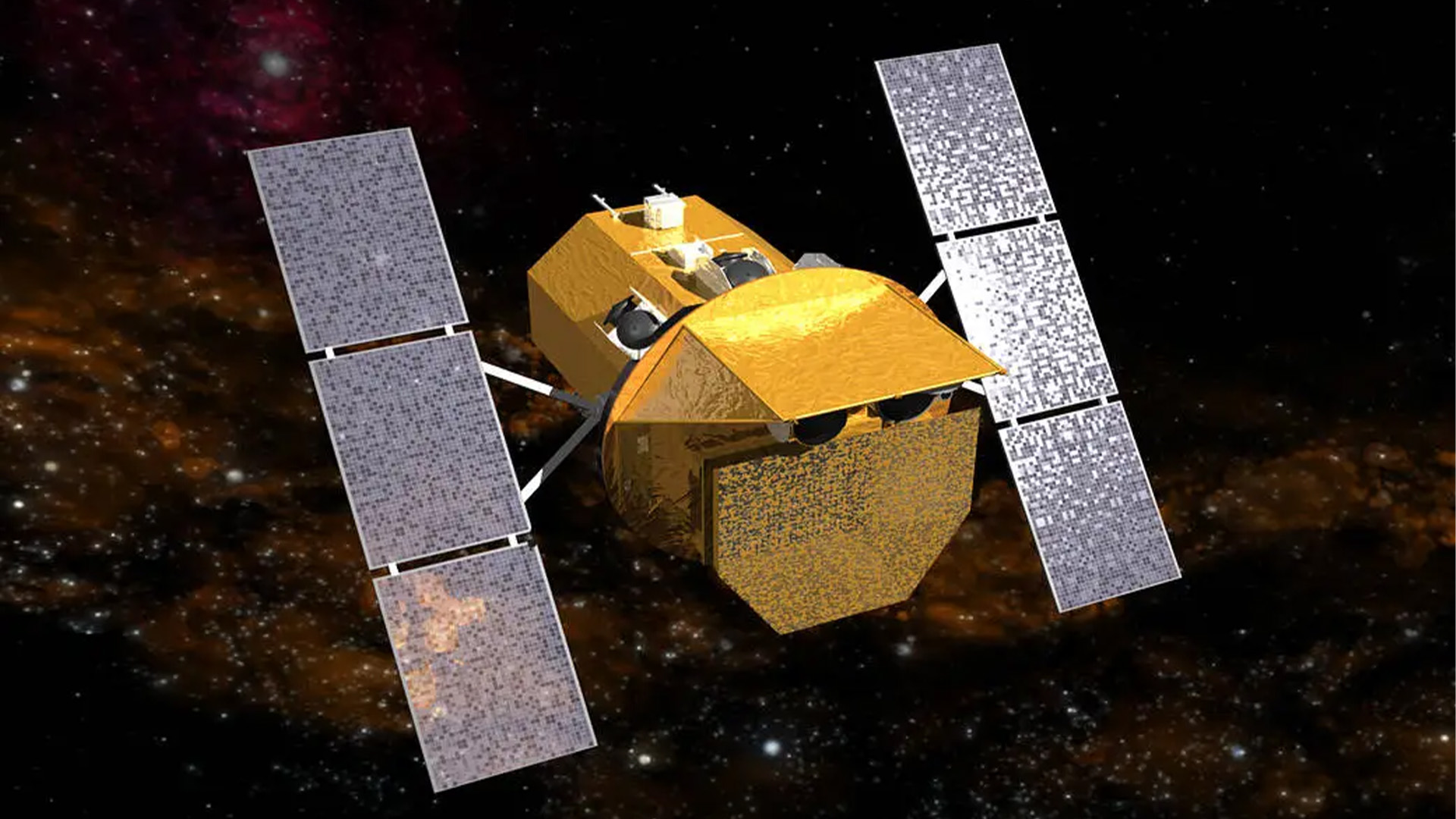
The Neil Gehrels Swift Observatory — formerly known as the Swift Gamma-Ray Burst Explorer — is in its final days. The space telescope was launched into orbit on Nov. 20, 2004, and almost 22 years to the day, it’s expected to come crashing back down. NASA says the telescope should hit the atmosphere on Nov. 4 at around 3:30 a.m. ET, but the agency acknowledges that there’s an 11-hour window where reentry is possible. That means it could come down in the middle of the night or the middle of the day. Most of the telescope is likely to burn up in orbit, with only a few components expected to reach Earth. The location where those components splash down depends entirely on when Swift reenters the atmosphere. However, NASA says that the surviving fragments are “limited between 20.6 degrees south latitude and 20.6 degrees north latitude.” On a map, that would create a band around the middle of the Earth terminating just above and just below the equator. The components that survive reentry should fall somewhere between the two red lines, according to NASA.GIS Geography “The risk of harm coming to anyone on Earth is unlikely — approximately 1 in 2,100,” NASA said in a statement. “NASA and Space Force will continue to monitor the re-entry and update predictions.” Swift had a lifetime to remember “Swift delivered an incredible, lasting return on investment for the nation, designed for a two-year primary mission but productive for more than 10 times as long,” Shawn Domagal-Goldman, director of the Astrophysics Division at NASA, said in a statement last month. Swift was designed to help solve the mystery of gamma-ray bursts. The instruments on the space telescope allowed it to rapidly detect these bursts, locate where they came from and then further analyze them for study back on Earth. “Swift needed to detect and locate gamma-ray bursts, communicate their position to other observatories and then swing its telescopes around to image the burst locations before their afterglows faded out,” Bradley Cenko, Swift’s principal investigator at NASA’s Goddard Space Flight Center, said in October. “This typically took Swift about a minute to do.” Swift’s initial mission was a runaway success and helped advance science’s understanding of gamma-ray bursts and their role in things like the birth of black holes and the history of the early universe. That mission ended on Nov. 4, 2004, but the observatory was doing so well that NASA left it up there to continue collecting data. It received its name change to the Neil Gehrels Swift Observatory on Jan. 10, 2018, in honor of pioneering NASA astrophysicist Neil Gehrels, who served as the agency’s chief of the Astroparticle Physics Laboratory from 1995 until his death in 2017. The amount of science conducted using Swift’s data cannot be overstated. According to NASA, it scanned over 2,000 gamma-ray bursts, took 1.5 million images from its ultraviolet/optical telescope and sent home 12TB of data. That data is showcased in an estimated 7,000 research papers, which averages out to just under one study per day over its 22-year run. It’s only a stroke of bad luck that kept the observatory from floating for even longer. NASA attempted a rescue of Swift over the summer of 2026. However, after a series of engineering difficulties and control issues, the attempt was abandoned, sealing Swift’s fate. NASA turned the instruments back on and kept recording data as long as possible.
The Swift Observatory Is Dropping Back to Earth This Week: Here’s What to Know
Full Article
Original Source
Read the full article at Cnet →KhanList aggregates and links to publicly available news content. We do not host full articles from third-party sources. Always verify important information with original sources.