
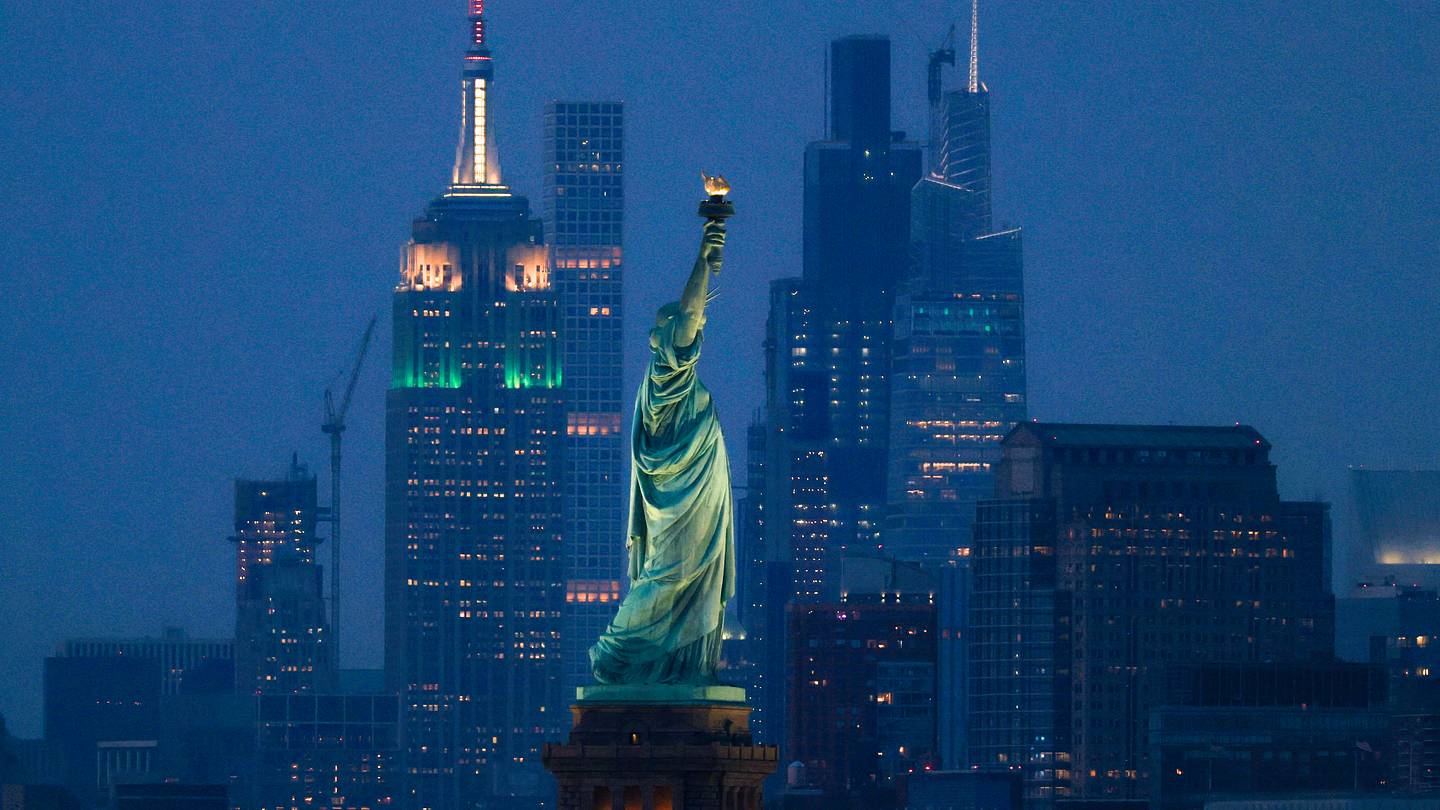
French sculptor Frédéric-Auguste Bartholdi designed the Statue of Liberty in 1865 to "commemorate the centennial of the Declaration of Independence” and “celebrate the close relationship between France and America."As funding for the giant sculpture was received, Alexandre Gustave Eiffel (yes, that Eiffel) helped bring Bartholdi's vision to life. The structure was completed in 1884, and American architect Richard Morris Hunt was asked to design the pedestal.The statue's framework consisted of 350 pieces packed into 200 crates and shipped across the Atlantic Ocean, arriving in New York City in June 1885.But it wasn't green, and it remains unpainted after 140 years in New York Harbor. So, what happened? THE UNVEILING OF LADY LIBERTYLiberty Enlightening the World: Statue of Liberty in New York Harbour, USA, dedicated on 28 October | UniversalImagesGroup/GettyImagesAccording to History, the 305-foot statue (then called "Liberty Enlightening the World") publicly debuted on October 28, 1886, as a copper structure, meaning it was reddish-brown. The exterior featured hundreds of copper sheets; each was the width of two pennies.Author Wortel-London believed Bartholdi chose copper for durability, and likely because it was a cost-effective alternative to heavier materials. Besides being weather-resistant enough to make it across the Atlantic, the structure had to be adaptable enough to be molded into the figure of what is now one of the world’s most iconic monuments.15 years after being raised in New York Harbor, Lady Liberty held her torch with pride, the copper slowly developing a "darker brown hue" in time.WHY GREEN? TOPSHOT-US-NEW YORK-MONUMENT-STATUE OF LIBERTY | CHARLY TRIBALLEAU/GettyImagesIn the early 1900s, she began to noticeably oxidize, as metals do, with a green coating forming along the outside. Bartholdi actually expected the statue to change color as he designed it, predicting a dark red, but the elements had other plans.In 1906, Congress set aside $62,000 to repaint the statue and restore it to its original copper color, but many considered this "sacrilege." Not only that, it would have to be repainted every 25 years to keep the green from showing, an expensive, tedious task.And so they kept it. In 1910, it appeared half copper, half greenish blue, and within 10 years, it was entirely green. According to Bendheim, in 1916, artist Gutzon Borglum installed amber-colored glass panels in the torch, and it was illuminated from within. By the 1920s, the statue looked like it does today, color and all (only now, the torch is wrapped in 24-karat gold leaf, and the entire structure is lit with floodlights). Not only is the green now a symbol of freedom, but the film caused by chemical weathering actually protects the statue from "corroding and degrading." Over time, Lady Liberty and her green hue became much more than 300 sheets of aged copper; they became a symbol of hope for immigrants arriving in the harbor and a timeless testament of democracy for the American people.Read More:
The Statue of Liberty Was Originally a Different Color
Full Article
Original Source
Read the full article at Mentalfloss →KhanList aggregates and links to publicly available news content. We do not host full articles from third-party sources. Always verify important information with original sources.