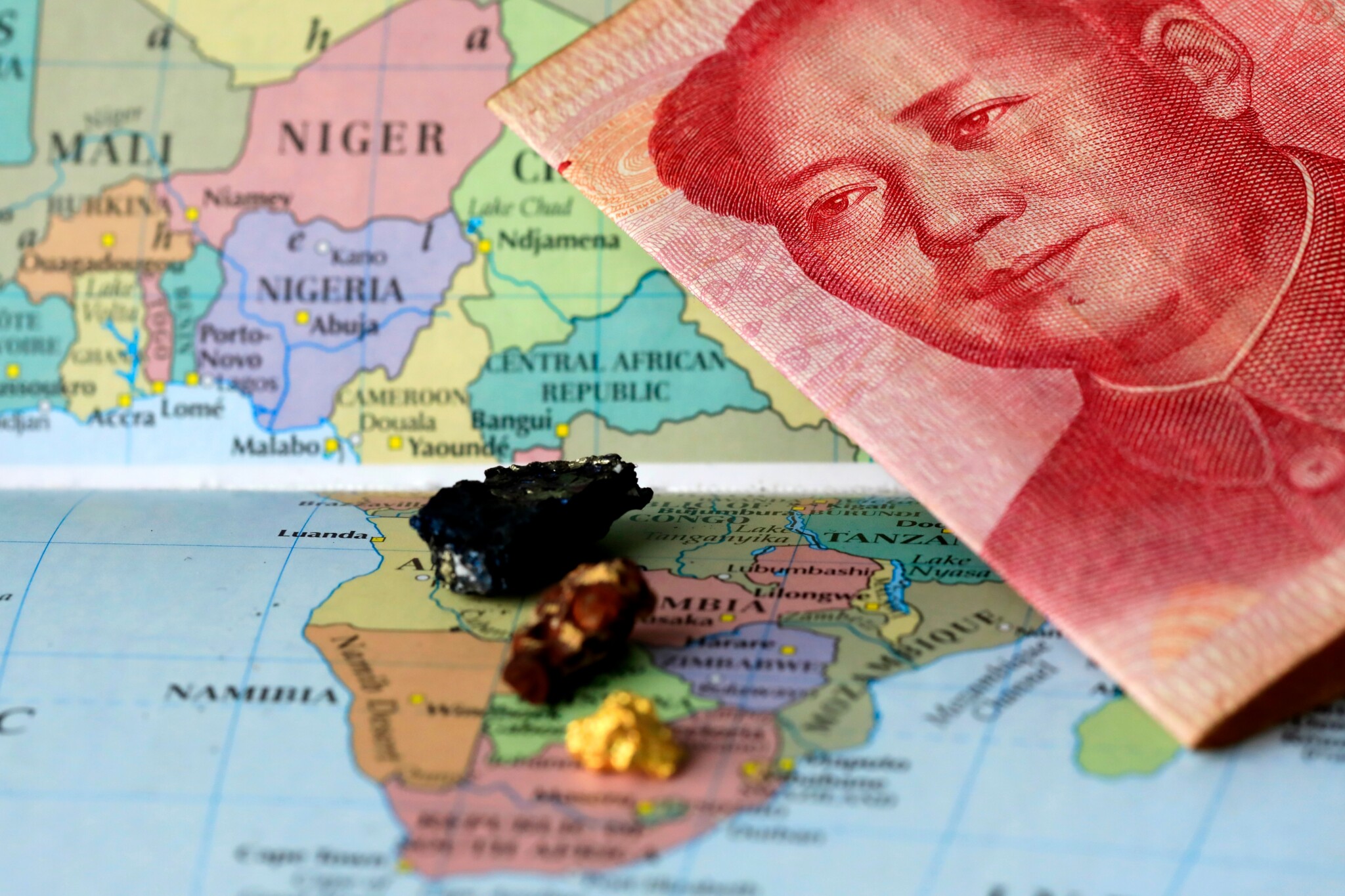
Trade over aid is Washington’s newest old idea for Africa. On July 24, the State Department launched the U.S.-Africa Strategic Investment Program — a $500 million effort and one of the first dedicated economic assistance programs under the Trump Administration’s Africa Strategy. The program rests on a simple premise: Washington can’t match Beijing’s spending on African critical minerals dollar-for-dollar. Instead, it is using federal grants to lessen risk so that U.S. private capital steps in. In practice, this means soliciting project ideas from applicants and issuing up to ten grants of $5-50 million for such initiatives as geological surveys, mining-sector reforms, and deal advisory work — the kinds of upfront costs that are often too risky for the private sector. Rules, Not Just Money The fund is explicitly framed against China’s dominance in mineral processing, where Beijing controls the overwhelming share of global capacity for minerals essential to defense and AI supply chains. Money is not the only front here — the program’s separate “commercial diplomacy” track, aimed at helping African institutions adopt shared market standards and modernize trade infrastructure, points to a longer-term fight over whose rules African trade adopts. The fight centers on the African Continental Free Trade Agreement (AfCFTA), a free-trade pact linking nearly every country on the continent. China has been an active technical partner to the AfCFTA Secretariat, helping shape rules of origin, customs standards, and dispute resolution. USTR has pushed for years to get more involved in that process — arguing that the market rules and standards being set now will govern African markets for decades — and produced little success. Deja Vu on U.S.-Africa Investment Set against China’s presence in Africa, $500 million is not much. The program is a bet that a modest amount of federal money can crowd in or incentivize private capital many times its size. That bet is not new. Prosper Africa, the presidential initiative to boost two-way U.S.-Africa trade and investment launched in 2019, rested on the same premise. The Strategic Investment Program risks repeating a learning curve Prosper Africa also began by funding deal preparation — surveys, advisory work, and regulatory reform. With limited results, it later shifted toward tools that bridged the gap between America’s deep capital markets and African projects directly, including the building of indices and specialized investment funds. For instance, Prosper Africa seeded a privately run guarantee company with $10 million to build a $100 million balance sheet, unlocking an estimated $1 billion in private capital by giving African bonds and loans a stronger credit rating than they could achieve on their own. Prosper Africa also pioneered recoverable grants, which had successful companies repay part of their grant back into a privately managed revolving fund. The Strategic Investment Program’s design doesn’t carry that lesson forward. How to Close the Capital Gap Success will hinge on how disciplined the State Department is in terms of its demands in return for grant funding. That discipline should start at the concept paper stage, where State should push applicants past generic claims of “unlocking private capital” toward a concrete account of who the follow-on investors are, what would make them commit, and how a federal grant changes that calculus. A strong application should read less like a grant application and more like a signed term sheet with investor commitments attached. The State Department should also make sure grants are recoverable — where a company repays part of its award once a project succeeds, feeding a revolving fund that can back the next deal. This leaves a more systematic and sustainable outcome at a lower cost to American taxpayers. State’s Bureau of African Affairs should also prioritize funding American advisors to sit on AfCFTA technical committees, where China is already shaping the bloc in its image. As Africa grows more central to the world economy, Washington should help it run on American market rules to the greatest extent possible. Daniel Swift is a senior research analyst for economics, finance, and trade for the Center on Economic and Financial Power (CEFP) at the Foundation for Defense of Democracies (FDD). He is a retired U.S. diplomat and was mostly recently the acting coordinator for Prosper Africa — a presidential-level national security initiative to increase two-way trade and investment between the U.S. and Africa. For more analysis from Daniel and FDD, please subscribe HERE. Follow FDD on X @FDD. FDD is a Washington, DC-based, nonpartisan research institute focusing on national security and foreign policy.
The State Department’s $500 Million Bet To Beat China on African Minerals
Full Article
Original Source
Read the full article at Fdd →KhanList aggregates and links to publicly available news content. We do not host full articles from third-party sources. Always verify important information with original sources.