
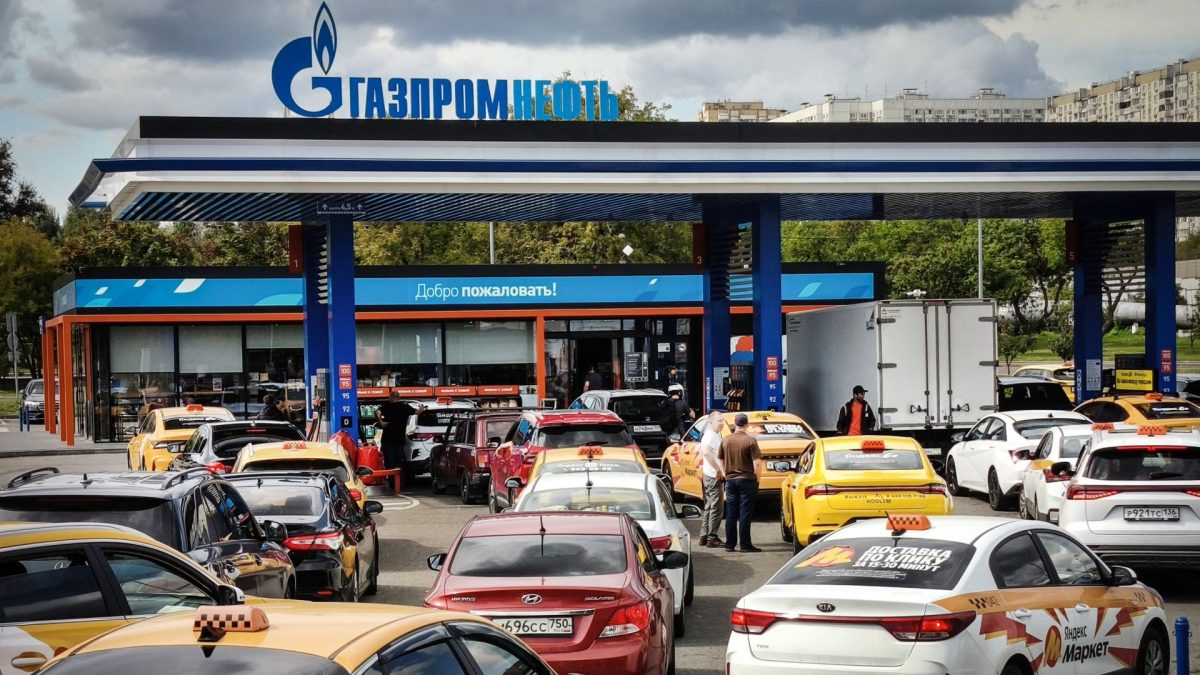
Vladimir Putin is facing mounting public unrest over fuel shortages in Russia linked to Ukrainian drone strikes, but a heavy-handed response could backfire, analysts believe. Russia is facing a second wave of shortages this year with long queues reported at petrol stations across the country, including Moscow, fights over scarce supplies and public displays of dissent on social media. Russian newspaper Izvestia reported that gasoline and diesel was available at just 28 per cent of stations nationwide in mid-August, down from 41 per cent a month ago. Shorts Major fuel companies have imposed limits of 50 to 60 litres per customer. Russian authorities have reintroduced previously banned, low-quality gasoline to plug the gap and have resorted to importing fuel from Belarus and India. Sasha*, a businessman from Moscow, said petrol supplies have become a major problem. “There are long queues at the stations,” he told The i Paper. “People have to drive at 2am to get petrol as they have to go to three or four stations to fill the tank up, which can take hours.” “Sometimes people are over reacting at stations and fights break out,” said Sasha, adding there is a sense that “the Government doesn’t give a f***”. The i Paper has analysed a number of videos shared on social media showing hundreds of cars trapped in hours long queues for fuel. One video, verified by The i Paper, shows cars queueing for over 5km to reach a petrol station with only two pumps just outside Pyatigorskaya, Krasnodar Krai. Russians have formed a huge queue at a petrol station in Saransk. Against the backdrop of fuel shortages in regions across the Russian Federation, Russians are increasingly forced to search for petrol stations that are still open, where they can still fill up their cars. pic.twitter.com/Z2QPRGdUbe— Alexport (@AlexAlexx974431) August 18, 2026 The crisis has become more acute following a resumption of Ukrainian drone attacks on Russian energy sites after a brief pause. Dozens of refineries have been hit over recent months, taking an estimated one-third of Russian oil processing capacity offline. Some Russians have taken the rare step of showing public dissent over the issue – in a country where protesters face jail sentences under repressive wartime laws. The authorities have moved quickly to crack down. This week, a member of the Dawn party in Russia’s western Perm region posted plans for a rally over fuel shortages on the Telegram messaging app. Authorities banned the event and fined the organiser 10,000 roubles (£87). 🇷🇺 MOSCOW, 2026. PEOPLE ARE ALREADY FIGHTING AT GAS STATIONS OVER FUEL.While waiting in line for imported Indian and Moroccan gasoline, Russians have apparently started beating the hell out of each other.Everything is going according to plan! 🇷🇺⛽🥊 pic.twitter.com/MWORTU27Yu— Mykhailo Rohoza (@MykhailoRohoza) August 20, 2026 Last month, five residents of the city of Volgograd published a video message alleging that local officials were using their privileges to obtain fuel supplies that were denied to others. They were fined and detained for five days. Units of the national guard have been deployed at petrol stations around Moscow to keep order, local news outlet Russian Crime reported. But the signs of public discontent spell trouble for the Kremlin, believes James Nixey, former head of the Russia-Eurasia programme at Chatham House. “We are seeing the first real beginnings of dissent,” he said. “The authorities will have to carefully calibrate their response: too weak and they are seen as weak and protests increase. Too much and they risk turning the people against them in a sudden outburst of anger.” Thick plumes of smoke with flames rise from an oil refinery following a Ukrainian drone attack in the Moscow region (Photo: Social Media/Reuters) Ruslan Trad, a researcher and open source investigator at the Atlantic Council think-tank, said anger is rising but the regime was not yet the main target. “The discontent is real and geographically broad, but it’s simmering, not boiling – at least not yet,” he said. “Ordinary Russians are reacting with anger to the crisis itself, not to the authorities. They want basic goods to be available and to be left alone, while the Government wages its war.” Russian officials are downplaying the issue. Russia’s energy minister Sergei Tsivilyov said on Tuesday that gasoline and diesel were still available “everywhere”, although he acknowledged long queues for supplies and said the Government was “working to solve this problem”. Russian media report that moves to import fuel shortages would ease shortages but could face delays with distribution. Analysis from newspaper Kommersant stated, “the situation remains dire, but not catastrophic”. But the fuel crisis, following Ukraine’s attacks on Wildberries – the leading online retailer dubbed “Russia’s Amazon” – which caused billions of pounds of damage and disruption for buyers and vendors, is another sign that a war Putin has tried to shield the public from has come home. Abbas Gallyamov, a former Kremlin aide turned regime critic, said this shift is hitting public morale and faith in the state. “The war was like a show they were watching on television … and now it has come into the house of every Russian,” he said. “Everybody understands this is not a war for existence … The Russian population has now really started thinking the price they are paying for the Donbas [region of eastern Ukraine] is too high.” Wildberries warehouses have also come under attack (Photo: Social Media/Reuters) That cost will rise again, Gallyamov predicts, as higher fuel prices filter through to farmers and food prices. Putin made a rare statement this week addressing public concerns, accepting that Ukrainian strikes against Wildberries had caused “harm” but claiming there were no “critical consequences”. He promised support for the company and those affected. But the Kremlin is unlikely to find lasting solutions to the oil crisis if Ukraine maintains its attacks on refineries, said Gallyamov, and could be forced to escalate repression to quell unrest over shortages. Greater repression, higher prices, and an increasingly unpopular war are all likely to drive public discontent and hostility to Putin’s regime, the former Kremlin aide added. “Definitely it’s going in this direction,” he said.
The spark that’s igniting rare unrest in Putin’s Russia
Full Article
Original Source
Read the full article at Inews →KhanList aggregates and links to publicly available news content. We do not host full articles from third-party sources. Always verify important information with original sources.